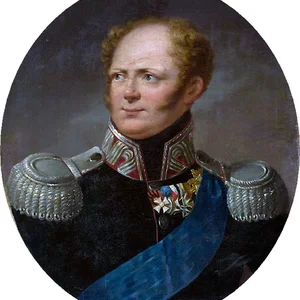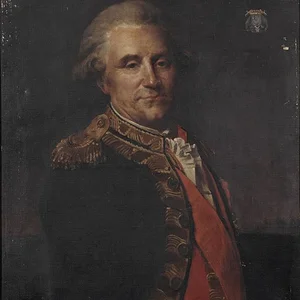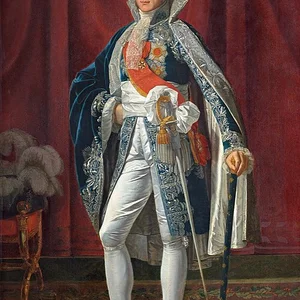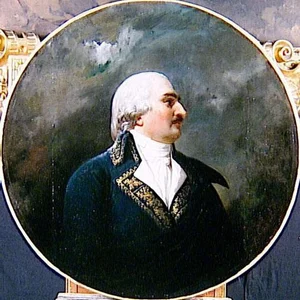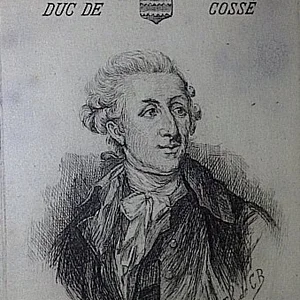

A French general from the high nobility, he served under the Revolution and the Empire. Appointed senator of the First Empire by Napoleon, he embodies the fusion between the old aristocracy and the new Napoleonic institutions.
Hyacinthe-Hughes Timoléon de Cossé-Brissac(1746 — 1813)
Hyacinthe-Hughes Timoléon de Cossé-Brissac
France
9 min read
Frequently asked questions
Key Facts
- Born into the prestigious noble family of Cossé-Brissac, one of the oldest in France
- Served as a general officer during the Revolutionary and Napoleonic Wars
- Appointed senator of the First Empire, member of the Conservative Senate established by the Constitution of Year VIII (1799)
- Represents Napoleon's reconciliation between the old nobility and the imperial regime
- His career illustrates Napoleon's policy of rallying Ancien Régime elites to the new order
Works & Achievements
Service as an officer in the royal regiments, following the military tradition of the house of Cossé-Brissac. For a nobleman of his generation, this training was the obligatory path to honors and state offices.
Navigation through the revolutionary years by maintaining or resuming military service in the name of Republican France. For nobles who remained in France, this difficult choice determined their rehabilitation under the Consulate and the Empire.
Appointed to the Conservative Senate by Napoleon I, de Cossé-Brissac served there until his death in 1813. His mandate illustrates Napoleon's policy of national reconciliation between the old nobility and the new imperial institutions.
As a senator, de Cossé-Brissac took part in the votes on the Empire's major constitutional texts, notably those establishing the imperial nobility and organizing the great Napoleonic administrative reforms.
Anecdotes
Born into the powerful house of Cossé-Brissac, one of the oldest families in the French military nobility, Hyacinthe-Hughes Timoléon had to navigate the revolutionary years with extreme caution. While his cousin the Duke Louis-Hercule-Timoléon de Cossé-Brissac was lynched by the mob in 1792 as he was being taken to prison, he managed to survive the Terror — illustrating just how precarious the fate of great noble families could sometimes be.
Appointed senator of the First Empire by Napoleon Bonaparte, de Cossé-Brissac served in the conservative Senate housed in the Palais du Luxembourg in Paris. His presence in this assembly perfectly illustrated Napoleon's so-called 'fusion' policy: by bringing together representatives of the old aristocracy and generals of the Revolution, Napoleon hoped to reconcile the France of the Ancien Régime with the new France.
Trained according to the codes of the military nobility of the Ancien Régime, de Cossé-Brissac had learned the arts of war and command in a world where noble birth automatically opened the path to an officer's career. The Revolution upended this order: henceforth, competence and service to the Nation took precedence over birth — a cultural revolution as much as a political one for the officers of his generation.
In 1813, the year of his death, imperial France was enduring one of its gravest crises: after the catastrophe of Russia, coalition armies were massing at the borders. The old senators like de Cossé-Brissac thus witnessed the twilight of an Empire they had seen rise. Extraordinary witnesses to their age, they had lived under three regimes — the Ancien Régime, the Revolution, and the Empire — without ever leaving the spheres of power.
Primary Sources
The Conservative Senate, assembled at the Palais du Luxembourg, heard the report of the commission tasked with examining the senatus-consulta concerning the organization of the Empire. The members appointed by the First Consul, among them several general officers drawn from the old military nobility, took their seats in accordance with the constitutional provisions.
Among the members of the Conservative Senate were several general officers from the great families of the old nobility, reconciled with the new institutions by the will of the Emperor. They brought to the legislative body the authority of their rank and the experience of their military service.
Napoleon had sought to make the Senate an instrument of national reconciliation by calling upon representatives of both the old and the new France. Families bearing the most illustrious names of the Ancien Régime sat alongside generals of the Revolution, in a synthesis the Emperor hoped would endure.
General officers who had served under the Monarchy and had rallied to the national institutions were maintained in their ranks or reinstated according to their service records as verified by military commissions. Their commissions were renewed in the name of the Republic and subsequently of the Empire.
Key Places
The ancestral seat of the de Cossé-Brissac family, the Château de Brissac is one of the tallest castles in France, rising seven stories high. This lordly estate in Anjou has symbolized the family's deep roots within the French military nobility since the fifteenth century.
The seat of the Conservative Senate under the First Empire, the Palais du Luxembourg was the principal workplace of the senators appointed by Napoleon. It was here that de Cossé-Brissac sat and took part in deliberations on the great laws of the Empire.
Before the Revolution, the court of Versailles was the center of French aristocratic life. Born into the high nobility, de Cossé-Brissac was shaped in a world where service to the king and honorary offices defined every noble career.
A military institution founded by Louis XIV to house wounded soldiers, the Invalides embodied the continuity of France's warrior tradition. For Empire generals who had come of age under the Ancien Régime, this site symbolized the link between the royal armies and the imperial armies.
Typical Objects

A ceremonial and command weapon carried by French generals under the Empire. The gilded hilt and blade engraved with imperial arms bore witness to the rank of its bearer and his allegiance to the new Napoleonic order.

A two-cornered hat in black felt, worn by Napoleonic generals. It could be worn *en bataille* (points to the left and right) or *en colonne* (points front and back), depending on the official or military occasion.

An official document signed by Napoleon appointing an individual to the Conservative Senate, bearing the imperial seal in red wax. For a nobleman of the Ancien Régime, this parchment symbolized his reinstatement into the circles of power after the upheavals of the Revolution.

A blue coat with gold embroidery as prescribed by the regulations of Year X, with gold-fringed epaulettes denoting rank. Decorations — the Légion d'honneur above all — were worn with pride on the chest of the Empire's senior officers.

A decoration created by Napoleon in 1802, awarded to officers and civilians who had distinguished themselves in the service of France. For a general of aristocratic birth, it embodied the synthesis between traditional chivalric values and the meritocratic recognition of the new regime.

An illustrated manuscript register preserving the lineage and titles of the house since the 15th century. During the Revolution, such documents were dangerous to keep; under the Empire, they regained their usefulness for legitimizing noble claims and negotiating the return of confiscated estates.
School Curriculum
Vocabulary & Tags
Key Vocabulary
Daily Life
Morning
General de Cossé-Brissac began his day in the military fashion, rising early. He would go through his correspondence and the press — *Le Moniteur universel* foremost among them — to keep abreast of news from the armies and government decisions. On days when the Senate was in session, he rode in a horse-drawn carriage to the Palais du Luxembourg, dressed in his official embroidered coat.
Afternoon
Afternoons were devoted to the work of the Conservative Senate or to calls in the Parisian salons where former nobles and imperial dignitaries mingled. Outside sessions, he managed his estates in Anjou by correspondence, receiving reports from his stewards on harvests and local affairs.
Evening
Evenings might be spent at dinner with fellow senators or imperial dignitaries, where military and political news was freely exchanged. Imperial society had revived the splendor of aristocratic dinners from the *Ancien Régime*, now enriched by the brilliance of Napoleonic uniforms and decorations.
Food
The table of an imperial senator from the high nobility reflected his rank: roasted meats, poultry, and game from his Angevin estates, Bordeaux and Burgundy wines served by liveried domestics. French haute cuisine had survived the Revolution and under the Empire recovered the refinement of aristocratic households.
Clothing
In his official capacity, de Cossé-Brissac wore the full senatorial dress — a red coat embroidered with silver olive leaves, white silk breeches, and a ceremonial sword. Day to day, he adopted the civilian fashions of the Empire: a dark tailcoat, light waistcoat, carefully knotted white cravat, and riding boots.
Housing
With a private mansion in Paris and the family Château de Brissac in Anjou, the general lived in the comfort of the high nobility adapted to the new times. The Parisian townhouse would have maintained a certain representative grandeur befitting his rank in the hierarchy of the imperial Senate.
Historical Timeline
Period Vocabulary
Liens externes & ressources
Références
Œuvres
Carrière militaire sous l'Ancien Régime
vers 1764-1789
Service pendant la période révolutionnaire
1789-1799
Mandat de sénateur du Premier Empire
1804-1813
Participation aux sénatus-consultes fondateurs
1804-1813