 flip
flipSeasonal Atsumono — clear soup with dried fish and vegetables
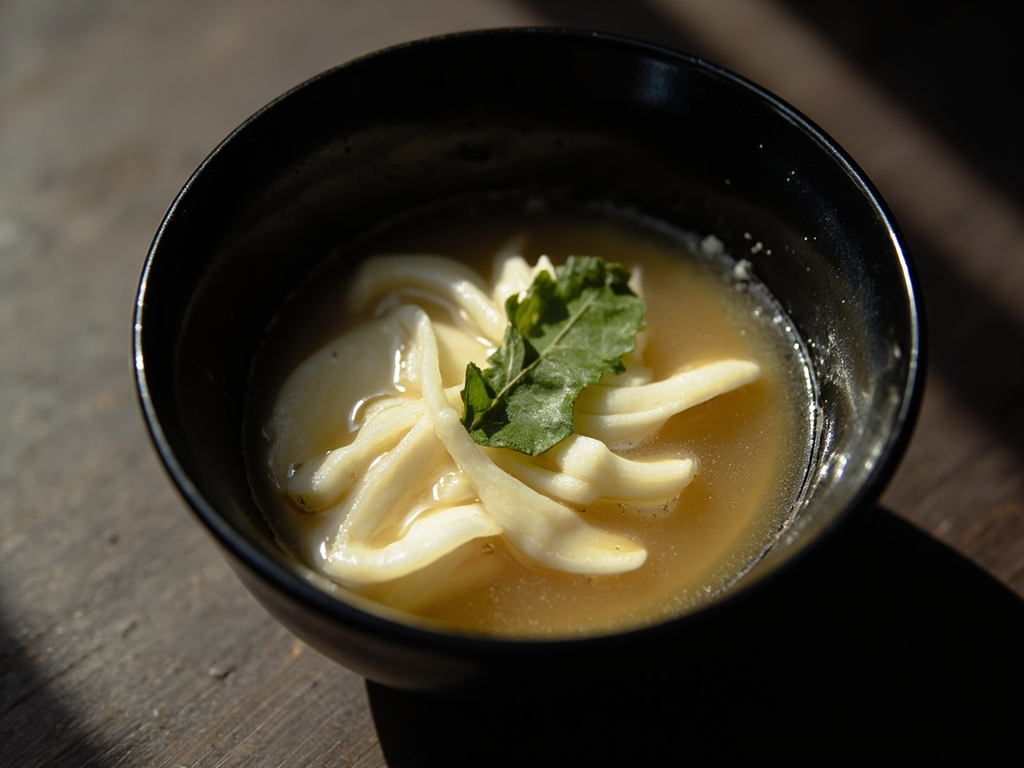
Seasonal Atsumono — clear soup with dried fish and vegetables
Why this dish? At the empress's two daily meals, this clear bowl always accompanied the steamed rice on the lacquered tray. Austere and meatless, out of respect for the court's Buddhist precepts, it embodies the discreet refinement of Teishi's table as described by Sei Shōnagon.
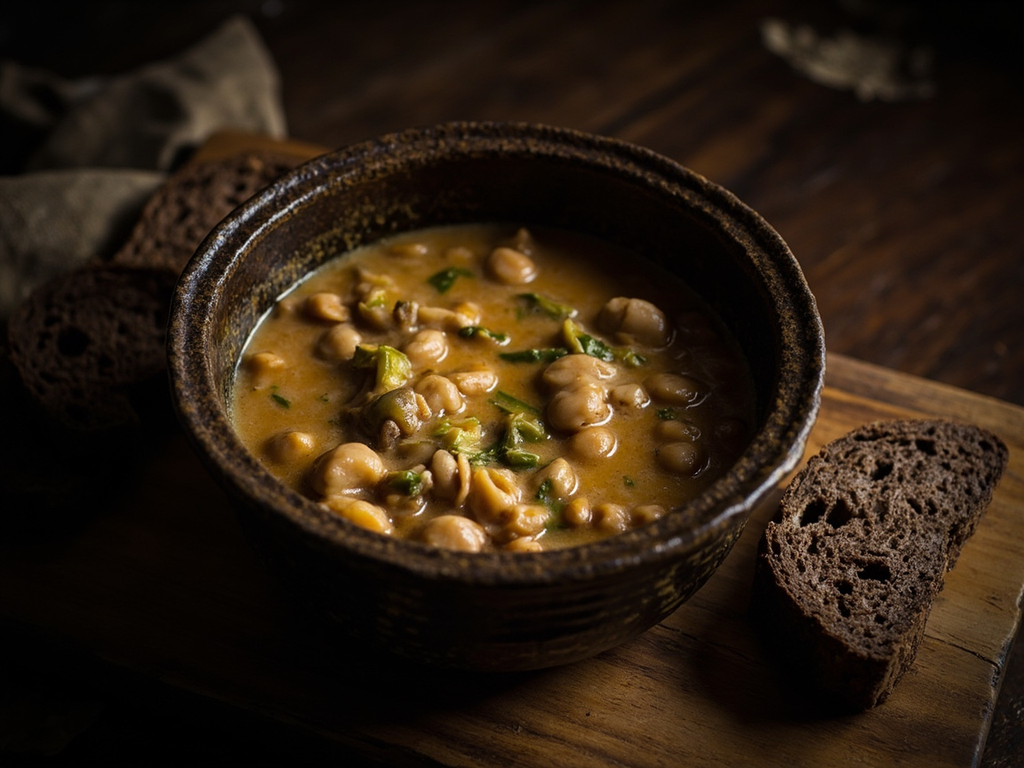
A clear broth made from dried fish and kelp, in which a few finely cut seasonal vegetables float. Light, fragrant, seasoned to taste with a pinch of salt or hishio.
Draw near, and first look at the color of this broth: one should be able to glimpse the bottom of the bowl. My ladies draw it from dried fish and seaweed, never from animal flesh — it befits our court to eat lightly. I like that only a single seasonal vegetable be placed in it, so that the eye knows, before the mouth, what month we are in. Salt it yourself, with a restrained hand: too much seasoning is vulgar.
- •Dried katsuo (bonito) or small dried fish — a handful (umami broth)
- •Kombu (kelp) — one piece (base broth)
- •Seasonal vegetable (turnip, greens, young spinach) — a few pieces (garnish)
- •Salt and hishio (fermented soybean paste) — separately, to taste (self-service seasoning)
Seasonal Atsumono — clear soup with dried fish and vegetables
A clear broth made from dried fish and kelp, in which a few finely cut seasonal vegetables float. Light, fragrant, seasoned to taste with a pinch of salt or hishio.
Why this dish? At the empress's two daily meals, this clear bowl always accompanied the steamed rice on the lacquered tray. Austere and meatless, out of respect for the court's Buddhist precepts, it embodies the discreet refinement of Teishi's table as described by Sei Shōnagon.
Draw near, and first look at the color of this broth: one should be able to glimpse the bottom of the bowl. My ladies draw it from dried fish and seaweed, never from animal flesh — it befits our court to eat lightly. I like that only a single seasonal vegetable be placed in it, so that the eye knows, before the mouth, what month we are in. Salt it yourself, with a restrained hand: too much seasoning is vulgar.
Ingredients (period version)
- Dried katsuo (bonito) or small dried fish — a handful (umami broth)
- Kombu (kelp) — one piece (base broth)
- Seasonal vegetable (turnip, greens, young spinach) — a few pieces (garnish)
- Salt and hishio (fermented soybean paste) — separately, to taste (self-service seasoning)
Ingredients
- Dried bonito flakes (katsuobushi) — 15 g (dashi broth)
- Kombu — 1 piece 10 cm square (dashi broth)
- Water — 1 liter (base)
- Turnip and its greens (or young spinach) — 1 small turnip (garnish)
- Fine salt — 1/2 tsp (seasoning)
- Miso or light soy sauce — separately, to taste (self-service seasoning)
Method
- Soak the kombu in cold water for 20 min, then heat gently without boiling; remove the kombu just before the boil.
- Add the bonito flakes, turn off the heat, let infuse 2 min, then strain: the broth should remain clear.
- Poach the turnip cut into thin wedges in the broth for 4-5 min, add the greens at the end of cooking.
- Salt the broth very lightly. Serve piping hot in a bowl, presenting a small dish of miso or soy sauce separately so each person can adjust.
How it was made : At Heian-kyō, there was neither instant dashi nor thermometer: the broth was drawn from dried fish and seaweed over a charcoal fire, and seasonings were always served separately in small cups, so that the diner salted his own bowl — hence the deliberately neutral taste of the broth as served.
The contemporary twist : Serve in a black lacquer bowl with a single floating leaf (watercress or shiso): a haiku in a spoon.
Sources : Sei Shōnagon, Notes de chevet (Makura no Sōshi) · Engishiki (延喜式), compendium des usages de l'ère Engi
Empress Teishi · Charactorium