 flip
flipCastilian Manjar Blanco with Capon and Almond
Castilian Manjar Blanco with Capon and Almond
Why this dish? Manjar blanco was the ceremonial dish served at weddings and grand receptions in Iberian courts; Isabella, who received ambassadors and grandees of Spain, offered it on her table as a mark of royal magnificence.
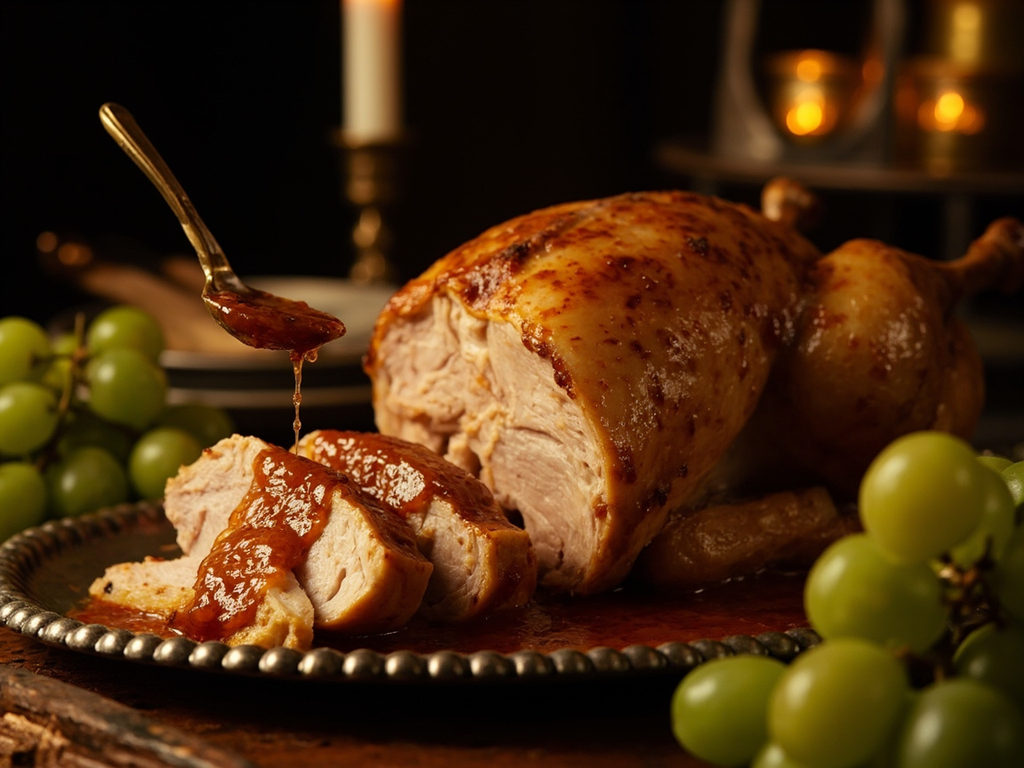
A sweet and pearly velouté of shredded capon breast, bound with rice flour and almond milk, perfumed with sugar, cinnamon and rose water. Half-dish, half-sweet, it was the most refined dish of medieval Spanish banquets.
Know, you who read these lines, that no dish befits a Christian and royal table better than this manjar blanco. One chooses the whitest flesh of a fine capon, shreds it into filaments as fine as silk, and bathes it in the milk of pounded almonds. The spoon must stand upright before serving: such is the rule I taught my cooks. A pinch of cinnamon from the merchants, a hint of rose water, and behold a gift worthy of honoring God and our guests.
- •Boiled capon breast — the flesh of a fine fowl (shredded protein base)
- •Pounded sweet almonds — a good bowlful (almond milk, binder and flavor)
- •Rice flour — a few spoonfuls (thickener)
- •Sugar — to taste (sweetness)
- •Cinnamon and rose water — to taste (perfume)
Castilian Manjar Blanco with Capon and Almond
A sweet and pearly velouté of shredded capon breast, bound with rice flour and almond milk, perfumed with sugar, cinnamon and rose water. Half-dish, half-sweet, it was the most refined dish of medieval Spanish banquets.
Why this dish? Manjar blanco was the ceremonial dish served at weddings and grand receptions in Iberian courts; Isabella, who received ambassadors and grandees of Spain, offered it on her table as a mark of royal magnificence.
Know, you who read these lines, that no dish befits a Christian and royal table better than this manjar blanco. One chooses the whitest flesh of a fine capon, shreds it into filaments as fine as silk, and bathes it in the milk of pounded almonds. The spoon must stand upright before serving: such is the rule I taught my cooks. A pinch of cinnamon from the merchants, a hint of rose water, and behold a gift worthy of honoring God and our guests.
Ingredients (period version)
- Boiled capon breast — the flesh of a fine fowl (shredded protein base)
- Pounded sweet almonds — a good bowlful (almond milk, binder and flavor)
- Rice flour — a few spoonfuls (thickener)
- Sugar — to taste (sweetness)
- Cinnamon and rose water — to taste (perfume)
Ingredients
- Poached chicken or capon breast — 300 g (finely shredded base)
- Unsweetened almond milk — 750 ml (liquid and flavor)
- Rice flour — 60 g (thickener)
- Sugar — 80 g (sweetness)
- Ground cinnamon — 1/2 tsp (perfume)
- Rose water — 1 tsp (floral note)
Method
- Poach the chicken, then shred it as finely as possible (almost into threads).
- Dissolve the rice flour in a little cold almond milk to avoid lumps.
- Heat the remaining almond milk with the sugar, add the flour mixture and whisk constantly.
- Stir in the shredded chicken and cook over low heat until a thick cream coats the spoon.
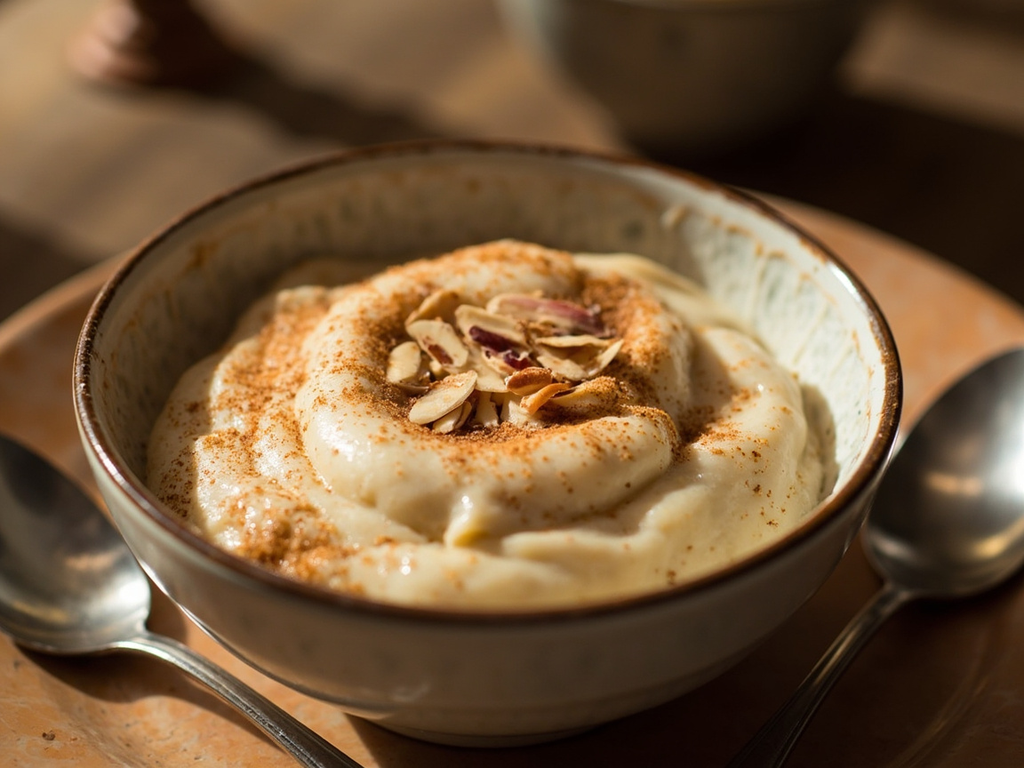
- Off the heat, flavor with cinnamon and rose water; serve warm sprinkled with cinnamon.
How it was made : Manjar blanco appears in medieval Catalan and Castilian cookbooks (including the Llibre de Sent Soví). Its uniqueness lies in uniting meat, sugar and almond without a boundary between savory and sweet, a typical concept of the late Middle Ages.
The contemporary twist : Served in a verrine, topped with toasted almond slivers and a veil of saffron, it becomes a startling signature dessert: "and it was chicken?"
Sources : Llibre de Sent Soví (14th c.) · Ruperto de Nola, Libro de cozina / Llibre del Coch (ed. 1525)
Isabella I of Castile · Charactorium