 flip
flipRoast capon in agrodolce, saffron and pine nuts
Roast capon in agrodolce, saffron and pine nuts
Why this dish? A wealthy man and magistrate, Francesco entertained associates and notables at his table in Santa Croce. For a convito worthy of a prosperous merchant, roast capon bathed in a saffron-gold sweet-and-sour sauce was served: imported sugar and spices silently proclaimed the standing of the house.
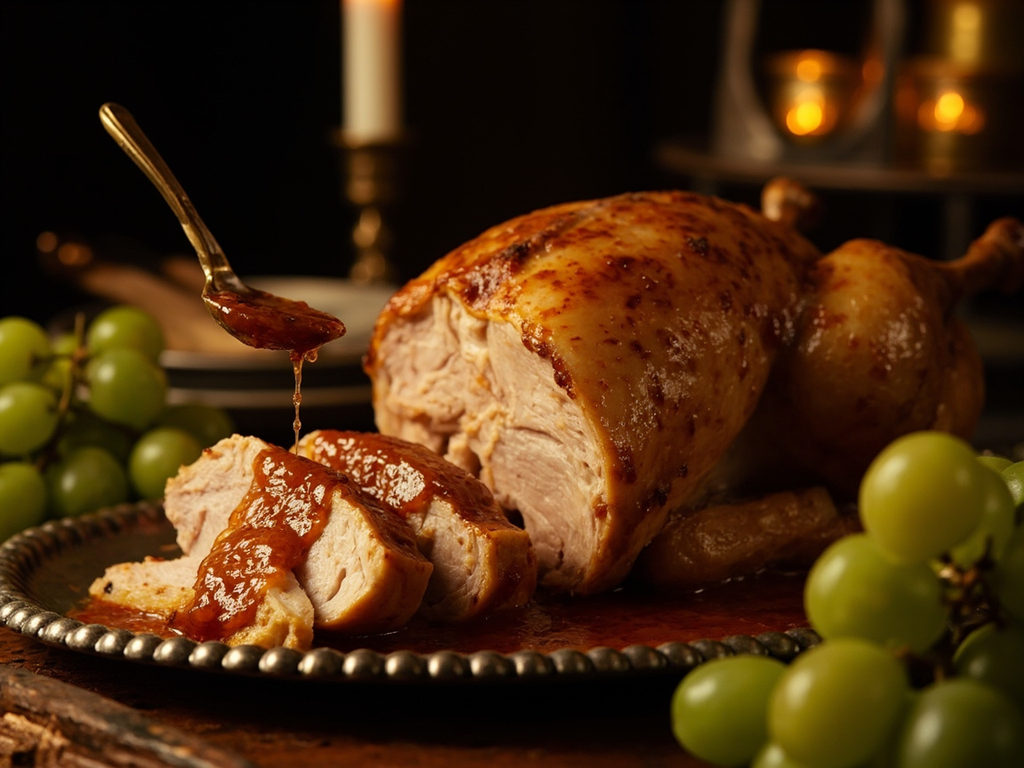
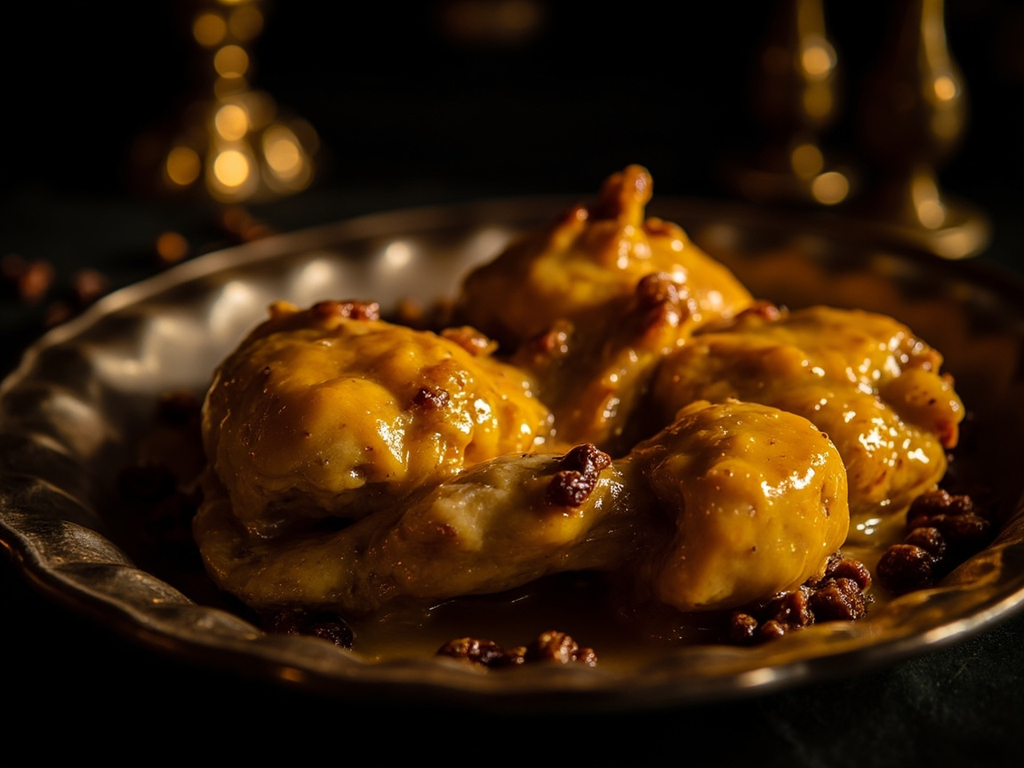
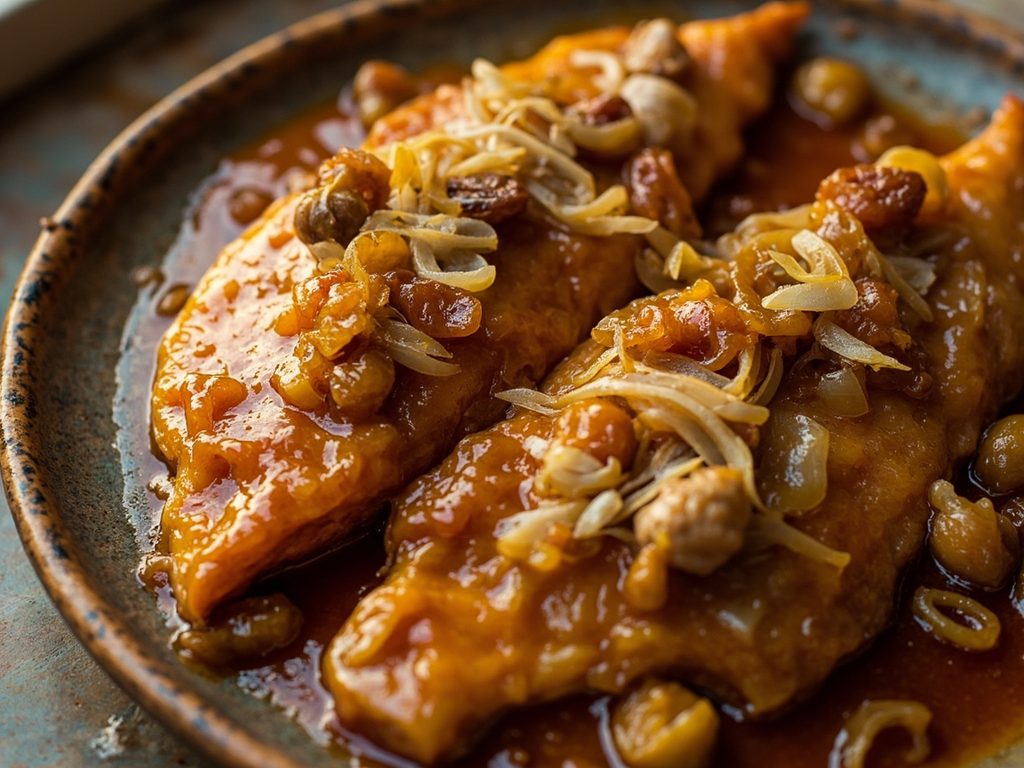
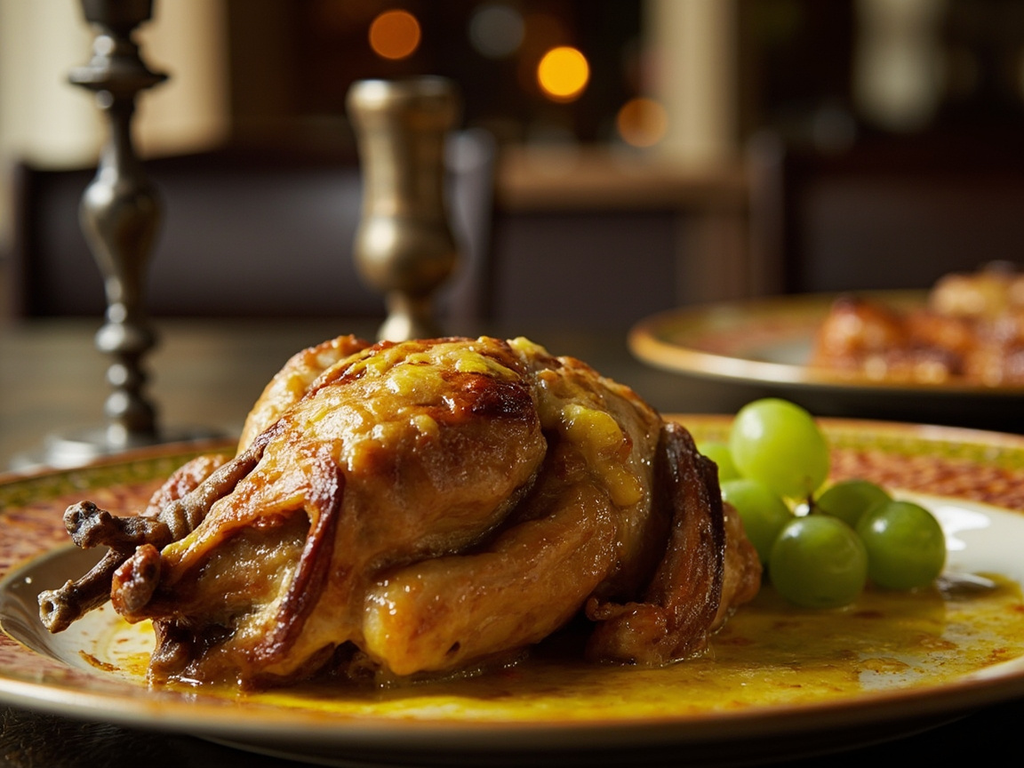
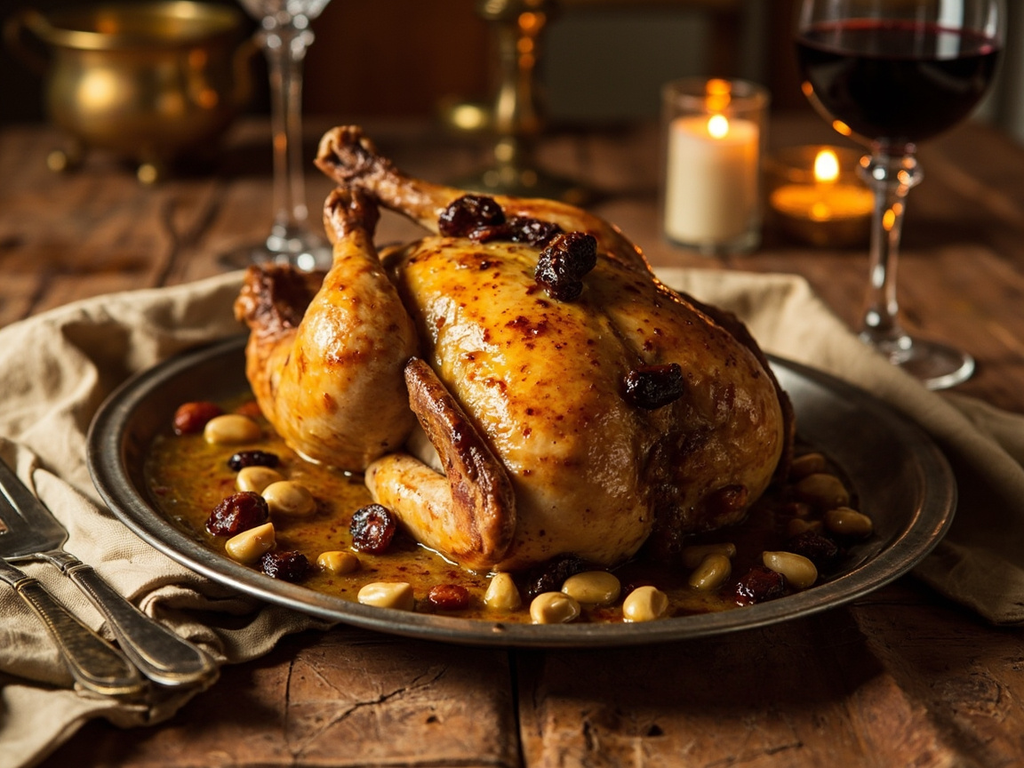
Capon roasted golden on the spit then coated with an agrodolce sauce: vinegar sweetened with sugar and raisins, perfumed with cinnamon, ginger, and precious saffron, enriched with pine nuts. The prestige dish of the Florentine banquet.
When I receive my peers, I want my table to speak for me. So have a fine capon browned on the spit, and prepare the sauce I love: vinegar sweetened with sugar, currants, an ounce of cinnamon and ginger, and above all that saffron I pay its weight in gold to the Levantine merchants. Pour it hot over the bird, scatter pine nuts — and see if my guests do not guess the prosperity of this house.
- •Capon — one, whole (star)
- •Wine vinegar — a cup (acidity)
- •Cane sugar — a good handful (sweetness)
- •Raisins — a handful (fruity sweetness)
- •Saffron — a few threads (color and perfume (signature))
- •Cinnamon, ginger, clove — in the mortar (spices)
- •Pine nuts — a handful (garnish)
Roast capon in agrodolce, saffron and pine nuts
Capon roasted golden on the spit then coated with an agrodolce sauce: vinegar sweetened with sugar and raisins, perfumed with cinnamon, ginger, and precious saffron, enriched with pine nuts. The prestige dish of the Florentine banquet.
Why this dish? A wealthy man and magistrate, Francesco entertained associates and notables at his table in Santa Croce. For a convito worthy of a prosperous merchant, roast capon bathed in a saffron-gold sweet-and-sour sauce was served: imported sugar and spices silently proclaimed the standing of the house.
When I receive my peers, I want my table to speak for me. So have a fine capon browned on the spit, and prepare the sauce I love: vinegar sweetened with sugar, currants, an ounce of cinnamon and ginger, and above all that saffron I pay its weight in gold to the Levantine merchants. Pour it hot over the bird, scatter pine nuts — and see if my guests do not guess the prosperity of this house.
Ingredients (period version)
- Capon — one, whole (star)
- Wine vinegar — a cup (acidity)
- Cane sugar — a good handful (sweetness)
- Raisins — a handful (fruity sweetness)
- Saffron — a few threads (color and perfume (signature))
- Cinnamon, ginger, clove — in the mortar (spices)
- Pine nuts — a handful (garnish)
Ingredients
- Capon or large free-range chicken — 1 (approx. 2.5 kg) (star)
- White wine vinegar — 8 cl (acidity)
- Sugar — 3 tbsp (sweetness)
- Raisins — 60 g (soaked 15 min) (fruity sweetness)
- Saffron — 1 good pinch of threads (color and perfume (signature))
- Ground cinnamon / ginger / clove — ½ tsp each (spices)
- Pine nuts — 50 g (garnish)
- Chicken broth — 20 cl (binding)
Method
- Salt the capon and roast in the oven (approx. 1h30 at 180°C, basting) until the skin is well browned.
- Infuse the saffron in a little hot broth.
- In a saucepan, dissolve the sugar in the vinegar, add the saffron broth, spices, and raisins; let reduce to a light syrup.
- Toast the pine nuts in a dry pan for a few minutes.
- Carve the capon, nap with the hot agrodolce sauce, sprinkle with pine nuts, and serve immediately.
How it was made : Sweet-and-sour sauces with dried fruits and spices dominate Italian prestige cuisine of the 15th-16th centuries, later codified by Bartolomeo Scappi. Saffron, cinnamon, cane sugar, and pine nuts were costly imported goods: serving them together on a noble fowl was an act of ostentation as much as taste.
The contemporary twist : Serve the shredded capon over creamy polenta (a knowing wink: since maize is post-1492, replace with chestnut or spelt porridge to stay period).
Sources : Bartolomeo Scappi, Opera dell'arte del cucinare (1570) · Maestro Martino, Libro de arte coquinaria (15th c.)
Francesco del Giocondo · Charactorium