 flip
flipHoney-Roasted Goose with Figs and Coriander
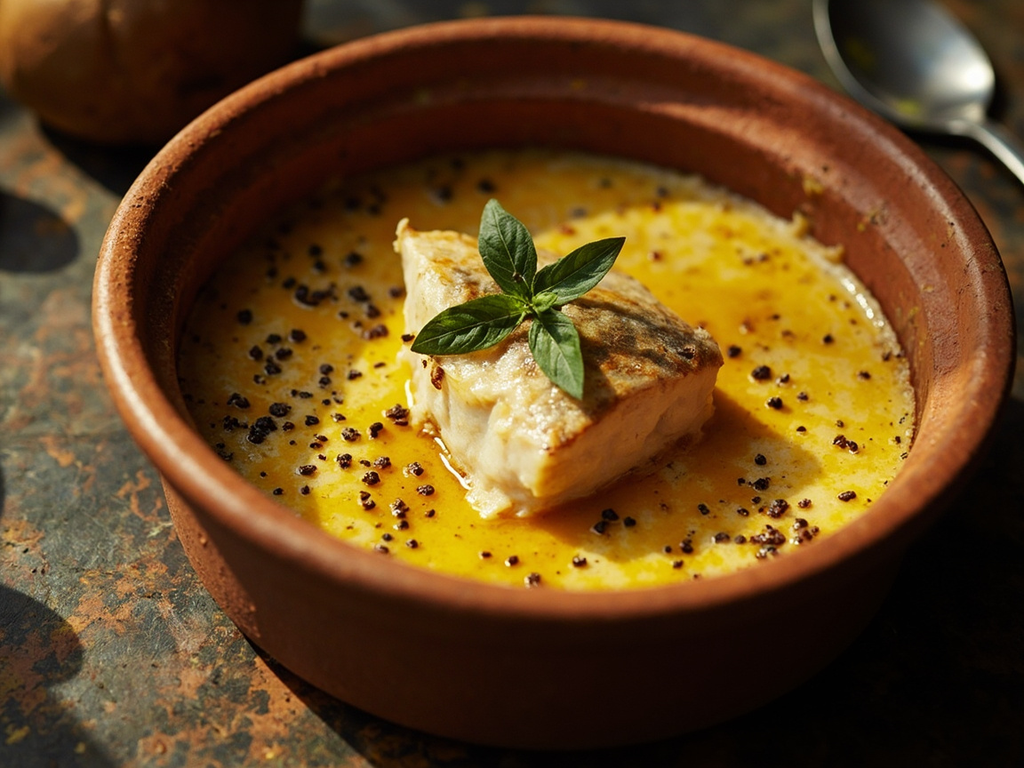
Honey-Roasted Goose with Figs and Coriander
Why this dish? The fat goose is one of the most prized poultry for festival offerings and funerary banquets; it is seen force-fed, plucked, and roasted on frescoes. During the great processions of Isis, roasted geese crowned the table set before the mother goddess, protector of the living and the dead.
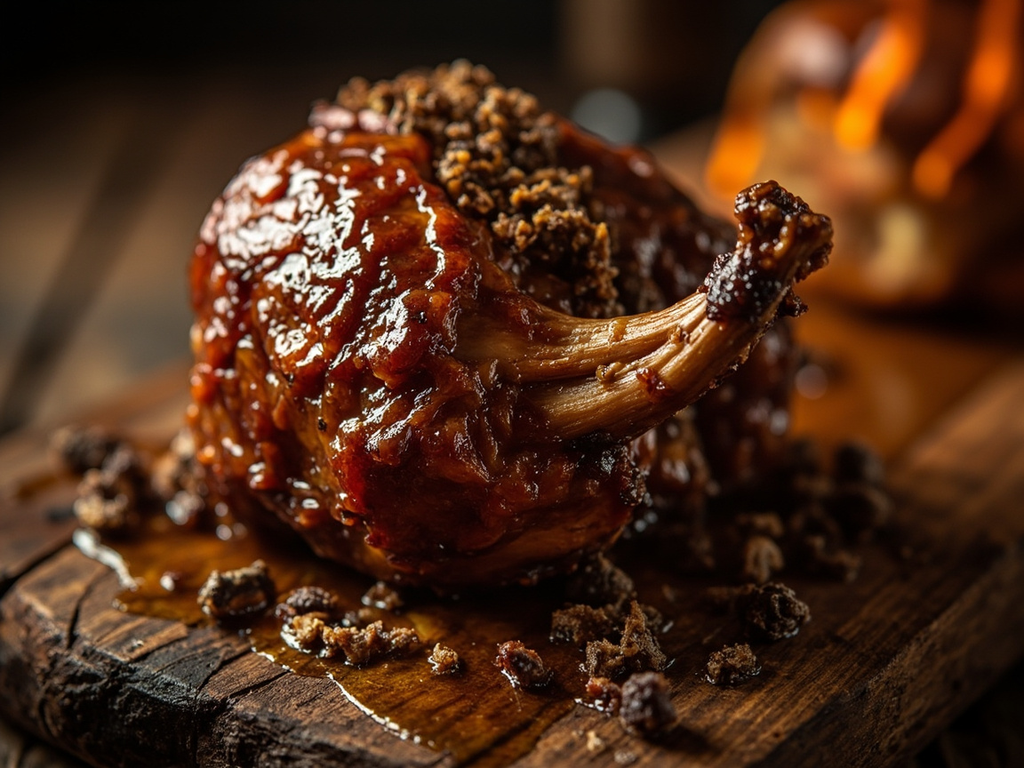
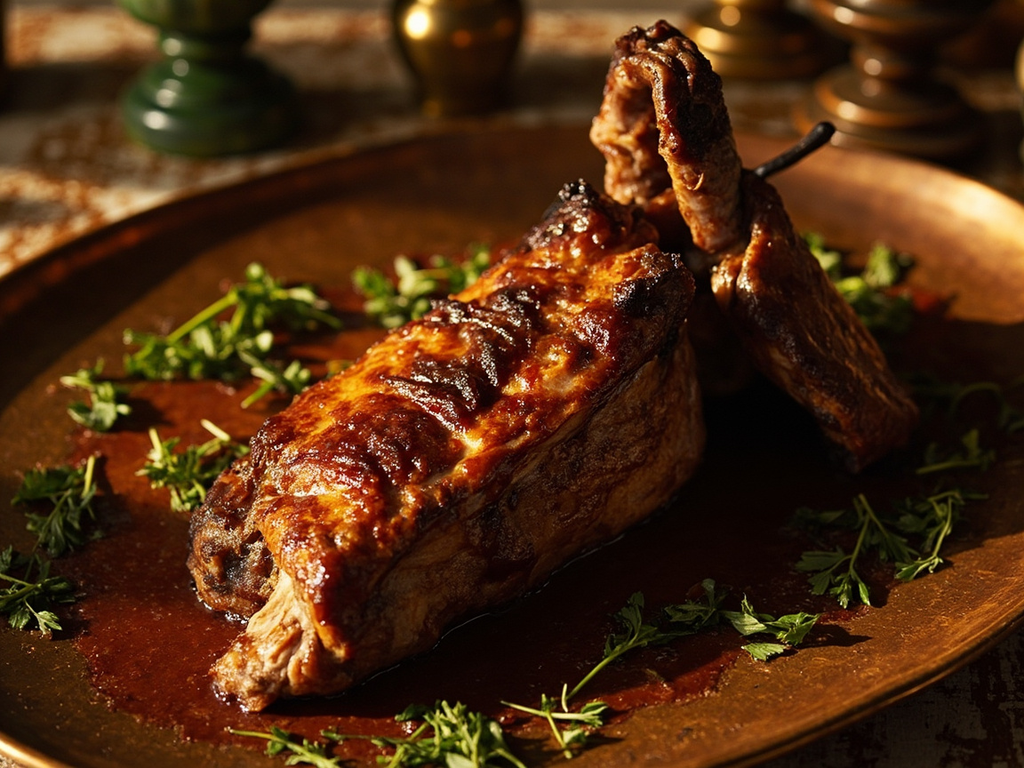
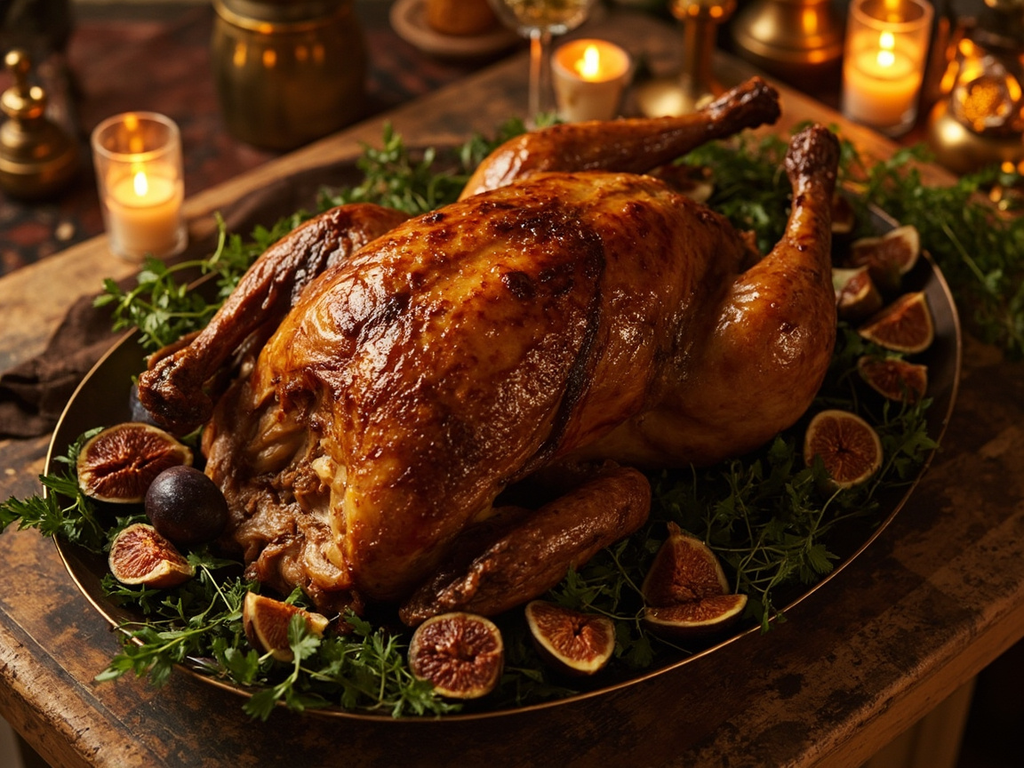
A golden goose, lacquered with honey and stuffed with figs, perfumed with coriander and cumin—the festive dish par excellence, the one for banquets honoring gods and ancestors.
For the days of great festival, when my name resounds from temple to river, they bring me the fat goose from the marshes of the Delta. They coat it with honey and slip ripe figs and coriander into its belly, then turn it over the embers until its skin shines like the gold of my throne. Beware of burning it, mortal: it requires the patience of a watchman. When the sweet juice flows onto the platter, know that you are eating what kings themselves offered to my glory.
- •Fat Delta goose, plucked and gutted — one whole bird (centerpiece)
- •Honey — generously (lacquer)
- •Fresh or dried figs — a handful (sweet garnish)
- •Coriander seeds and cumin — ground in a mortar (spices)
- •Salt — by hand (seasoning)
Honey-Roasted Goose with Figs and Coriander
A golden goose, lacquered with honey and stuffed with figs, perfumed with coriander and cumin—the festive dish par excellence, the one for banquets honoring gods and ancestors.
Why this dish? The fat goose is one of the most prized poultry for festival offerings and funerary banquets; it is seen force-fed, plucked, and roasted on frescoes. During the great processions of Isis, roasted geese crowned the table set before the mother goddess, protector of the living and the dead.
For the days of great festival, when my name resounds from temple to river, they bring me the fat goose from the marshes of the Delta. They coat it with honey and slip ripe figs and coriander into its belly, then turn it over the embers until its skin shines like the gold of my throne. Beware of burning it, mortal: it requires the patience of a watchman. When the sweet juice flows onto the platter, know that you are eating what kings themselves offered to my glory.
Ingredients (period version)
- Fat Delta goose, plucked and gutted — one whole bird (centerpiece)
- Honey — generously (lacquer)
- Fresh or dried figs — a handful (sweet garnish)
- Coriander seeds and cumin — ground in a mortar (spices)
- Salt — by hand (seasoning)
Ingredients
- Goose (or large duck if unavailable) — 1 (about 4 kg) (centerpiece)
- Honey — 4 tbsp (lacquer)
- Dried figs — 10 (stuffing)
- Coriander seeds — 1 tbsp (spice)
- Ground cumin — 1 tsp (spice)
- Salt and a drizzle of olive oil — to taste (seasoning)
Method
- Crush coriander and cumin in a mortar, mix with salt and a little oil.
- Rub the goose inside and out with this mixture, stuff the cavity with figs.
- Roast at 180 °C, basting regularly with pan juices, about 30 minutes per kilo.
- Halfway through, brush with honey and continue to lacquer the skin.
- Let rest 15 minutes before carving, serve with the softened figs.
How it was made : Egyptians raised and force-fed geese and ducks; poultry was roasted on spits over embers or cooked in earthen ovens. Honey and fruit served both as preservatives and marks of luxury. Pepper was not yet present in everyday cuisine; dishes were spiced with cumin, coriander, and dill.
The contemporary twist : Present the goose on a bed of roasted figs and fresh coriander leaves, a "temple banquet" revisited.
Sources : Joyce Tyldesley, "The Penguin Book of Myths and Legends of Ancient Egypt" · Pierre Tallet, "Histoire de la cuisine et de la gastronomie égyptiennes" (revue Égypte, Afrique & Orient)
Isis · Charactorium