 flip
flipSamaki wa kupaka — grilled fish in coconut milk
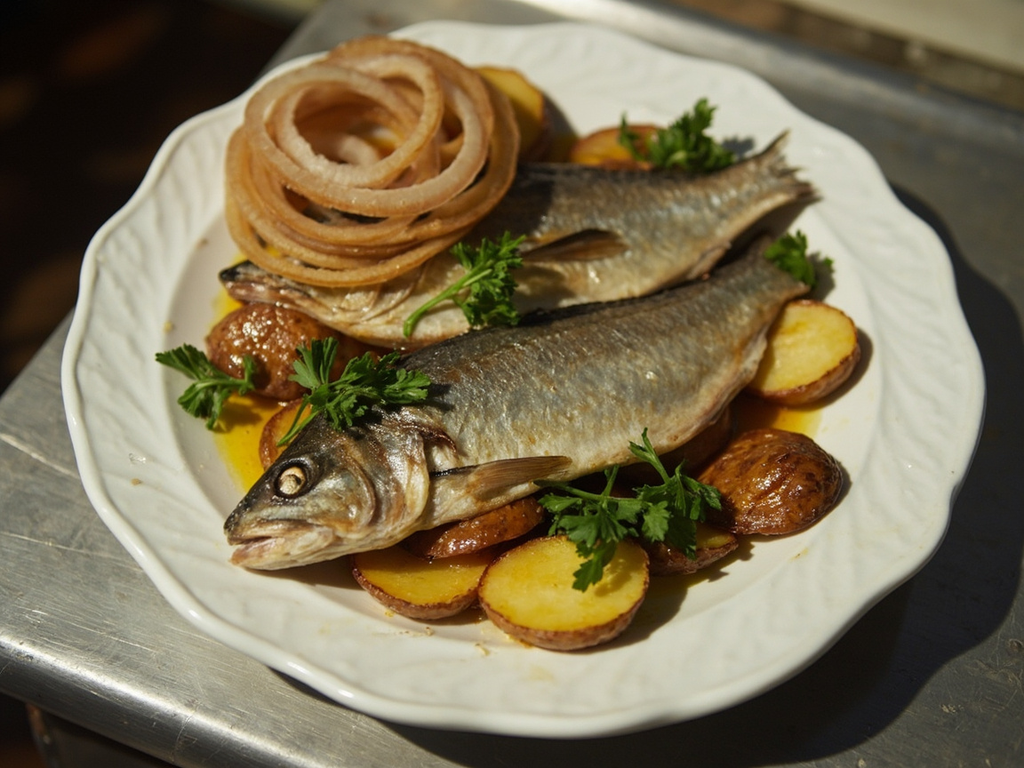
Samaki wa kupaka — grilled fish in coconut milk
Why this dish? Allen lived close to the sea, among dhows and ports of Lamu, Mombasa, and Zanzibar; the day's grilled fish, basted with coconut milk, was the savory daily fare of coastal families whose language and songs he studied.
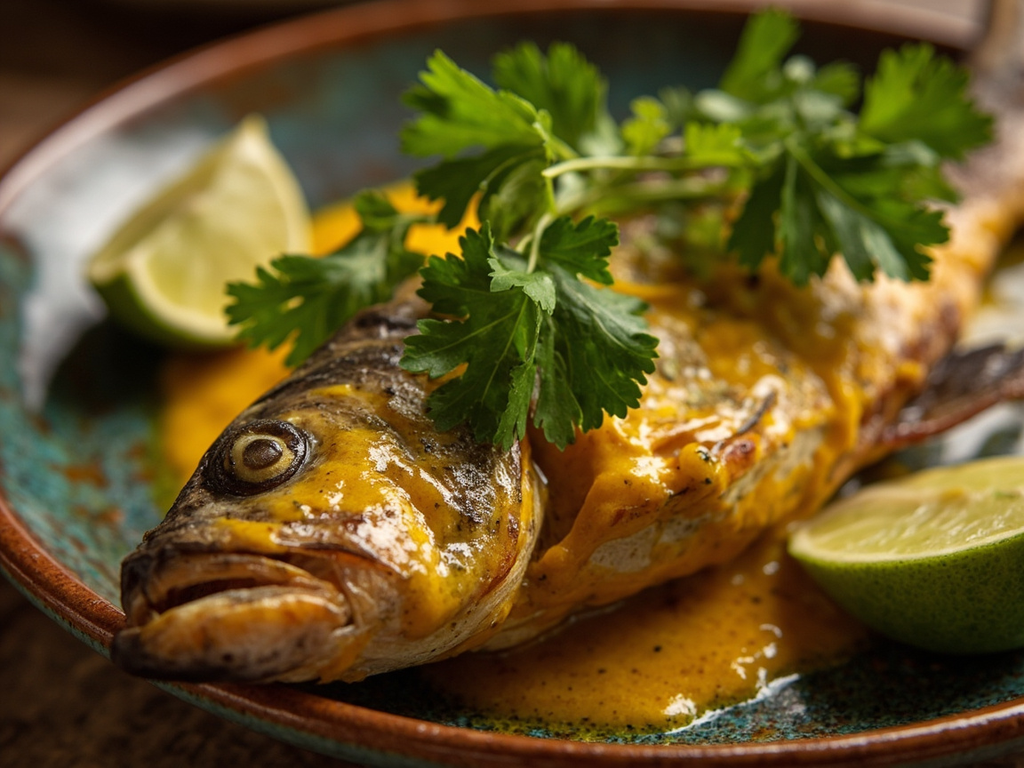
A whole fish grilled then coated with a creamy coconut milk sauce spiked with tamarind, garlic, ginger, and spices. 'Kupaka' means 'to baste': the fish is basted with the sauce as it finishes cooking over the embers.
On this coast, fish is eaten the very day the dhow returns, and no other way — a man of Lamu will tell you plainly. First you grill it over the embers, then you baste it, again and again, with fresh coconut milk beaten with tamarind and a little chili. Mark me: the secret lies in the patience of the brush, for each layer caramelizes and gives that velvetiness no butter of England can match. I confess I long preferred this dish to all the imported preserves from the Metropole.
- •Whole reef fish (red mullet, snapper) — a fine specimen (centerpiece)
- •Freshly pressed coconut milk — a bowl (creamy sauce)
- •Tamarind pulp — a little (acidity)
- •Pounded garlic and ginger — a knob (aromatics)
- •Turmeric and chili — to taste (color and heat)
- •Lime (ndimu) — a few (marinade)
Samaki wa kupaka — grilled fish in coconut milk
A whole fish grilled then coated with a creamy coconut milk sauce spiked with tamarind, garlic, ginger, and spices. 'Kupaka' means 'to baste': the fish is basted with the sauce as it finishes cooking over the embers.
Why this dish? Allen lived close to the sea, among dhows and ports of Lamu, Mombasa, and Zanzibar; the day's grilled fish, basted with coconut milk, was the savory daily fare of coastal families whose language and songs he studied.
On this coast, fish is eaten the very day the dhow returns, and no other way — a man of Lamu will tell you plainly. First you grill it over the embers, then you baste it, again and again, with fresh coconut milk beaten with tamarind and a little chili. Mark me: the secret lies in the patience of the brush, for each layer caramelizes and gives that velvetiness no butter of England can match. I confess I long preferred this dish to all the imported preserves from the Metropole.
Ingredients (period version)
- Whole reef fish (red mullet, snapper) — a fine specimen (centerpiece)
- Freshly pressed coconut milk — a bowl (creamy sauce)
- Tamarind pulp — a little (acidity)
- Pounded garlic and ginger — a knob (aromatics)
- Turmeric and chili — to taste (color and heat)
- Lime (ndimu) — a few (marinade)
Ingredients
- Whole fish (sea bream, sea bass) or thick fillets — 800 g (centerpiece)
- Coconut milk — 400 ml (sauce)
- Tamarind paste — 1 tbsp (acidity)
- Garlic + ginger — 3 cloves + 1 piece, made into paste (aromatics)
- Turmeric — 1 tsp (color)
- Fresh chili — 1/2 to 1, to taste (heat)
- Lime — 2 (marinade)
- Salt — to taste (seasoning)
- Fresh coriander — a few sprigs (garnish)
Method
- Score the fish, rub with salt, turmeric, lime juice, and a little garlic; marinate 20 min.
- Grill the fish in the oven (250 °C) or over embers until half-cooked.
- Prepare the sauce: reduce coconut milk with garlic, ginger, tamarind, chili, and salt until thickened.
- Generously baste the fish with sauce, return to cook a few minutes, repeat 2-3 times (kupaka technique).
- Pour remaining sauce over, sprinkle with coriander, and serve with white rice and a lime wedge.
How it was made : Coconut milk was extracted by hand: the flesh was grated on a stool-grater (mbuzi) then pressed with a little water. Cooking was over a wood fire, the fish placed on a grill above embers of coconut husks.
The contemporary twist : Served as individual fillet on a streak of coconut sauce, micro-coriander and grated lime zest — 'Indian Ocean bistro' style.
Sources : Documented Swahili coastal cuisine (Zanzibar, Mombasa, Lamu)
J.W.T. Allen · Charactorium