 flip
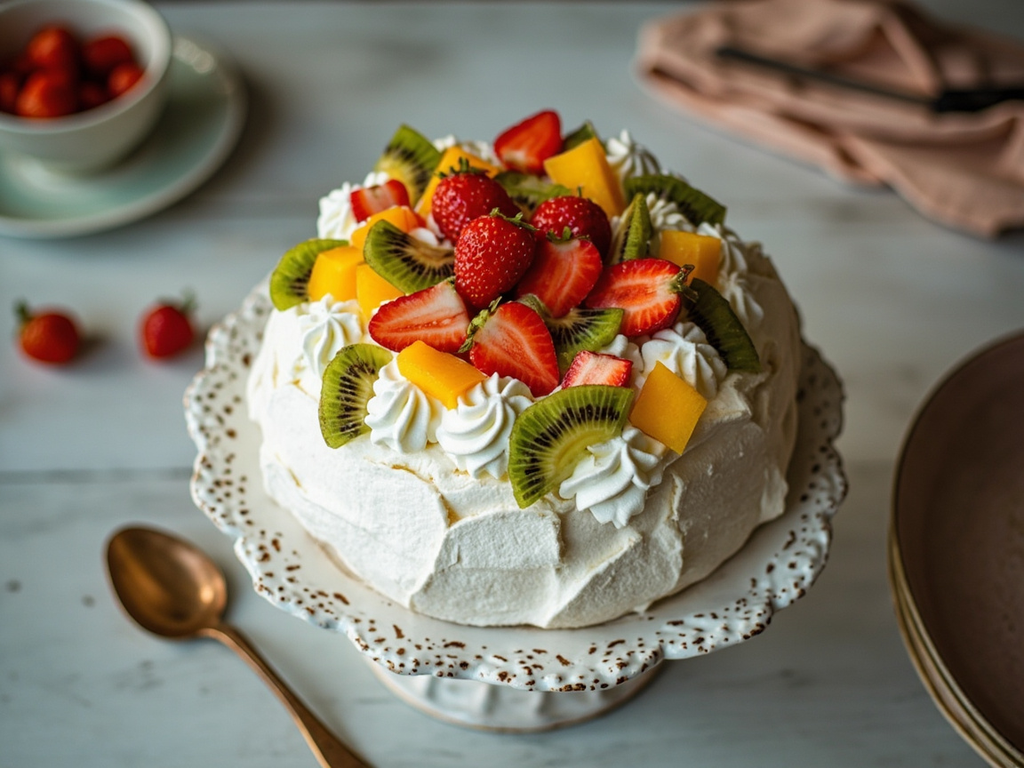
flipSummer pavlova with kiwifruit and passionfruit
Summer pavlova with kiwifruit and passionfruit
Why this dish? Pavlova is THE New Zealand national dessert, served for Christmas in December — so in full summer in the southern hemisphere. For a Prime Minister known for her down-to-earth image and family meals, this is the gathering cake par excellence, and it's naturally vegetarian.
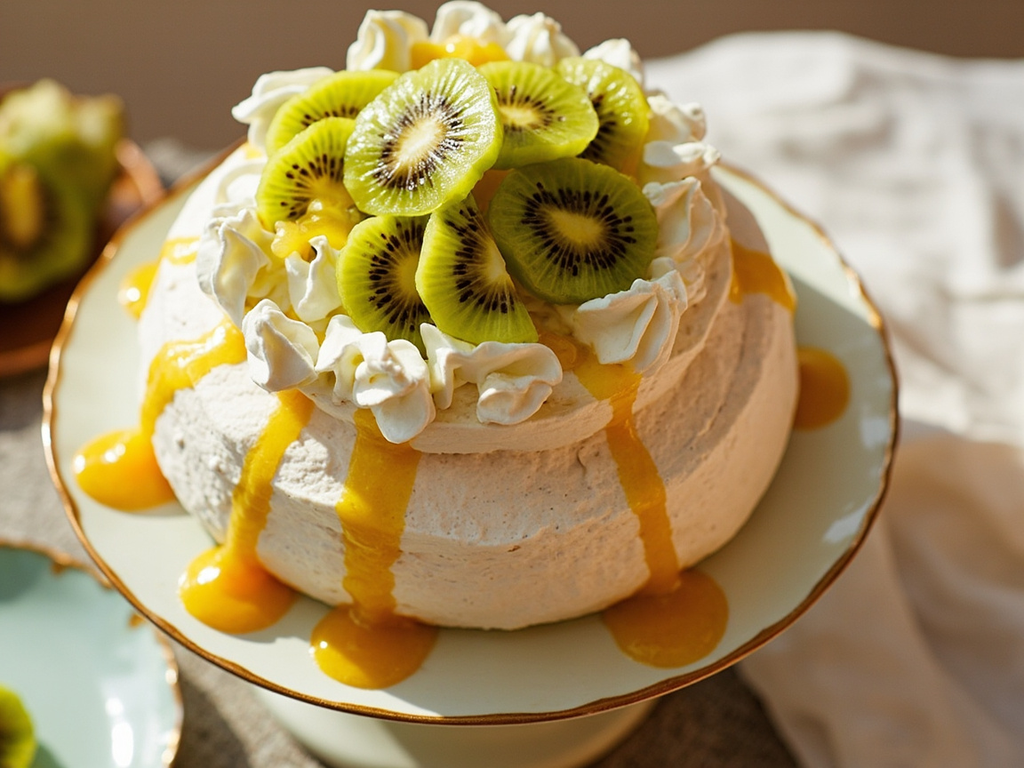
A large meringue, crisp on the outside, soft and marshmallowy inside, crowned with whipped cream, slices of green kiwifruit and tangy passionfruit pulp. The contrast of sweet softness and tropical acidity is irresistible.
Now, careful, this is a sensitive topic between us and the Australians — each swears the pavlova was born in their country! I'll tell you straight: it's New Zealand. At Christmas, under the December sun, we bring it outside, dress it with bright green kiwis and passionfruit, and everyone helps themselves. The secret is not to be afraid: meringue white as snow, heart still tender like marshmallow. It's imperfect, it cracks, it spills a little — and that's exactly why we love it.
- •Egg whites — several (meringue structure)
- •Sugar — abundant (sweetness and stability)
- •Vinegar — a dash (marshmallow heart)
- •Whipping cream — generous (topping)
- •Kiwifruit — several (tangy freshness)
- •Passionfruit — a few (fragrant acidity)
Summer pavlova with kiwifruit and passionfruit
A large meringue, crisp on the outside, soft and marshmallowy inside, crowned with whipped cream, slices of green kiwifruit and tangy passionfruit pulp. The contrast of sweet softness and tropical acidity is irresistible.
Why this dish? Pavlova is THE New Zealand national dessert, served for Christmas in December — so in full summer in the southern hemisphere. For a Prime Minister known for her down-to-earth image and family meals, this is the gathering cake par excellence, and it's naturally vegetarian.
Now, careful, this is a sensitive topic between us and the Australians — each swears the pavlova was born in their country! I'll tell you straight: it's New Zealand. At Christmas, under the December sun, we bring it outside, dress it with bright green kiwis and passionfruit, and everyone helps themselves. The secret is not to be afraid: meringue white as snow, heart still tender like marshmallow. It's imperfect, it cracks, it spills a little — and that's exactly why we love it.
Ingredients (period version)
- Egg whites — several (meringue structure)
- Sugar — abundant (sweetness and stability)
- Vinegar — a dash (marshmallow heart)
- Whipping cream — generous (topping)
- Kiwifruit — several (tangy freshness)
- Passionfruit — a few (fragrant acidity)
Ingredients
- Egg whites (at room temperature) — 4 (meringue structure)
- Caster sugar — 250 g (sweetness and stability)
- White vinegar — 1 tsp (marshmallow heart)
- Cornflour — 1 tsp (soft heart)
- Double cream — 300 ml (whipped topping)
- Kiwifruit — 3 (tangy freshness)
- Passionfruit — 3 (fragrant acidity)
Method
- Preheat the oven to 150°C. Draw a 20 cm circle on baking paper on a tray.
- Whisk the egg whites to stiff peaks, then add the sugar spoon by spoon, whisking until the meringue is glossy and forms stiff peaks.
- Gently fold in the vinegar and cornflour with a spatula.
- Spread the meringue into a disc on the circle, slightly hollowing the centre. Bake, immediately reduce to 120°C and cook for 1 hour 15. Turn off the oven and leave to cool with the door ajar.
- Just before serving, whip the cream, spread over the meringue, top with kiwifruit slices and drizzle with passionfruit pulp.
How it was made : The pavlova is named after the Russian ballerina Anna Pavlova, who toured Australasia in the 1920s. The first named recipe appears in New Zealand in the late 1920s, sparking a lasting culinary rivalry with Australia. It is traditionally made for summer celebrations and Christmas.
The contemporary twist : Individual mini pavlovas for a buffet: everyone chooses their own fruit, in a convivial and fuss-free spirit.
Jacinda Ardern · Charactorium