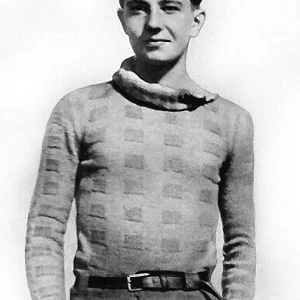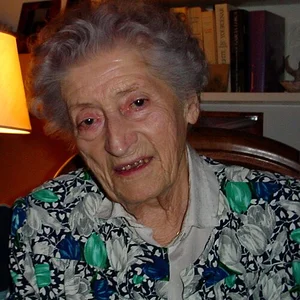

A French civil engineer, Jacques Bonsergent was the first Parisian civilian executed by the Germans during the Occupation, on December 23, 1940. His execution, following a scuffle with German soldiers, made him a symbol of passive resistance and martyrdom.
Jacques Bonsergent(1912 — 1940)
Jacques Bonsergent
France
8 min read
Frequently asked questions
Key Facts
- Born on May 28, 1907, in Paris
- Trained as an engineer at the Arts et Métiers school
- Arrested on November 11, 1940, during a scuffle with German soldiers near the Gare Saint-Lazare
- Shot at Mont-Valérien on December 23, 1940, the first Parisian civilian executed by the Germans
- A station on Paris Métro line 5 has borne his name since 1971
Works & Achievements
An engineering qualification Bonsergent had completed before the Occupation. His engineer's title represented the social ascent of a young Frenchman from modest origins who had joined the ranks of the Republic's skilled technicians.
A major historical document written on the night before his execution, bearing witness to his serenity and his pride in having protected his friends. Preserved in the national archives, this letter is regularly cited as a symbol of moral resistance under the Occupation.
By stubbornly refusing to give up the names of his companions during his arrest and trial, Bonsergent carried out a deliberate act of civil resistance. This act constitutes his essential historical legacy and places him among the first martyrs of occupied France.
Through his execution and the wave of solidarity it stirred among Parisians — who laid flowers beneath the posted notices — Bonsergent became, despite himself, the catalyst for a collective awakening. His case was raised by the clandestine press and Allied radio stations as proof of the occupier's brutality.
Anecdotes
On the evening of November 11, 1940, Jacques Bonsergent was returning with friends from a wedding celebration held at a restaurant near the Gare Saint-Lazare. A scuffle broke out with a group of German soldiers. One of his friends struck a non-commissioned officer. Wanting to protect his companions, Bonsergent refused to identify them and took sole responsibility for the incident before the occupation authorities.
At his trial before the German military tribunal, Bonsergent stubbornly refused to give up the names of his friends who had been present that evening, despite repeated pressure from his interrogators. This courageous silence, which cost him his life, made him a symbol of solidarity and dignity in the face of the occupier.
After his death sentence on December 5, 1940, many individuals and organizations interceded on his behalf, including the Red Cross and even some German officers. Field Marshal von Brauchitsch nonetheless refused any clemency. The execution, set for December 23, 1940, was deliberately scheduled two days before Christmas, deepening the grief felt by Parisians.
Following the execution, the Germans plastered red posters across Paris announcing Bonsergent's death for “having committed acts of violence against members of the Wehrmacht.” Parisians responded by quietly laying flowers at the foot of the posters — a gesture of silent resistance that the occupation authorities tried in vain to suppress.
During his final night, Bonsergent wrote his family a farewell letter of remarkable serenity, stating that he was dying at peace with himself for not having betrayed his friends. This letter, preserved in the archives, has become one of the most moving testimonies of the French civilian Resistance under the Occupation.
Primary Sources
Jacques Bonsergent, civil engineer, born on October 15, 1912, in Paris, is sentenced to death for acts of violence against members of the German Wehrmacht. The sentence will be carried out by firing squad.
The individual named Bonsergent Jacques, of Paris, has been sentenced to death by the German military tribunal for committing an act of violence against members of the Wehrmacht. He was shot this morning.
I die with a clear conscience, knowing that I did not falter. Do not grieve too much — my death may perhaps hold meaning for our country.
The execution of Bonsergent took place in accordance with the tribunal's sentence. The condemned refused until the end to name his accomplices. The measure is intended to demonstrate that any hostile act against the occupying forces will be met with strict punishment.
Key Places
It was in the streets near the Gare Saint-Lazare that the scuffle between Bonsergent's group and German soldiers took place on 11 November 1940 — the incident that triggered his arrest.
The prison where Bonsergent was held after his arrest, awaiting trial. An emblematic site of the Occupation, it confined many resistance members and civilians arrested by the Germans.
The execution site where Jacques Bonsergent was shot at dawn on 23 December 1940. This military fortress on the eastern edge of Paris served as a place of execution for several condemned men during the Occupation.
The métro station on the Boulevard Magenta was renamed "Jacques Bonsergent" at the Liberation in tribute to the first Parisian civilian executed by the Germans. Today it keeps his memory alive for the millions of passengers who pass through it each year.
Bonsergent was born and raised in the working-class Paris of the 10th arrondissement — the neighbourhood of the République and the Canal Saint-Martin, deeply rooted in the world of labour and craftsmanship.
Typical Objects

A mandatory document for every French citizen under the Occupation, required at every German checkpoint. Bonsergent was carrying one when he was arrested on November 11, 1940.

A form in German and French authorizing movement in the occupied zone. Essential for traveling through Paris after curfew or crossing certain military perimeters.

A booklet of tickets introduced as early as 1940 for food, textiles, and coal. The daily life of all Parisians — engineers and workers alike — was governed by this system of deprivation imposed by the occupier.

An indispensable analog calculating instrument for civil engineers of the 1940s, used to quickly perform multiplications and divisions. A symbol of the engineering profession that Bonsergent had chosen.

A notice printed in red, posted in the streets of Paris to announce executions. The poster published after Bonsergent's death became a symbol of terror and, paradoxically, of resistance when Parisians covered it with flowers.

The paper on which Bonsergent wrote letters to his family from his cell between November and December 1940. These writings are today precious archival documents on the state of mind of civilian prisoners under the Occupation.
School Curriculum
Vocabulary & Tags
Key Vocabulary
Daily Life
Morning
Like most Parisian civil engineers in 1940, Bonsergent began his day early, conforming to the restrictions of the Occupation: secretly listening to the news on the radio (BBC London), commuting on foot or by metro due to the fuel shortage, and presenting his pass at German checkpoints.
Afternoon
His professional work as an engineer took place on construction sites and in design offices, amid shortages of materials and German requisitions. French companies often had to adapt their projects to the demands and priorities imposed by the occupying authority.
Evening
Evenings were constrained by the curfew (11 p.m. in 1940, reduced to 9 p.m. then 10 p.m. depending on the period) and the ever-present fear of identity checks. On November 11, Bonsergent and his friends were enjoying a rare festive evening — a wedding — before tragically crossing paths with a German patrol on their way home.
Food
Parisians lived under strict rationing: limited bread (300 g/day in 1940), scarce meat, and rationed sugar and fats. Food tickets governed every purchase; engineers, classified in an intermediate professional category, received slightly higher rations than ordinary civilians.
Clothing
As an engineer, Bonsergent wore a dark suit, tie, and felt hat — the standard middle-class attire of executives and technicians of the era. The textile shortage forced people to repair and recycle; textile ration tickets introduced in autumn 1940 limited new purchases.
Housing
Bonsergent lived in Paris in a typical apartment in one of the city's working-class districts — a Haussmann-era or early 20th-century rental building, heated by rationed coal, with running water but modest amenities. The forced cohabitation with the Occupation was visible throughout the streets: German flags, bilingual signs, and soldiers at every turn.
Historical Timeline
Period Vocabulary
Liens externes & ressources
Références
Œuvres
Diplôme d'ingénieur civil des Arts et Métiers
années 1930
Lettre d'adieu à sa famille
22-23 décembre 1940
Acte de résistance passive — refus de dénonciation
novembre-décembre 1940
Héritage mémoriel : premier symbole de la résistance civile parisienne
décembre 1940