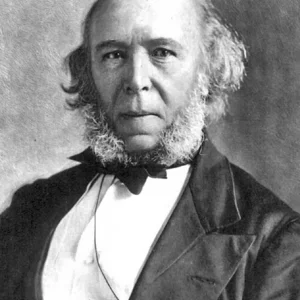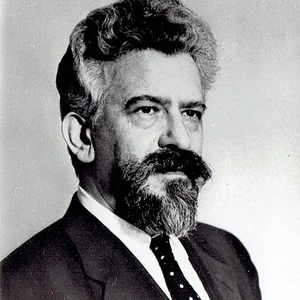

French psychiatrist and psychoanalyst, a major figure of 20th-century psychoanalysis. He calls for a “return to Freud” and rereads psychoanalysis through the lens of structuralism and linguistics, asserting that “the unconscious is structured like a language.”
Jacques Lacan(1901 — 1981)
Jacques Lacan
France
6 min read
Frequently asked questions
Famous Quotes
« The unconscious is structured like a language.»
« Man's desire is the desire of the Other.»
Key Facts
- Born in Paris in 1901, died in 1981.
- Defended his psychiatry thesis on paranoid psychosis in 1932.
- Presented the concept of the “mirror stage” at the Marienbad congress in 1936.
- Led an influential seminar from 1953 onward and championed the “return to Freud.”
- Founded the Freudian School of Paris in 1964, which he dissolved in 1980.
Works & Achievements
His medical thesis, a study of the “Aimée case,” which brought him to notice in psychiatric and Surrealist circles.
A foundational text in which he explains how the child builds the image of its self by recognizing itself in a mirror.
The manifesto of his “return to Freud,” which places speech and language at the heart of psychoanalysis.
Oral teaching given over nearly thirty years, later transcribed into numerous volumes; the core of his transmission.
The major collection of his texts, a bookshop success that spread his thought far beyond psychoanalysis.
The creation of his own institution to train analysts after his break with the international association.
The central conceptual framework of his thought, which he would eventually illustrate with the Borromean knot.
Anecdotes
In the 1950s, Lacan held a weekly “seminar” that became a genuine intellectual event in Paris. Philosophers, writers, and students flocked to hear him speak for hours, often in a deliberately bewildering manner. This seminar would run for nearly thirty years and turned him into a star of ideas.
Lacan was famous for his psychoanalysis sessions of variable length: instead of the usual 45 or 50 minutes, he might cut a patient off after just a few minutes. This practice of “short sessions” sparked fierce criticism and was one of the reasons for his expulsion from the International Psychoanalytical Association in 1963.
A passionate art lover, Lacan secretly bought Gustave Courbet's last scandalous painting, *The Origin of the World*. To keep it hidden from view, he commissioned his brother-in-law, the painter André Masson, to make a painted sliding panel that concealed the work in his country house.
As a young man, Lacan moved in Surrealist circles and conversed with artists such as Salvador Dalí and the writer André Breton. His 1932 medical thesis, devoted to a paranoid patient, was admired by the Surrealists, who saw in it an echo of their own explorations of the unconscious and dreams.
Lacan loved to play with words and was forever inventing new terms and language games. He coined, for instance, the word *lalangue* and spoke of *mathèmes*, little formulas borrowed from mathematics in an attempt to write psychoanalysis as a science.
Primary Sources
We need only understand the mirror stage as an identification, in the full sense that analysis gives to the term: namely, the transformation that takes place in the subject when he assumes an image.
The unconscious is structured like a language.
That psychoanalysis has but one medium: the patient's speech. The obviousness of this fact is no excuse for neglecting it.
The unconscious is that which closes up again as soon as it has opened, in accordance with a temporal pulsation.
Key Places
Lacan's birthplace, where he practiced as a psychiatrist and psychoanalyst and held his seminars. The center of 20th-century French intellectual life.
A major Parisian psychiatric hospital where Lacan trained in psychiatry and held his seminar during the 1950s.
A prestigious school where Lacan moved his seminar starting in 1964, drawing an audience of students and intellectuals.
A village in the Yvelines where Lacan owned his country house, “La Prévôté,” in which he hid Courbet's painting “The Origin of the World.”
The city where, in 1953, Lacan delivered his famous “Rome Report” on the function of speech and language in psychoanalysis.
Typical Objects

Iconic piece of furniture in psychoanalytic treatment, on which the patient lies down to speak freely, with the analyst seated out of their line of sight. Lacan received his patients on it throughout his career.

An everyday object that became a central concept: for Lacan, the child who recognizes themselves in a mirror builds the unified image of their self. The “mirror stage” is one of his most famous ideas.

During his seminars, Lacan drew diagrams, graphs and his famous “mathemes” on the board, little formulas meant to convey psychoanalysis.

A figure of three interlaced rings that Lacan used in his final years to represent the three registers: the Real, the Symbolic and the Imaginary. If one ring is cut, all three come apart.

A thick collection of texts published in 1966, reputedly difficult but now a classic of the humanities. Its publication made Lacan a major intellectual figure.

A device used to record Lacan's seminars, whose delivery was often improvised. These recordings made it possible to transcribe and publish the “Seminar” after his death.
School Curriculum
Vocabulary & Tags
Key Vocabulary
Daily Life
Morning
Lacan gets up and devotes a large part of his day to seeing patients in analysis at his Paris practice. The sessions follow one another at a brisk pace, sometimes very short, separated by only a few minutes.
Afternoon
The afternoon is split between consultations, reading, and preparing his seminar. Lacan reads enormously: philosophy, linguistics, mathematics, and he endlessly rereads the texts of **Freud**.
Evening
In the evening, Lacan frequents the intellectual and artistic circles of Paris, dines with writers, philosophers, or artists, and carries on his discussions late into the night. On the day of his seminar, he speaks for hours before a packed room.
Food
A gourmet and lover of fine food, Lacan enjoyed the refined restaurants of Paris and good wines. His success afforded him a comfortable lifestyle and carefully prepared meals.
Clothing
Lacan took care of his appearance and cultivated an original look: elegant, sometimes eccentric suits, twisted collars, and jackets and coats that drew attention. His style was part of his public persona.
Housing
He lived in a plush Paris apartment that also housed his practice, and owned a country house, “La Prévôté,” in Guitrancourt in the Yvelines, where he would retreat and keep his works of art.
Historical Timeline
Period Vocabulary
Liens externes & ressources
Références
Œuvres
De la psychose paranoïaque dans ses rapports avec la personnalité (thèse de doctorat)
1932
Le stade du miroir comme formateur de la fonction du Je
1949
Fonction et champ de la parole et du langage en psychanalyse (rapport de Rome)
1953
Le Séminaire (séminaire public hebdomadaire)
1953-1980
Fondation de l'École freudienne de Paris
1964
La théorie des trois registres : Réel, Symbolique, Imaginaire
années 1950-1970