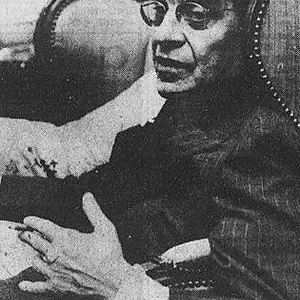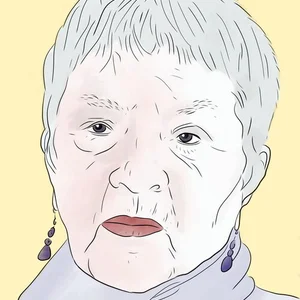

Sandra Harding is an American philosopher born in 1935, a leading figure in feminist epistemology and the philosophy of science. She theorized the notion of the “situated standpoint” (standpoint theory) and criticized the claim to neutral objectivity in scientific knowledge.
Sandra Harding(1935 — 2025)
Sandra G. Harding
États-Unis
5 min read
Frequently asked questions
Key Facts
- Born in 1935 in San Francisco (United States)
- Published “The Science Question in Feminism” in 1986, a founding work of feminist epistemology
- Developed the concept of “strong objectivity” from standpoint theory
- Taught at the University of Delaware and then at UCLA
- Edited “The Feminist Standpoint Theory Reader” (2004), a synthesis of the movement
Works & Achievements
The book that made her famous: it raises the question of whether science as it exists is neutral or shaped by gender bias.
A major development of standpoint theory, according to which knowledge depends on the social position of the person who produces it.
A collection she edited, showing how the history of science has been bound up with racism and colonialism.
An essay that gives value to scientific knowledge born outside the West and criticizes the idea of a purely European science.
A reflection on the relationships between science, feminism, and the legacy of colonization in the contemporary world.
A synthesis of her notion of “strong objectivity”: taking the diversity of viewpoints into account makes science more rigorous.
Anecdotes
When Sandra Harding published *The Science Question in Feminism* in 1986, she dared to make a claim that would cause an uproar: in her view, the language used by certain scholars to describe nature reveals hidden masculine biases. This idea sparked heated debates in American universities for years.
Harding liked to recount that her thinking had grown out of a very simple question: why, throughout history, had so many great scholars been wealthy Western men? Rather than seeing this as a coincidence, she spent her life showing that a researcher's social position influences what they observe and the questions they ask.
She coined the phrase “strong objectivity,” a striking formula: in her view, science becomes MORE objective, not less, when it takes into account the perspectives of people who are usually ignored, such as women or colonized peoples.
Between 2000 and 2005, Harding co-edited *Signs*, one of the leading academic journals on feminist studies. To run such a journal is to decide which articles will be read by thousands of researchers around the world.
Much in demand abroad, Harding advised organizations such as UNESCO and the UN on the links between science, gender, and development, proving that her philosophical ideas had very concrete consequences for the countries of the Global South.
Primary Sources
Social life has a gendered structure, and that structure runs so deep that it shapes even the ways we come to know the world.
Starting from women's lives makes it possible to ask questions about nature and society that could not be framed from within the dominant scientific institutions.
No culture, including modern Western scientific culture, holds a monopoly on producing valid knowledge about nature.
A stronger objectivity requires critically examining not only the objects under study, but also the researcher and his or her position within society.
Key Places
City in California associated with her early years in the western United States, the region where she would spend most of her career.
University where Harding taught philosophy for many years and wrote her most influential works of the 1980s and 1990s.
Major university where she continued her career, teaching education and gender studies in the 2000s.
Hub of American academic publishing and of the major feminist debates in which Harding took part throughout her life.
Typical Objects

Her works, such as *The Science Question in Feminism*, are the main tool through which Harding spread her ideas. Several have become classics taught at university.

Like all intellectuals of her generation, Harding first wrote on a typewriter before switching to a computer. It is the everyday instrument of philosophical work.

The journal *Signs*, which she co-edited, selects and publishes research in gender studies. It is a central object of scientific life: it is where research is made known and discussed.

A professor for decades, Harding passed on her thinking to students with chalk in hand. The lecture hall is the place where her ideas met new generations.

To critique the history of science, Harding read and annotated countless works of physics, biology and sociology. Her cards were the raw material of her analyses.
School Curriculum
Vocabulary & Tags
Key Vocabulary
Tags
Daily Life
Morning
The morning of a university philosopher often begins with reading and writing, in the quiet of an office. There Harding wrote her books and prepared her lectures, surrounded by stacks of annotated works.
Afternoon
The afternoon is devoted to teaching: lectures, discussion seminars with students, and department meetings. It is also the time for exchanges with other researchers.
Evening
In the evening, intellectual work often continues: reviewing articles submitted to the journal “Signs,” correspondence with colleagues from around the world, or preparing for conferences abroad.
Food
Her daily life resembles that of middle-class American academics of the 20th century: simple meals, coffees grabbed between classes, and working lunches on campus.
Clothing
She wore the understated, professional attire of a late-20th-century university professor, suited to classrooms and academic conferences.
Housing
She lived in the university towns where she taught, such as Newark (Delaware) and later Los Angeles, close to libraries and campuses.
Historical Timeline
Period Vocabulary
Liens externes & ressources
Références
Œuvres
The Science Question in Feminism
1986
Whose Science? Whose Knowledge? Thinking from Women's Lives
1991
The Racial Economy of Science (direction de l'ouvrage)
1993
Is Science Multicultural?
1998
Sciences from Below
2008
Objectivity and Diversity
2015