 flip
flipPolo-ye meyve-o za'feran (Festive Rice with Dried Fruit and Saffron)
Polo-ye meyve-o za'feran (Festive Rice with Dried Fruit and Saffron)
Why this dish? Jami, though a Sufi and frugal in daily life, was received at the court of Sultan Husayn Bayqara, great patron of Herat. Timurid banquets were famous for their sumptuous polos, studded with dried fruits and gilded with Khorasan saffron. Jami evokes these feasts in several passages of his Baharestan, where the royal table becomes a metaphor for divine abundance.
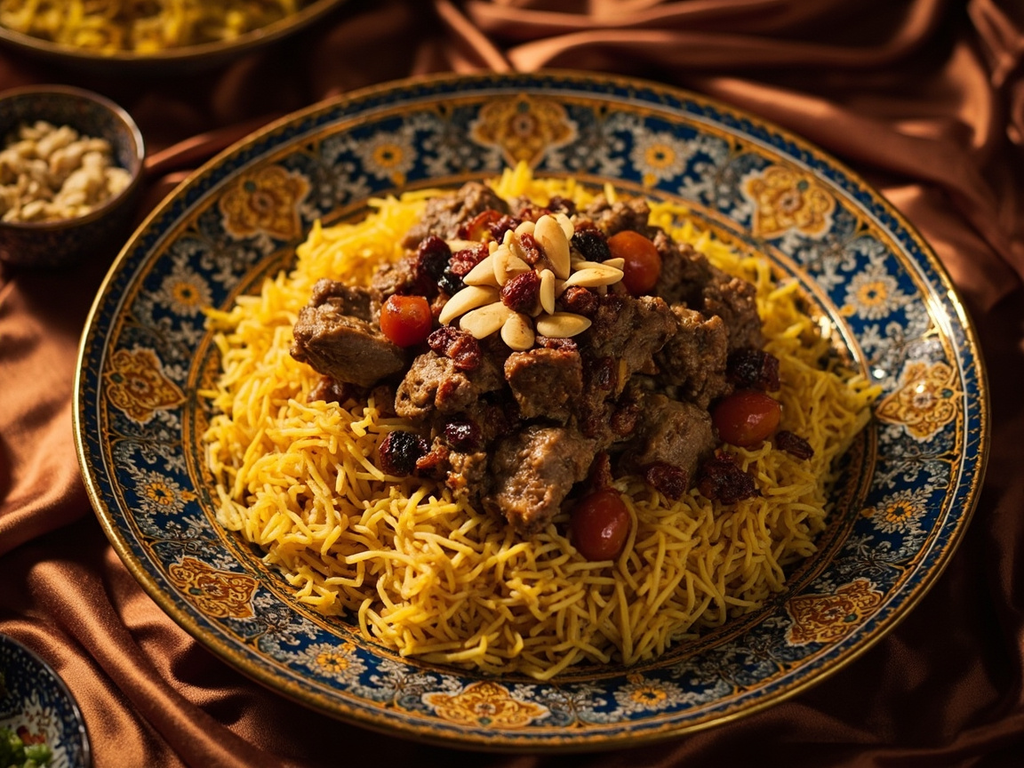
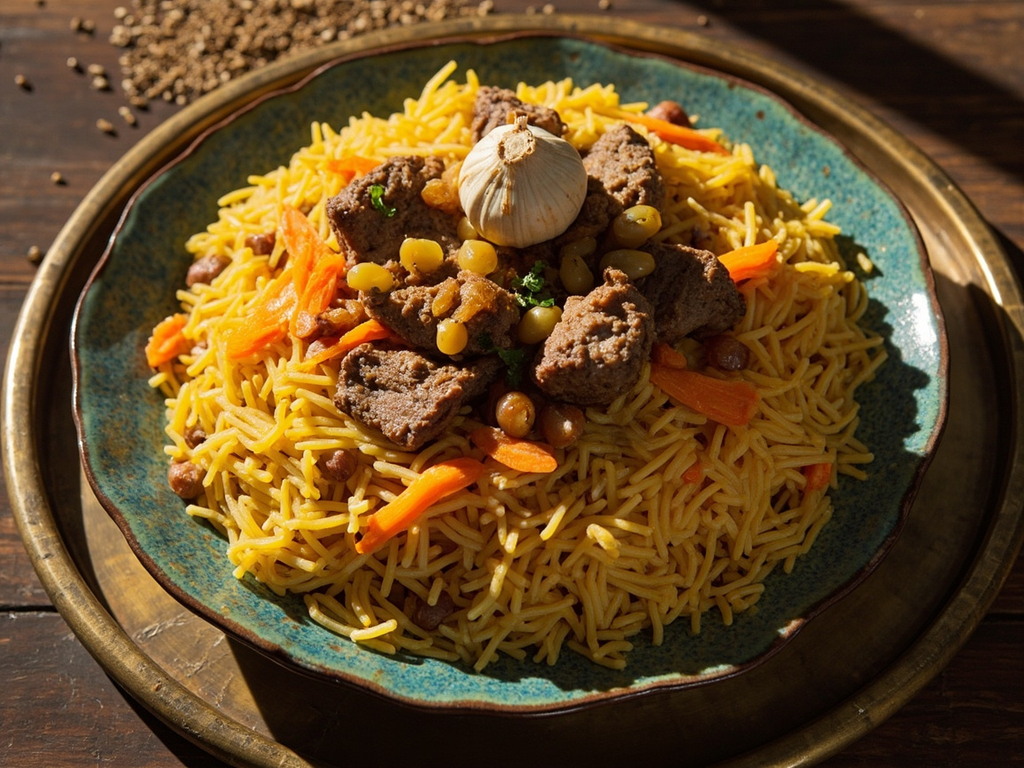
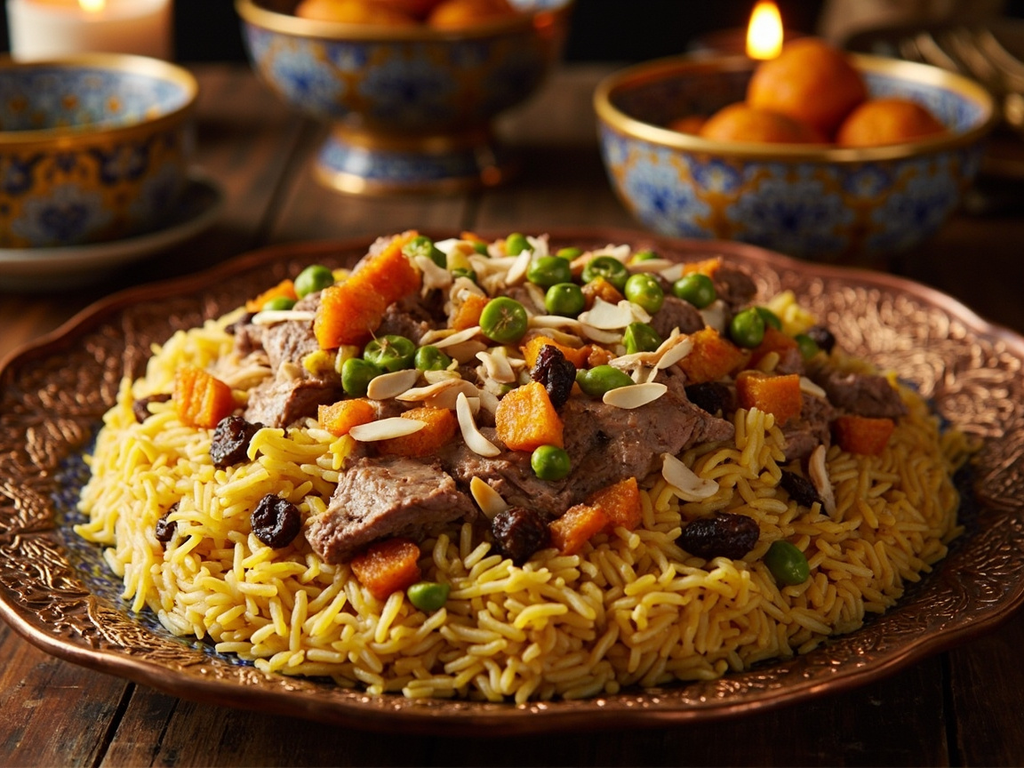
Basmati rice steamed using the tahdig method (golden crust at the bottom), perfumed with Herat saffron, garnished with slivered almonds, pistachios, dried apricots, and currants, with a few pieces of lamb confit in spices. It is the festive dish par excellence of Timurid Persia—a display of colors reminiscent of the illuminated manuscripts of Herat.
When Sultan Husayn lays his sofre for the poets, the polo arrives in a copper dish so vast a child could sleep in it. Saffron traces veins of gold, almonds gleam like well-turned ghazal verses, and apricots offer their sweetness like a hemistich of respite. I who am content with barley at the khanqah do not refuse this grace when it appears—for the mystic does not despise beauty, he passes through it.
- •Long-grain rice — Three handfuls (Polo base)
- •Herat saffron — A pinch infused in rosewater (Color and fragrance)
- •Rosewater (golab) — A few spoonfuls (Fragrance)
- •Slivered almonds — A handful (Crunchy garnish)
- •Blanched pistachios — A handful (Garnish)
- •Dried apricots — A dozen (Sweet garnish)
- •Currants — A handful (Sweet garnish)
- •Lamb shoulder — One piece (Festive meat)
- •Cinnamon, cardamom, cumin — A little of each (Spices)
- •Clarified butter (roghan) — Generously (Cooking and tahdig)
- •Salt — To taste (Seasoning)
Polo-ye meyve-o za'feran (Festive Rice with Dried Fruit and Saffron)
Basmati rice steamed using the tahdig method (golden crust at the bottom), perfumed with Herat saffron, garnished with slivered almonds, pistachios, dried apricots, and currants, with a few pieces of lamb confit in spices. It is the festive dish par excellence of Timurid Persia—a display of colors reminiscent of the illuminated manuscripts of Herat.
Why this dish? Jami, though a Sufi and frugal in daily life, was received at the court of Sultan Husayn Bayqara, great patron of Herat. Timurid banquets were famous for their sumptuous polos, studded with dried fruits and gilded with Khorasan saffron. Jami evokes these feasts in several passages of his Baharestan, where the royal table becomes a metaphor for divine abundance.
When Sultan Husayn lays his sofre for the poets, the polo arrives in a copper dish so vast a child could sleep in it. Saffron traces veins of gold, almonds gleam like well-turned ghazal verses, and apricots offer their sweetness like a hemistich of respite. I who am content with barley at the khanqah do not refuse this grace when it appears—for the mystic does not despise beauty, he passes through it.
Ingredients (period version)
- Long-grain rice — Three handfuls (Polo base)
- Herat saffron — A pinch infused in rosewater (Color and fragrance)
- Rosewater (golab) — A few spoonfuls (Fragrance)
- Slivered almonds — A handful (Crunchy garnish)
- Blanched pistachios — A handful (Garnish)
- Dried apricots — A dozen (Sweet garnish)
- Currants — A handful (Sweet garnish)
- Lamb shoulder — One piece (Festive meat)
- Cinnamon, cardamom, cumin — A little of each (Spices)
- Clarified butter (roghan) — Generously (Cooking and tahdig)
- Salt — To taste (Seasoning)
Ingredients
- Basmati rice — 400 g (Polo base)
- Saffron threads — 1 g (a good pinch) (Color and fragrance)
- Rosewater — 2 tbsp (Fragrance)
- Slivered almonds — 50 g (Garnish)
- Unsalted pistachios, blanched — 40 g (Garnish)
- Soft dried apricots — 80 g (halved) (Sweet garnish)
- Raisins — 50 g (Sweet garnish)
- Boneless lamb shoulder — 300 g, cubed (Meat)
- Cinnamon stick — 1 (Spice)
- Green cardamom — 4 pods (Spice)
- Ground cumin — 1/2 tsp (Spice)
- Clarified butter (ghee) or oil — 60 g (Cooking and tahdig)
- Salt — 2 tsp (Seasoning)
- Water — For soaking and cooking (Cooking)
Method
- Rinse the basmati rice in cold water until clear. Soak for 1 hour in salted water, then drain.
- Infuse the saffron in 3 tbsp hot water mixed with rosewater. Set aside.
- In a skillet, brown the lamb cubes in 1 tbsp ghee with the cinnamon stick, cardamom, and cumin. Cover with water and simmer 45 min over low heat until tender. Reserve the meat, discard whole spices.
- In another pan, separately toast the slivered almonds and pistachios in a little ghee until golden. Add the apricots and raisins, sauté 2 minutes. Reserve this garnish.
- Bring a large pot of salted water to a boil. Add the rice and cook 6-7 minutes (it should remain firm at the center). Drain.
- In a heavy-bottomed pot, melt the remaining ghee. Spread a thin layer of rice on the bottom (this will become the tahdig, the golden crust). Then alternate layers of rice, meat, and dried fruit garnish.
- Drizzle the top layer with the saffron infusion. Cover the lid with a clean cloth, seal tightly. Cook over very low heat for 45 minutes.
- Upside-down the polo onto a large serving platter to reveal the golden tahdig. Sprinkle with the remaining dried fruit garnish.
How it was made : Polo with dried fruit is attested in Persian cuisine since Abbasid times, but it reached its peak of refinement under the Timurids. Herat manuscripts show banquet scenes where polo is served on hammered copper trays. Khorasan saffron (from the Qaen and Birjand region) was exported throughout the Islamic world and as far as China. The tahdig technique—a crispy rice crust at the bottom of the pot—is a Persian culinary pride already codified in this period.
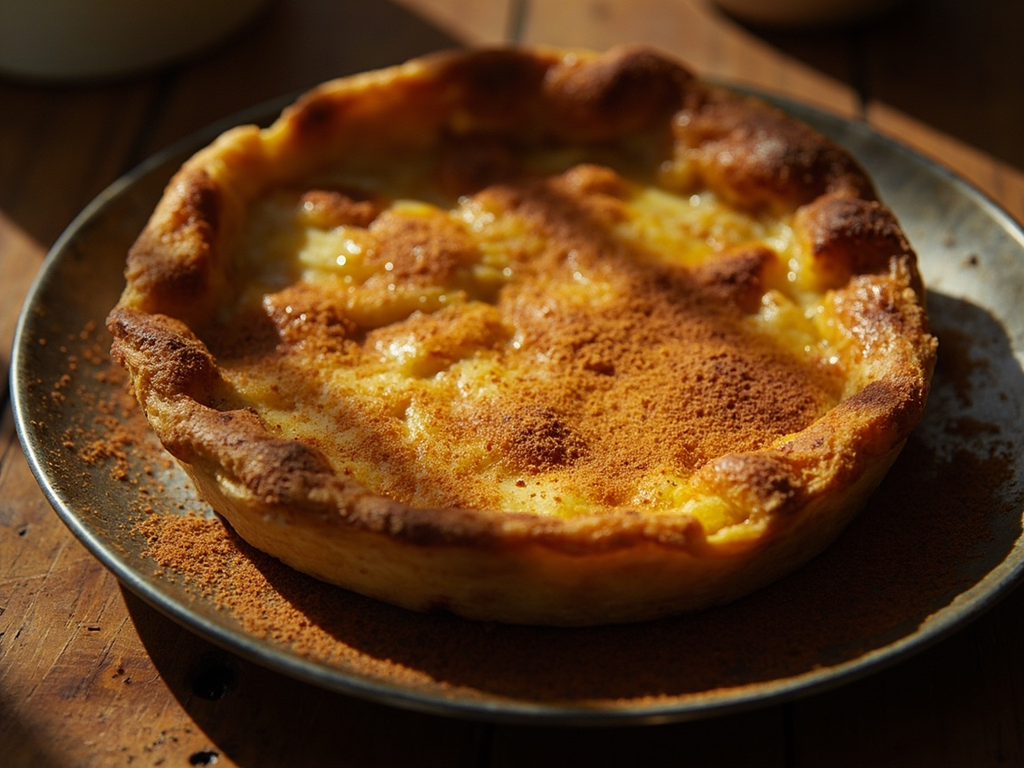
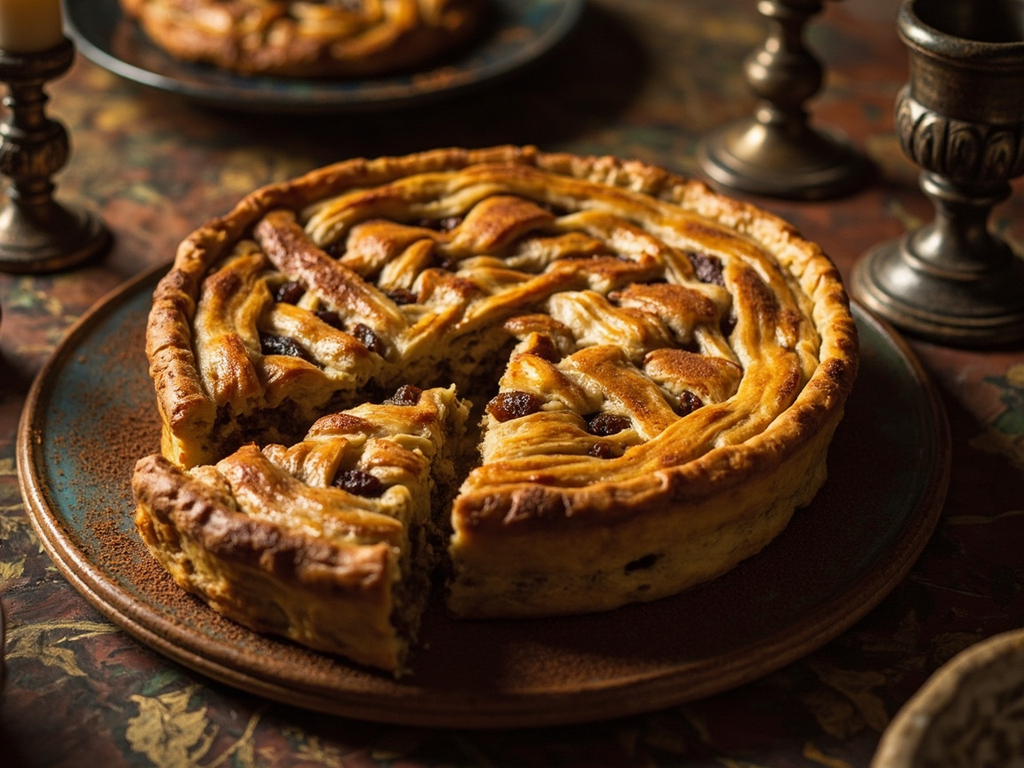
The contemporary twist : Unmold the tahdig like a cake and serve it in slices, like a golden rice tart—spectacular as a centerpiece.
Sources : Charles Perry, « Medieval Arab Cookery » (2001), recipes for polo with dried fruit · Abolqasem Ferdowsi, descriptions of feasts in the Shahnameh (cultural context) · Najmieh Batmanglij, « Food of Life: Ancient Persian and Modern Iranian Cooking and Ceremonies » (2011)
Jami · Charactorium