 flip
flipLibum, the cheese cake of the gods
Libum, the cheese cake of the gods
Why this dish? The libum is THE Roman offering cake par excellence: it was burned or placed on the altar when inaugurating an undertaking — and every beginning belongs to Janus, god of thresholds. Before crossing an important door, this warm cake drizzled with honey was presented to him.
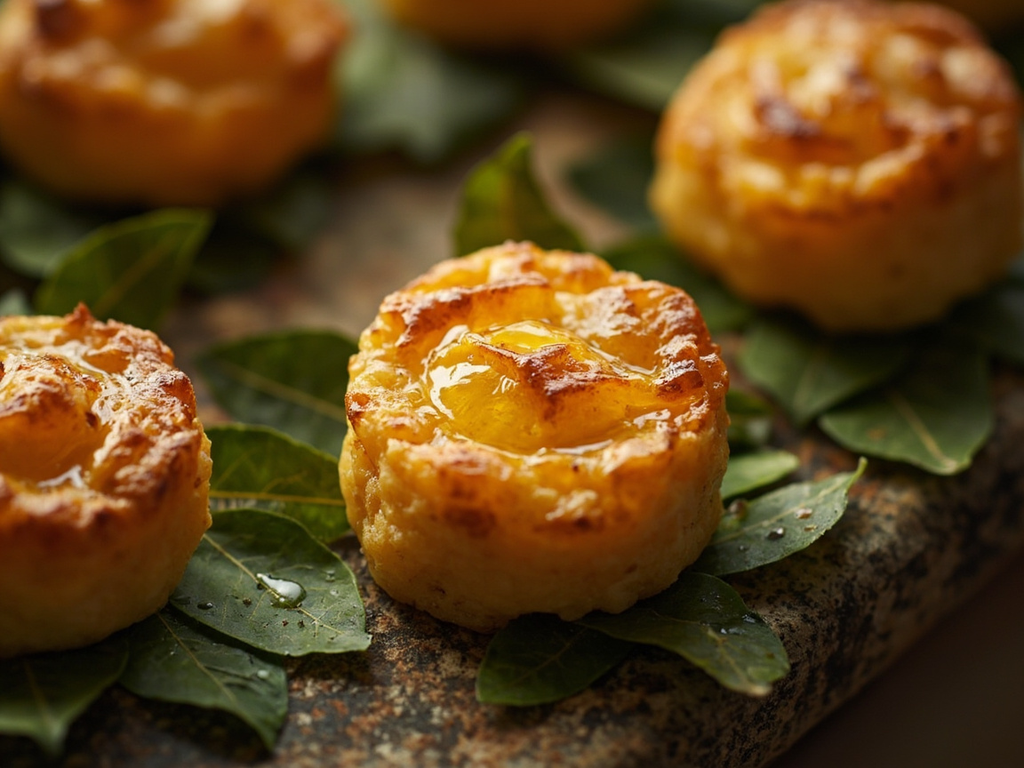
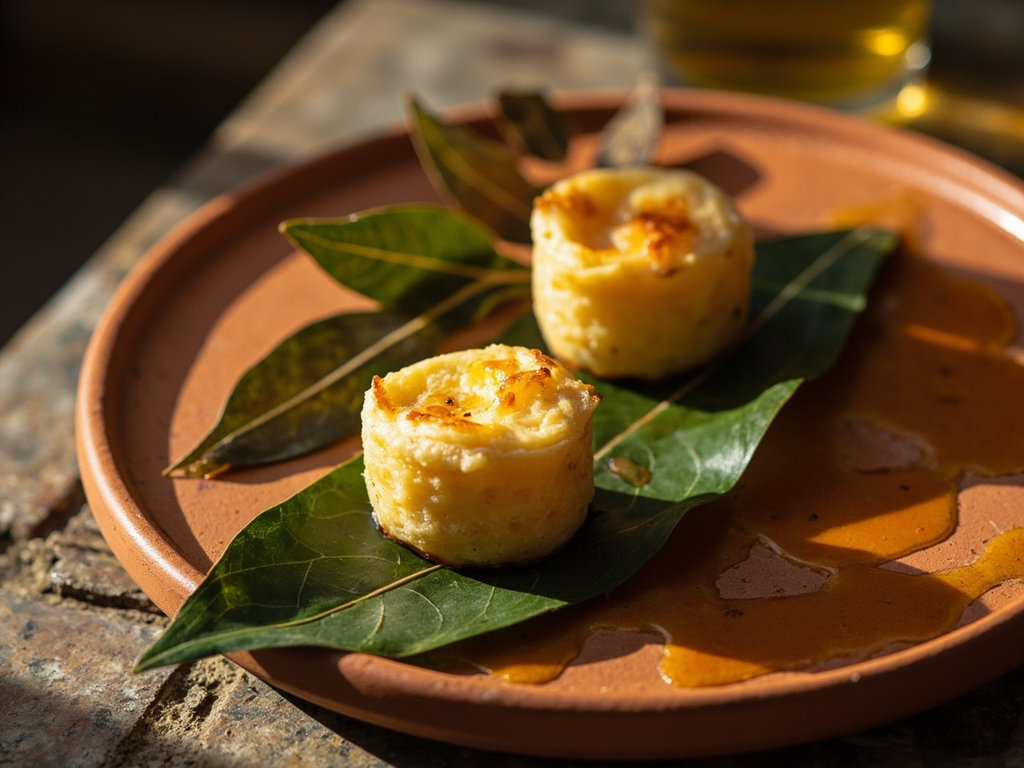
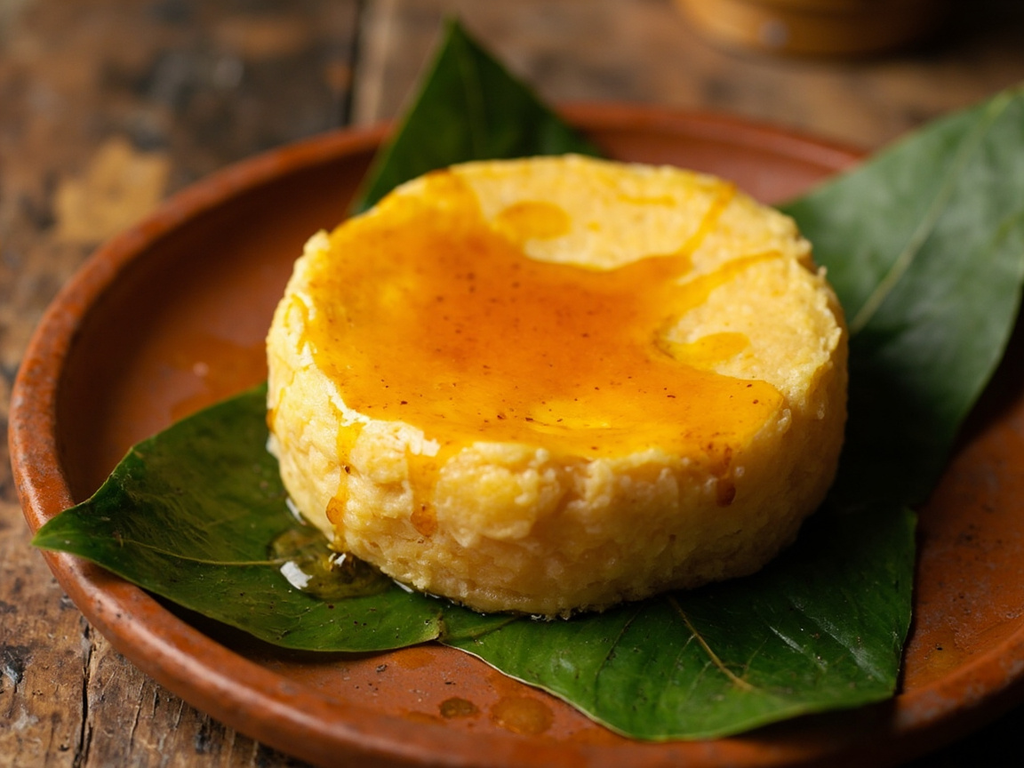
A dense and soft cake of fresh cheese bound with spelt flour and egg, baked on bay leaves, then drizzled with warm honey. Salty from the cheese, sweet from the honey: the taste of the threshold between two flavors, like the two-faced god.
Approach, mortal, and know this: before your hand touches the threshold, the first offering is mine. Knead the fresh cheese with far flour and an egg, as old Cato teaches, and lay the dough on bay leaves. When the cake turns golden under the earthen bell, pour over it the still-warm honey — and let its sweetness open your year. I who look upon the past and the future taste first; what is offered to me at the beginning blesses all that follows.
- •Fresh cheese (caseus) — two parts (soft body and salty note)
- •Far flour (spelt) — one part (binder)
- •Egg — one (binding)
- •Bay leaves — a few (fragrant baking support)
- •Honey — as needed (ritual glaze)
Libum, the cheese cake of the gods
A dense and soft cake of fresh cheese bound with spelt flour and egg, baked on bay leaves, then drizzled with warm honey. Salty from the cheese, sweet from the honey: the taste of the threshold between two flavors, like the two-faced god.
Why this dish? The libum is THE Roman offering cake par excellence: it was burned or placed on the altar when inaugurating an undertaking — and every beginning belongs to Janus, god of thresholds. Before crossing an important door, this warm cake drizzled with honey was presented to him.
Approach, mortal, and know this: before your hand touches the threshold, the first offering is mine. Knead the fresh cheese with far flour and an egg, as old Cato teaches, and lay the dough on bay leaves. When the cake turns golden under the earthen bell, pour over it the still-warm honey — and let its sweetness open your year. I who look upon the past and the future taste first; what is offered to me at the beginning blesses all that follows.
Ingredients (period version)
- Fresh cheese (caseus) — two parts (soft body and salty note)
- Far flour (spelt) — one part (binder)
- Egg — one (binding)
- Bay leaves — a few (fragrant baking support)
- Honey — as needed (ritual glaze)
Ingredients
- Well-drained ricotta (or brousse) — 250 g (soft body and salty note)
- Spelt flour — 125 g (binder)
- Egg — 1 (binding)
- Fresh bay leaves — 6 (fragrant baking support)
- Liquid honey — 4 tbsp (glaze)
Method
- Mash the ricotta with a fork, add the flour and egg, and knead into a soft dough.
- Shape into a dome and place on bay leaves arranged on a baking sheet.
- Cover with an earthen bowl or inverted dish (testum-style) to trap heat, or bake uncovered at 190°C for 35-40 min until the top is golden.
- Let cool slightly, remove the leaves, generously drizzle with warm honey, and serve immediately.
How it was made : Cato the Elder gives the exact recipe in his De Agri Cultura (2nd century BC): cheese and flour kneaded with an egg, baked 'under a hot bell' (testum) on bay leaves. It was a cult cake offered to the gods and household spirits.
The contemporary twist : Serve in two halves placed back-to-back like Janus's two faces, a trickle of honey flowing over each.
Sources : Cato the Elder, De Agri Cultura, ch. 75 (libum recipe)
Janus · Charactorium