 flip
flipSpelt libum with cheese and honey
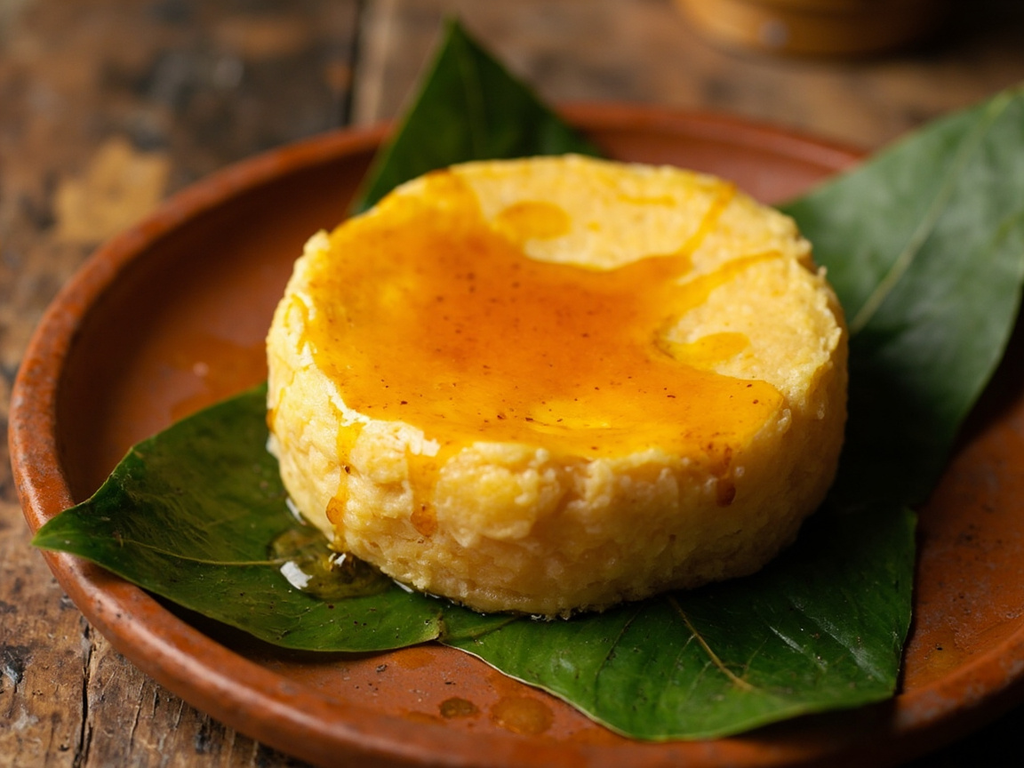
Spelt libum with cheese and honey
Why this dish? The libum is THE Roman offering cake par excellence, baked for the gods and then shared. For the Magna Mater, who refuses blood and accepts only the fruits of the earth, wheat, sheep's cheese, and honey are the perfect homage: the fertility of flocks and fields returned to her who brings them forth.
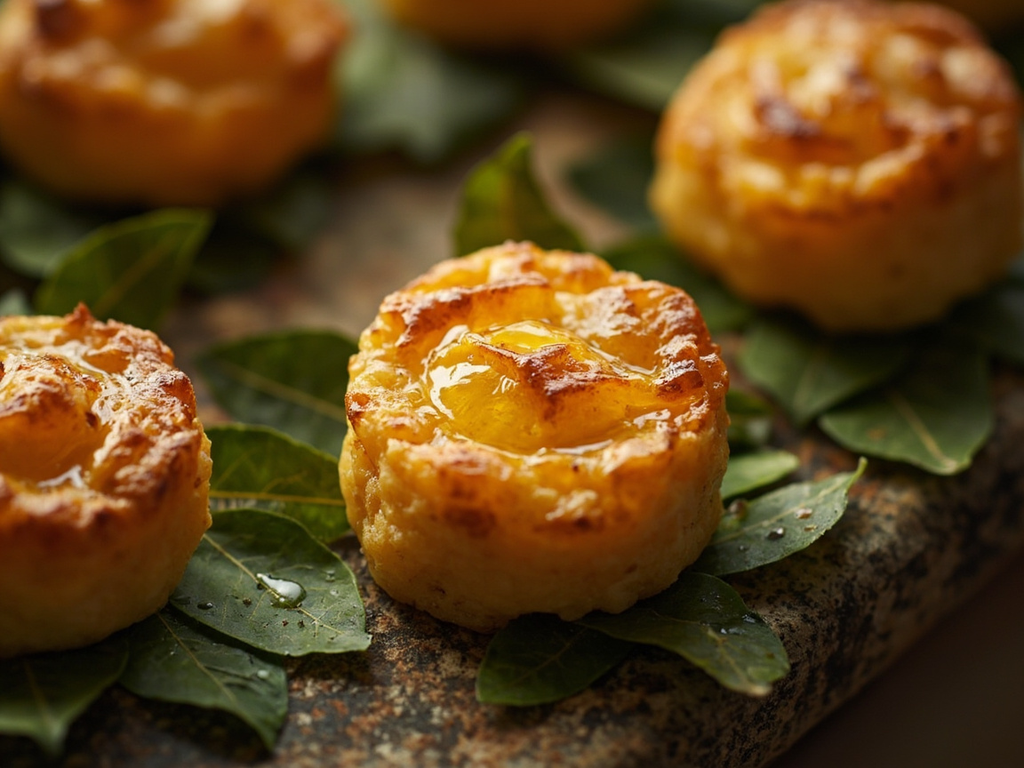
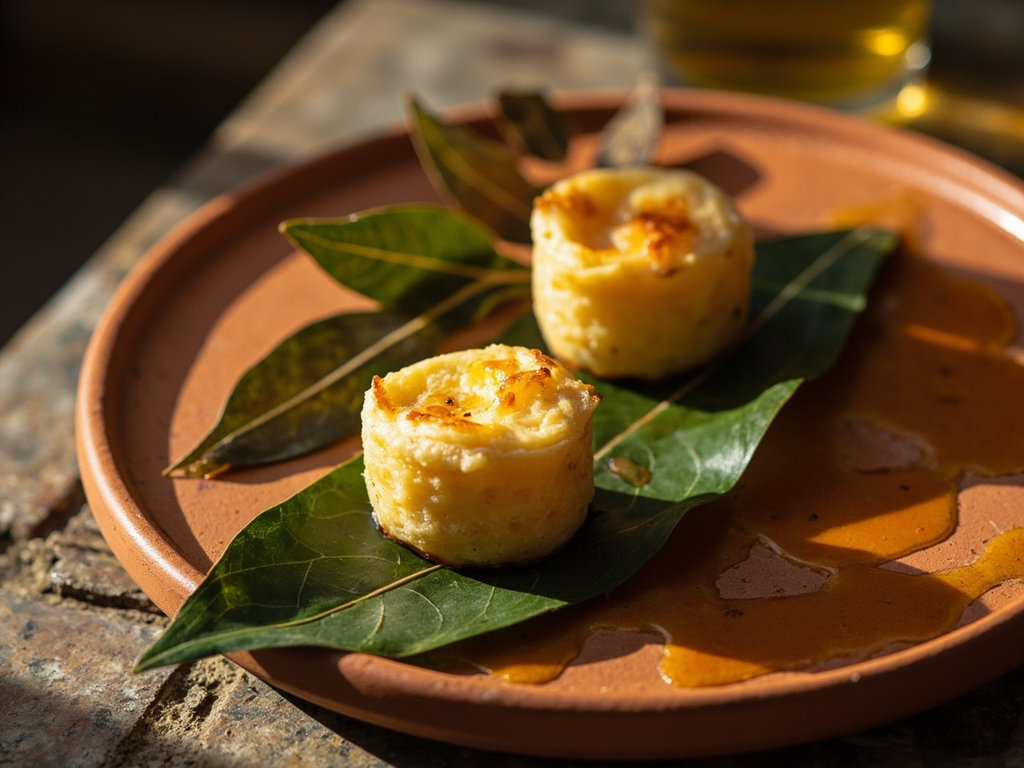
A small soft cake halfway between cheesecake and bread, made with fresh beaten cheese, spelt flour, and one egg, baked on bay leaves and drizzled with warm honey upon leaving the oven. Tender, slightly sweet, fragrant with bay.
Approach, mortal, and bring no slaughtered beast to my altar: the Mother of all that lives does not love the smell of blood. Rather, knead for me the wheat of your fields with the cheese of your ewes, place the dough on bay leaves, and let the fire brown it slowly. When it swells, pour over it the still-warm honey, as one pours a prayer — this is how my faithful honored me from Mount Ida to the Palatine. Eat what remains: what I touch, I make fruitful.
- •Spelt flour (far) — a generous handful (binder and structure)
- •Fresh sheep's cheese — twice the volume of flour (heart of the cake)
- •Egg — one (binder)
- •Honey — as much as needed for drizzling (sweet offering)
- •Bay leaves — a few (baking support and flavor)
Spelt libum with cheese and honey
A small soft cake halfway between cheesecake and bread, made with fresh beaten cheese, spelt flour, and one egg, baked on bay leaves and drizzled with warm honey upon leaving the oven. Tender, slightly sweet, fragrant with bay.
Why this dish? The libum is THE Roman offering cake par excellence, baked for the gods and then shared. For the Magna Mater, who refuses blood and accepts only the fruits of the earth, wheat, sheep's cheese, and honey are the perfect homage: the fertility of flocks and fields returned to her who brings them forth.
Approach, mortal, and bring no slaughtered beast to my altar: the Mother of all that lives does not love the smell of blood. Rather, knead for me the wheat of your fields with the cheese of your ewes, place the dough on bay leaves, and let the fire brown it slowly. When it swells, pour over it the still-warm honey, as one pours a prayer — this is how my faithful honored me from Mount Ida to the Palatine. Eat what remains: what I touch, I make fruitful.
Ingredients (period version)
- Spelt flour (far) — a generous handful (binder and structure)
- Fresh sheep's cheese — twice the volume of flour (heart of the cake)
- Egg — one (binder)
- Honey — as much as needed for drizzling (sweet offering)
- Bay leaves — a few (baking support and flavor)
Ingredients
- Fresh cheese (ricotta or sheep's brousse) — 250 g (heart of the cake)
- Spelt flour — 100 g (structure)
- Egg — 1 (binder)
- Honey — 4 tablespoons (drizzle)
- Fresh bay leaves — 6 to 8 (support and flavor)
Method
- Drain and mash the fresh cheese with a fork until smooth.
- Incorporate the spelt flour, then the egg, to obtain a soft, sticky dough.
- Arrange the bay leaves on the bottom of a small dish or on a baking sheet, place domes of dough on top.
- Bake at medium heat (180°C) for 35 to 40 minutes, until the top is golden and firm.
- Upon removal from the oven, warm the honey and drizzle generously over the cakes. Serve warm.
How it was made : Cato the Elder gives the exact recipe for libum in his agricultural treatise (ca. 160 BC): pounded cheese, flour, one egg, baked 'under a hot bell' on bay leaves. It was a common domestic offering, placed on the altar of household gods or major deities during festivals.
The contemporary twist : Served in mini-portions with a drop of thyme honey and a few toasted pine nuts, the libum becomes a very Instagrammable 'antique' banquet dessert.
Sources : Cato the Elder, De Agri Cultura, 75 (libum recipe) · Ovid, Fasti, IV, 179-372 (festivals of the Magna Mater / Megalesia)
Cybele · Charactorium