 flip
flipPanade with Garden Herbs
Panade with Garden Herbs
Why this dish? This was the everyday fare of a man of science with a modest income: stale bread, water, a little butter, and the herbs that Lamarck, a botanist above all, could identify better than anyone. The end of his life, marked by real poverty, often had to make do with this panade.
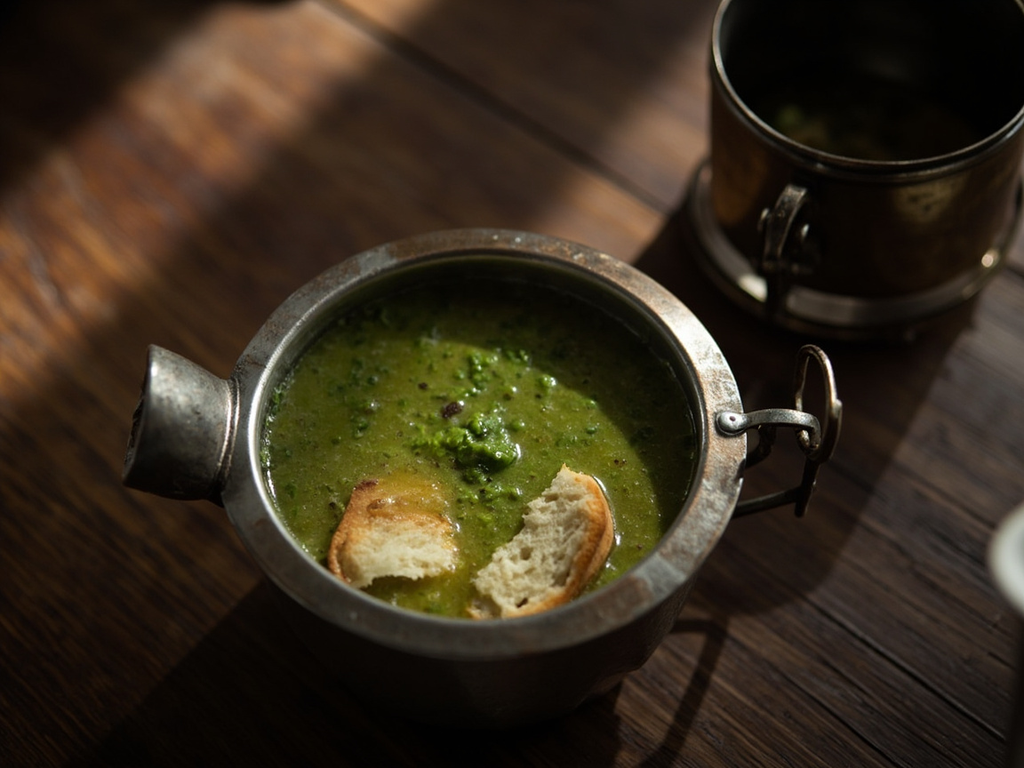
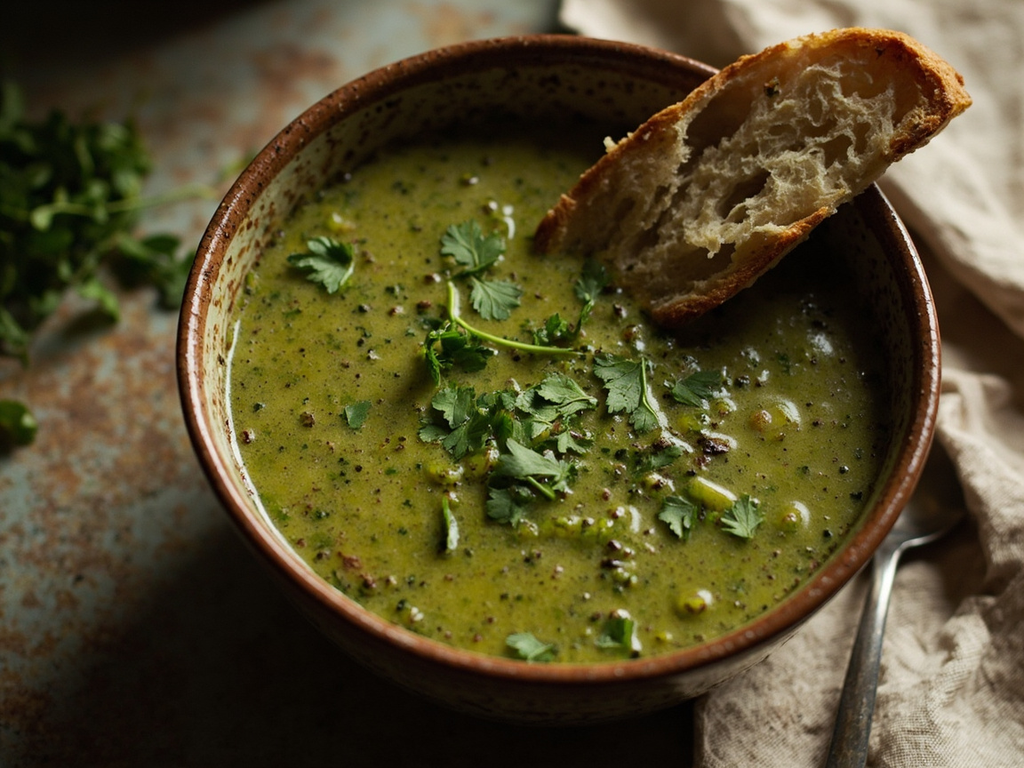
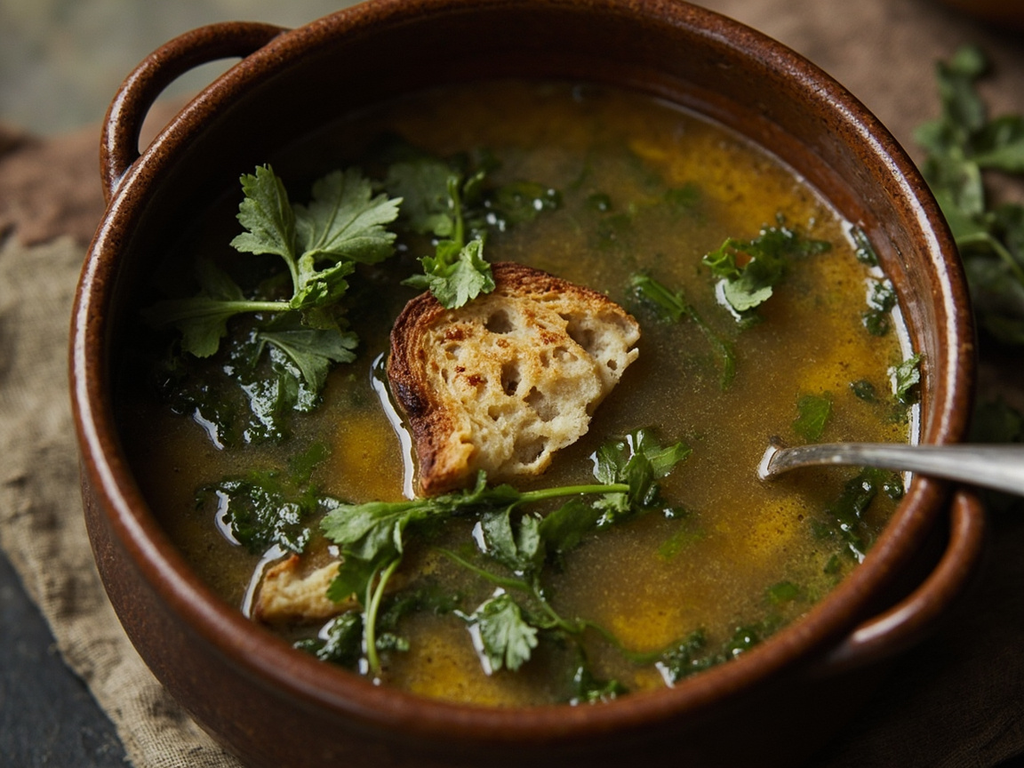
A soft porridge of soaked and long-cooked bread, lightened with an egg yolk and brightened with a handful of green herbs. Nourishing, economical, comforting: the soup of ordinary days.
Approach, and do not mock the simplicity of my bowl. I have spent my life classifying the plants of the kingdom, and see the irony: it is these same herbs, chervil and sorrel, that give all the value to my soup when the rest is lacking. I melt the bread in water until it offers no more resistance, I bind it with an egg yolk, and I name each leaf I throw in as a friend. Fortune has smiled on me little, sir; this panade, however, has never betrayed me.
- •Stale bread — a few slices (nourishing base)
- •Water or vegetable broth — a large bowl (cooking liquid)
- •Fresh butter — a walnut-sized piece (richness)
- •Chervil, sorrel, parsley — a good handful (flavor (signature))
- •Egg yolk — one (thickener)
- •Salt — to taste (seasoning)
Panade with Garden Herbs
A soft porridge of soaked and long-cooked bread, lightened with an egg yolk and brightened with a handful of green herbs. Nourishing, economical, comforting: the soup of ordinary days.
Why this dish? This was the everyday fare of a man of science with a modest income: stale bread, water, a little butter, and the herbs that Lamarck, a botanist above all, could identify better than anyone. The end of his life, marked by real poverty, often had to make do with this panade.
Approach, and do not mock the simplicity of my bowl. I have spent my life classifying the plants of the kingdom, and see the irony: it is these same herbs, chervil and sorrel, that give all the value to my soup when the rest is lacking. I melt the bread in water until it offers no more resistance, I bind it with an egg yolk, and I name each leaf I throw in as a friend. Fortune has smiled on me little, sir; this panade, however, has never betrayed me.
Ingredients (period version)
- Stale bread — a few slices (nourishing base)
- Water or vegetable broth — a large bowl (cooking liquid)
- Fresh butter — a walnut-sized piece (richness)
- Chervil, sorrel, parsley — a good handful (flavor (signature))
- Egg yolk — one (thickener)
- Salt — to taste (seasoning)
Ingredients
- Stale country bread — 150 g (base)
- Light vegetable broth — 70 cl (liquid)
- Butter — 25 g (richness)
- Chervil + sorrel + parsley — 1 large handful, chopped (signature herbs)
- Egg yolk — 1 (thickener)
- Salt, pepper — to taste (seasoning)
Method
- Crumble the stale bread into a saucepan and cover with hot broth.
- Let it melt over low heat for 20-25 minutes, stirring, until you get a smooth porridge.
- Add the butter and chopped herbs, season with salt.
- Off the heat, stir in the egg yolk, whisking vigorously to bind without curdling.
- Serve immediately, piping hot, in an earthenware bowl.
How it was made : Panade (from the Latin *panis*, bread) was the quintessential poor man's soup: stale bread was salvaged to avoid waste. In modest homes and hospices alike, it was thickened with egg yolk on good days, with just butter on others.
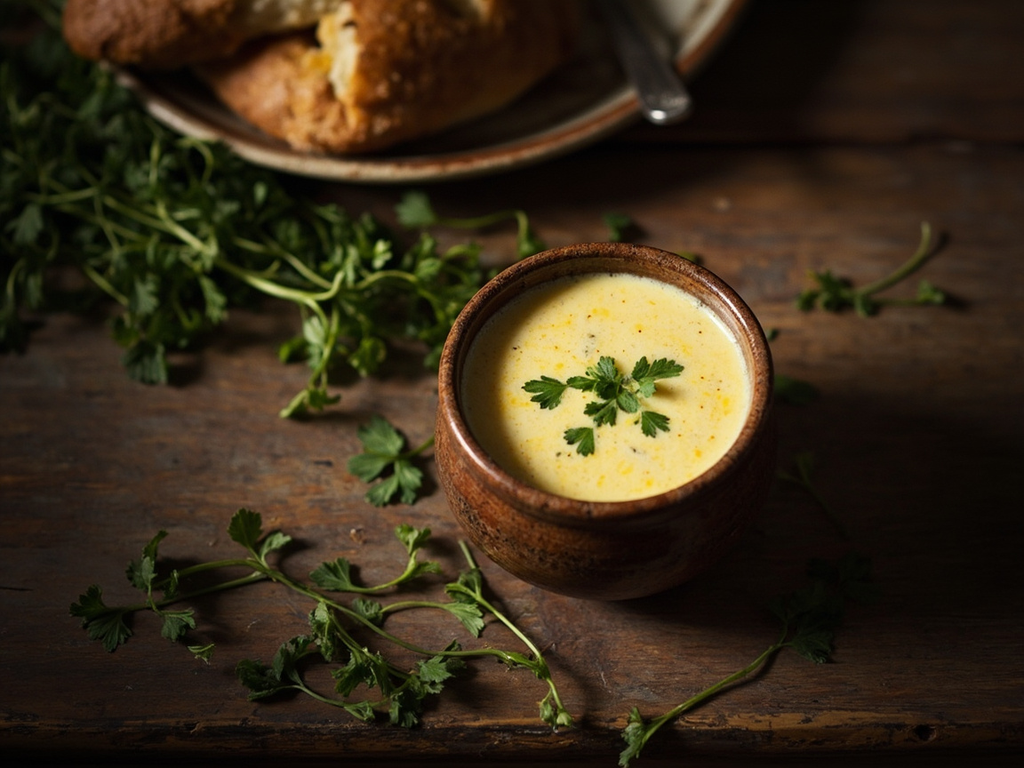
The contemporary twist : Serve it in a warm verrine with a drizzle of herb oil and a few watercress shoots: the scholar's soup becomes a spring amuse-bouche.
Jean-Baptiste Lamarck · Charactorium