 flip
flipAsparagus with oil and vinegar
Asparagus with oil and vinegar
Why this dish? Fontenelle was so fond of asparagus that a famous anecdote circulates about him: a fan of oil-dressed asparagus, he supposedly, out of politeness, had half the dish prepared with butter for a friend who liked them that way; the friend dropped dead before dinner, and Fontenelle is said to have cried out to the kitchen, “All in oil!” The anecdote is no doubt polished by salon gossip, but it rings true about his passion for this vegetable.
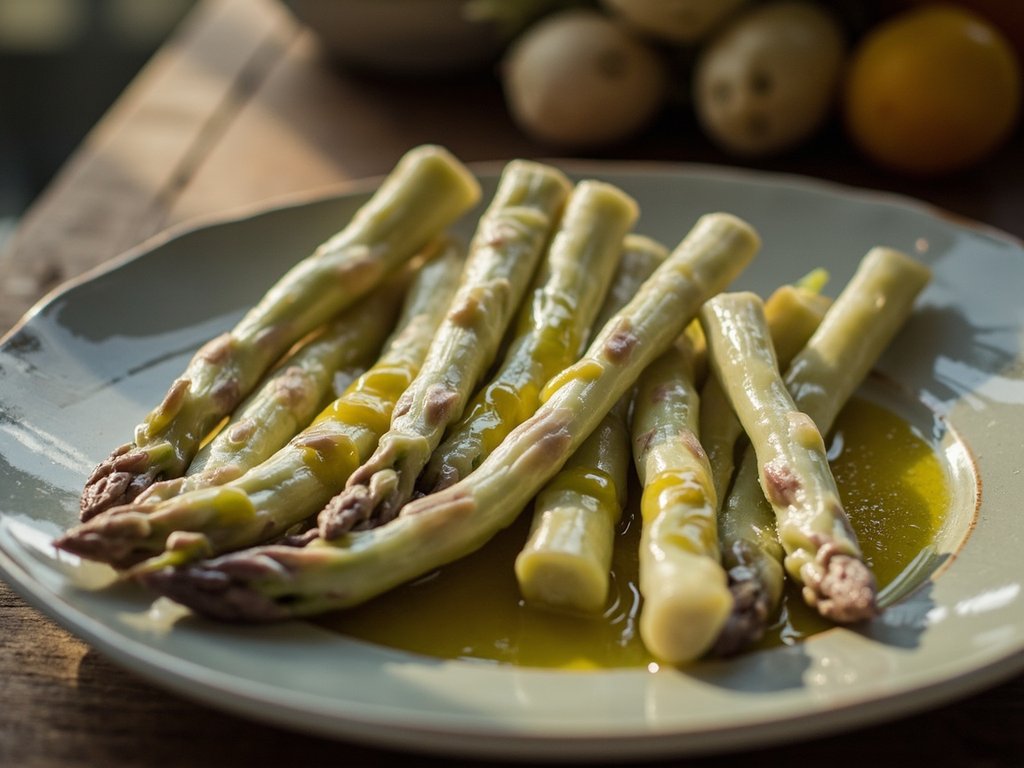
Beautiful warm asparagus, firm, coated with a simple liaison of oil, vinegar, salt, and a little pepper: the elegant sobriety of a man who made moderation an art of living.
You see, I have always held that great quarrels lodge in small things: one disputes about worlds, and one also disputes about asparagus. For me, no hesitation — oil, vinegar, a grain of salt, and leave me to my pleasure. I want them picked in the morning, barely tenderized in boiling water, still crunchy under the tooth, for an overcooked asparagus is like an overworked mind: it loses all composure. Eat little, but eat well: that is my whole secret, and it has carried me far.
- •Fresh asparagus (preferably purple) — a beautiful bunch (star vegetable)
- •Fine olive oil — as needed (body of the sauce)
- •Wine vinegar — a dash (acidity)
- •Salt — to taste (seasoning)
- •Pepper — a pinch (discrete lift)
Asparagus with oil and vinegar
Beautiful warm asparagus, firm, coated with a simple liaison of oil, vinegar, salt, and a little pepper: the elegant sobriety of a man who made moderation an art of living.
Why this dish? Fontenelle was so fond of asparagus that a famous anecdote circulates about him: a fan of oil-dressed asparagus, he supposedly, out of politeness, had half the dish prepared with butter for a friend who liked them that way; the friend dropped dead before dinner, and Fontenelle is said to have cried out to the kitchen, “All in oil!” The anecdote is no doubt polished by salon gossip, but it rings true about his passion for this vegetable.
You see, I have always held that great quarrels lodge in small things: one disputes about worlds, and one also disputes about asparagus. For me, no hesitation — oil, vinegar, a grain of salt, and leave me to my pleasure. I want them picked in the morning, barely tenderized in boiling water, still crunchy under the tooth, for an overcooked asparagus is like an overworked mind: it loses all composure. Eat little, but eat well: that is my whole secret, and it has carried me far.
Ingredients (period version)
- Fresh asparagus (preferably purple) — a beautiful bunch (star vegetable)
- Fine olive oil — as needed (body of the sauce)
- Wine vinegar — a dash (acidity)
- Salt — to taste (seasoning)
- Pepper — a pinch (discrete lift)
Ingredients
- Asparagus (green or purple) — 500 g (star vegetable)
- Extra virgin olive oil — 3 tbsp (body of the vinaigrette)
- White wine vinegar — 1 tbsp (acidity)
- Fine salt — 1/2 tsp (seasoning)
- Freshly ground pepper — 2 turns (lift)
Method
- Peel the asparagus from the tip to the base and cut off the fibrous ends.
- Tie them into small bundles and plunge them into a large pot of salted boiling water, tips up.
- Cook for 8 to 12 minutes depending on thickness: the tip of a knife should enter without resistance but the vegetable remain firm.
- Drain gently and let cool slightly.
- Whisk the oil, vinegar, salt, and pepper into a tight vinaigrette.
- Coat the warm asparagus just before serving, without drowning them.
How it was made : In the 17th and 18th centuries, asparagus was a prized vegetable on refined tables, cultivated in royal and bourgeois kitchen gardens. It was served warm, either with melted butter or “in oil” like a salad — hence the famous taste dispute among diners. La Varenne already gives preparations for it in *Le Cuisinier françois* (1651).
The contemporary twist : Arrange them in a fan on a slate board, tips aligned, and place a soft-boiled egg next to it: the runny yolk mischievously replaces the butter of the opposing camp.
Sources : François Pierre de La Varenne, Le Cuisinier françois, 1651 · Anecdote reported in the tradition of 18th-century memorialists (popularized account, literary value)
Fontenelle · Charactorium