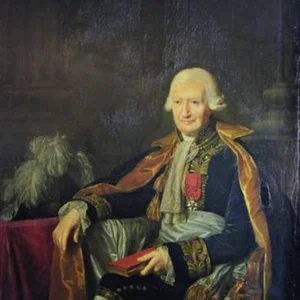

French politician and member of the Convention during the Revolution, he served in the National Convention before becoming a dignitary under the Napoleonic Empire. His career illustrates the political trajectories of those who navigated both the Revolution and the Empire.
Jean-Baptiste-Pierre Bevière(1723 — 1807)
Jean-Baptiste-Pierre Bevière
France
7 min read
Frequently asked questions
Key Facts
- Elected to the National Convention during the French Revolution
- Took part in the political debates of the revolutionary period
- Became a senator and dignitary under Napoleon Bonaparte's First Empire
Works & Achievements
Like all members of the Convention, Bevière took part in the votes on the major revolutionary laws, including the solemn trial of Louis XVI in January 1793. His positions on these matters represent his principal contribution to the legislative history of the French Revolution.
Members of the Convention sat on various specialized committees — legislation, public education, finance. Bevière contributed to the drafting of revolutionary legislation through these collective bodies of parliamentary work.
Having rallied to the Napoleonic regime, Bevière served as a dignitary, participating in the consolidation of imperial institutions that preserved a portion of the administrative and legal gains of the Revolution.
Anecdotes
Born in 1723, Jean-Baptiste-Pierre Bevière was already sixty-six years old when the French Revolution broke out in 1789. Shaped by a generation formed under the Ancien Régime, he was one of the rare politicians to navigate the entire revolutionary cycle with his career intact, demonstrating a remarkable ability to adapt to the upheavals of his time.
Elected to the National Convention in September 1792, Bevière took part in the historic vote on the fate of Louis XVI in January 1793. Like all his fellow conventionnels, he was required to take a public stand by roll call on the king's guilt and on the punishment to be imposed — a vote that bound his personal responsibility before history for the rest of his life.
The Terror (1793–1794) was an ordeal for many moderate conventionnels. Bevière managed to navigate between the revolutionary factions and to survive politically through the fall of Robespierre in July 1794, demonstrating a keen sense of political maneuvering at a time when a single error of judgment could cost a man his life.
When the Republic gave way to the First Empire in 1804, Bevière was among the former conventionnels who rallied to the Napoleonic regime. This rallying of a man of the Revolution to Napoleon illustrates the tendency of many revolutionaries to see in the Consulate and the Empire a consolidation of revolutionary gains rather than a betrayal of their ideals.
Primary Sources
The sessions of the National Convention (1792-1795) record the speeches and votes of the representatives, including those of Bevière, making it possible to reconstruct his positions during the major revolutionary debates.
The official register of the roll-call vote from 16 to 20 January 1793 records each deputy's position on the king's guilt, the sentence, and the possibility of a reprieve. This document is the essential primary source for establishing Bevière's vote.
The official bulletins of the Revolutionary and Imperial periods publish the decrees, appointments, and administrative acts that allow us to trace the offices held by Bevière under the Convention and later under the Napoleonic Empire.
The *Almanach national* (later the *Almanach impérial* under Napoleon) lists the dignitaries and state officials on an annual basis, making it possible to follow Bevière's career across the successive political regimes.
Key Places
The National Convention met in the Salle du Manège of the Tuileries Palace from 1792. Bevière sat there as a representative of the people, taking part in the great revolutionary votes including the trial of Louis XVI.
Residence of the sovereigns and then seat of the revolutionary powers, the Tuileries were the stage for the great revolutionary journées. The National Convention deliberated there after the sans-culottes stormed the royal palace in 1792.
The Luxembourg Palace housed various legislative assemblies during the Revolution and the Directory, then became the seat of the Conservative Senate under Napoleon. It symbolizes the institutional continuity through which men like Bevière sustained their political commitment.
The cathedral was transformed into a Temple of Reason in 1793 during the dechristianization campaign, then served as the site of Napoleon's coronation in December 1804. These landmark events bookended Bevière's entire political career, from the revolutionary rupture to the imperial reconciliation.
Typical Objects

A distinctive badge worn by members of the Convention during sessions or on official missions, the blue-white-red sash symbolized the authority of the French Republic. Bevière wore it during his official duties at the National Convention.

The everyday working tool of every lawyer and politician under the Ancien Régime and the Revolution, the quill pen was used to draft speeches, committee reports, and administrative correspondence. Members of the Convention made heavy use of them for their legislative work.

The quintessential revolutionary headgear, the red cap became the symbol of liberty and the Republic. Worn or displayed during civic ceremonies and revolutionary festivals, it was a marker of commitment to republican ideals.

The National Convention produced thousands of printed decrees distributed throughout France. These legislative texts formed the body of revolutionary law, and members of the Convention such as Bevière took part in drafting and voting on them.

Under the Napoleonic Empire, dignitaries and senior officials wore dark cloth coats adorned with gold embroidery and imperial symbols such as the bee. Bevière, having become a dignitary under Napoleon, wore these garments at official ceremonies.
School Curriculum
Vocabulary & Tags
Key Vocabulary
Daily Life
Morning
A deputy to the Convention like Bevière began his day by consulting the revolutionary press — Le Moniteur universel, the Journal des débats — to keep up with the intense political news. He received mail and visitors, drafted his correspondence with a quill pen, then made his way to Convention sessions, which often started in the morning.
Afternoon
Sessions of the National Convention could last many hours, sometimes stretching into the evening. Debates were often heated, with representatives taking the floor from the tribune or from the galleries divided between Montagnards and Girondins. Bevière also took part in committee work and maintained his relationships with fellow representatives in the corridors of the assembly.
Evening
In the evenings, politicians would gather in Parisian clubs and cafés to debate informally about the situation. Under the Terror, these moments of social life were marked by extreme caution, with everyone carefully weighing their words. Bevière, a man of the Ancien Régime who had converted to revolutionary politics, had to navigate skillfully through these dangerous political circles.
Food
The French Revolution was also a period of food shortages and rationing, particularly during the harsh winters of 1793–1794. A dignitary like Bevière, however, had access to a more varied diet than ordinary Parisians: wheat bread, market vegetables, meat, and table wine made up the everyday fare of the comfortable classes despite the shortages.
Clothing
Under the Revolution, dress was a major political statement. Wearing the carmagnole and the red bonnet signaled solidarity with the sans-culottes, while overly refined bourgeois attire could attract suspicion. Deputies to the Convention wore sober outfits in black or navy blue cloth, with the tricolor sash as their official badge. Under the Empire, Bevière would have adopted the embroidered dress of Napoleonic dignitaries.
Housing
Representatives of the people in Paris generally lodged in bourgeois apartments rented in the central neighborhoods of the capital. Under the Revolution, aristocratic private mansions had been placed under sequestration, profoundly transforming the Parisian residential landscape. Bevière, born in 1723, had known life under the Ancien Régime before adapting to the world of revolutionary politics.
Historical Timeline
Period Vocabulary
Liens externes & ressources
Références
Œuvres
Votes et interventions à la Convention nationale
1792-1795
Participation aux travaux des comités de la Convention
1793-1794
Fonctions de dignitaire sous le Premier Empire
1804-1807
Rechercher
See also
Related Characters
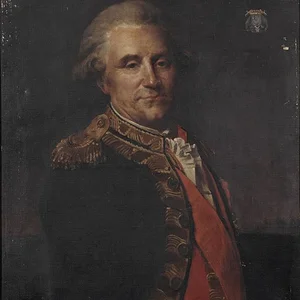
Antoine-Jean-Marie Thévenard
1733 — 1815
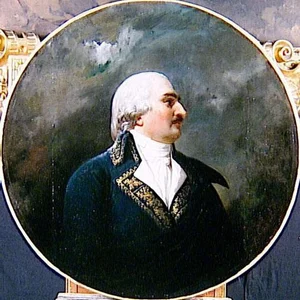
Auguste Marie Henri Picot de Dampierre
1756 — 1793
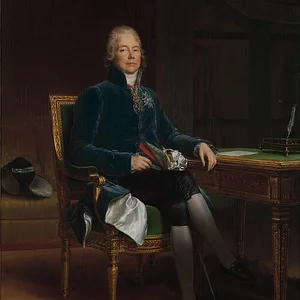
Charles-Maurice de Talleyrand-Périgord
1754 — 1839
Claude Ambroise Régnier
1746 — 1814
Claude-Louis Petiet
1749 — 1806
François Denis Tronchet
1726 — 1806