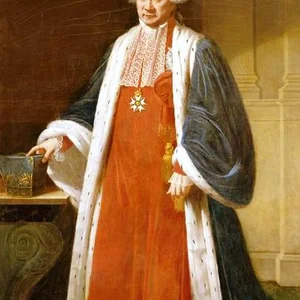

French jurist and politician (1746–1814), Grand Judge and Minister of Justice under the First Empire. A loyal servant of Napoleon, he was created Duke of Massa in 1809 and contributed to the organization of the Napoleonic judicial system.
Claude Ambroise Régnier(1746 — 1814)
Claude Ambroise Régnier
France
7 min read
Frequently asked questions
Key Facts
- Born on 6 April 1746 in Etain (Meuse), died on 2 June 1814
- Appointed Grand Judge and Minister of Justice by Napoleon in 1802
- Created Duke of Massa by Napoleon in 1809
- Deputy to the Estates General of 1789, he served throughout the Revolution
- Contributed to establishing the judicial institutions of the First Empire
Works & Achievements
As Grand Judge, Régnier presided over numerous sessions of the Council of State devoted to the codification of civil law. The Code, promulgated in 1804, unified private law across the entire French territory for the first time.
Régnier oversaw the establishment of the court hierarchy defined by the law of ventôse year VIII: justices of the peace, courts of first instance, courts of appeal, and the Court of Cassation — an architecture that still structures the French judicial system today.
Régnier supported the drafting and implementation of this code, which organized proceedings before civil courts, making justice more predictable and accessible for litigants.
This code, prepared under the supervision of the Ministry of Justice, defined the rules of criminal procedure: investigation, preliminary inquiry, and trial. It notably established the assize jury for serious criminal cases.
Each year, Régnier reported to the Emperor on the activity of the courts, criminal statistics, and necessary reforms, thereby building a valuable body of documentation on imperial justice.
Anecdotes
Appointed Grand Judge and Minister of Justice by Napoleon in 1802, Claude Ambroise Régnier held the post for more than eleven years — an exceptional tenure under the Empire, where ministers changed frequently. His discretion, absolute loyalty, and legal expertise earned him the Emperor's lasting confidence.
Régnier took an active part in the lengthy Council of State sessions devoted to drafting the Civil Code between 1800 and 1804. These meetings, sometimes chaired by Napoleon himself until midnight, brought together jurists and councillors to debate the code article by article — a code destined to unify French law.
In 1809, Napoleon elevated Régnier to the dignity of Duke of Massa, a reference to the small Italian principality of Massa-Carrara recently annexed to the French Empire. This honorary title rewarded a decade of faithful service at the head of imperial justice.
Régnier was one of the architects of the complete reorganization of French courts after the Revolution. He helped establish the Napoleonic judicial hierarchy — justices of the peace, courts of first instance, courts of appeal, and the Court of Cassation — a judicial framework that survives largely intact to this day.
The son of a prosecutor from Lorraine, Régnier had been elected to the Estates-General of 1789 as a deputy of the Third Estate for the bailiwick of Blâmont. His trajectory — from modest provincial lawyer to duke and minister of the Emperor — illustrates the remarkable social rise that the Revolution and then the Empire made possible for a generation of talented men of law.
Primary Sources
Grand Judge Régnier presents to the Council of State the draft title on inheritances. After deliberation, the Council adopts the proposed provisions subject to editorial amendments.
I wish, citizen Grand Judge, that you provide me with a report on the state of the courts in the reunited departments, so that I may take the necessary measures to establish swift and regular justice there.
The law of 27 Ventôse Year VIII laid the foundations of a new judicial organization. It remains to fill the courts with capable and upright magistrates, and to ensure the uniform application of the laws throughout the territory.
By virtue of the powers conferred upon us, We, Grand Judge Minister of Justice, certify this copy to be in conformity with the original deposited in the archives of the Senate.
Key Places
Small town in Lorraine where Régnier was born on April 6, 1746, the son of a local prosecutor. It was in this provincial legal milieu that he received his first training as a jurist.
Seat of the Ministry of Justice under the Empire, where Régnier worked for more than eleven years as Grand Judge, overseeing the entire French magistracy.
The venue where Régnier sat in 1789 as a deputy of the Third Estate, taking part in the founding debates that would transform France. It was here that his national political career began.
Small Italian town that Napoleon made into a duchy to reward Régnier in 1809. Although Régnier most likely never lived there, this noble title bore his name until his death.
Seat of the Court of Cassation and the principal Parisian courts, which Régnier helped to organize and whose operations he oversaw throughout his tenure as minister.
Typical Objects

A collection of 2,281 articles written in clear French, unifying private law across the entire territory. Régnier kept a copy on his desk throughout his ministry.

A wax or metal matrix bearing the imperial arms, affixed to official documents to authenticate them. As Grand Judge, Régnier held a copy to seal imperial verdicts and pardons.

A ceremonial costume of black velvet trimmed with ermine, required by imperial protocol for solemn hearings and Senate sessions. This garment visually set the judiciary apart from the other branches of power.

A trimmed goose-quill pen and a crystal or gilt-bronze desktop inkwell — the everyday tools of a minister who signed hundreds of reports, ordinances, and official letters.

A large leather-bound register recording pardon requests and the Emperor's decisions as transmitted through the Grand Judge. It served as an instrument of clemency and political oversight of the justice system.

A decoration created by Napoleon in 1802 to reward military and civilian service. Régnier, like all senior dignitaries of the Empire, wore the grand-cross insignia on his chest at official ceremonies.
School Curriculum
Vocabulary & Tags
Key Vocabulary
Daily Life
Morning
Régnier rose early to review dispatches arriving from courts of appeal and prefects across France. He would then meet with his principal collaborators to handle urgent matters — appointments of magistrates, petitions for clemency, procedural questions — before heading to the Council of State or the Tuileries for imperial audiences.
Afternoon
Afternoons were devoted to long sessions of legislative work: reviewing draft codes, drafting reports for the Emperor, and corresponding with the attorneys general of the courts of appeal. He also chaired commissions of jurists tasked with preparing the major judicial reforms.
Evening
In the evenings, Régnier frequented the official salons of the Empire and court dinners, where political decisions were quietly shaped behind the scenes. He also spent his evenings reading legal briefs and clemency appeals, signing the dispatches his secretaries brought before him.
Food
Like other dignitaries of the Empire, Régnier enjoyed an abundant table — roasted meats, game, market vegetables, and wines from Burgundy or Bordeaux. Official dinners might gather a dozen guests around dishes served *à la française*, in several successive courses.
Clothing
Outside of ceremonies, Régnier wore French formal dress: a dark frock coat over silk breeches and white stockings, with the cross of the Legion of Honor pinned to his chest. For solemn audiences and sessions of the Senate, he donned the black robe trimmed with ermine and the cap of the Grand Judge.
Housing
Régnier resided in Paris in a private mansion befitting his rank as duke and minister, with domestic staff, secretaries, and a horse-drawn carriage. These residences of the imperial elite combined the fashionable neoclassical décor of the day — columns, draperies, mahogany furniture — with the bourgeois comfort that the salary of a senior dignitary could afford.
Historical Timeline
Period Vocabulary
Liens externes & ressources
Références
Œuvres
Participation à la rédaction du Code civil des Français
1800-1804
Réorganisation du système judiciaire impérial
1802-1810
Contribution au Code de procédure civile
1806
Participation au Code d'instruction criminelle
1808
Rapports annuels sur l'état de la justice en France
1802-1813
Rechercher
See also
Related Characters
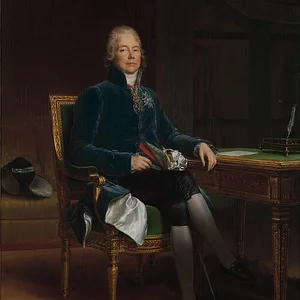
Charles-Maurice de Talleyrand-Périgord
1754 — 1839
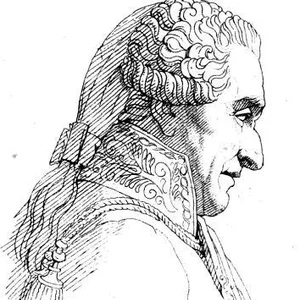
François Denis Tronchet
1726 — 1806
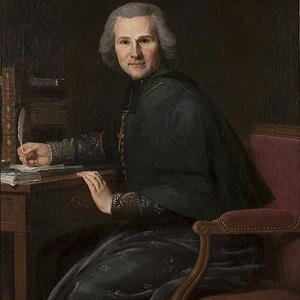
Abbé Henri Grégoire
1750 — 1831
Jean-Baptiste Treilhard
1742 — 1810
Charlotte Corday
1768 — 1793
Joseph Agricol Viala
1778 — 1793