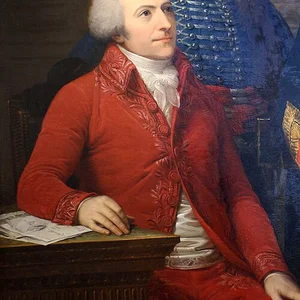

French general and politician, Claude-Louis Petiet served as Minister of War under the Directory (1797–1798), then as Councillor of State and senator under the Consulate and the Napoleonic Empire. He died in 1806, becoming the first person interred during the reign of Napoleon I.
Claude-Louis Petiet(1749 — 1806)
Claude-Louis Petiet
France
7 min read
Frequently asked questions
Key Facts
- Born in 1749 in Lons-le-Saunier, in the Jura
- Appointed Minister of War under the Directory (1797–1798)
- Became Councillor of State under the Napoleonic Consulate
- Elevated to senator under the Empire
- Died in 1806: the first person interred during the reign of Napoleon I
Works & Achievements
During his tenure as minister, Petiet restructured the ministry's central departments to improve coordination between field armies and the Parisian administration. This rationalization contributed to the logistical efficiency of the final wars of the Revolutionary period.
Petiet drafted several detailed reports on the situation of French armies in Italy and on the Rhine, alerting the Directory to their needs in manpower and supplies. These documents are valuable records of the actual state of the Revolutionary military forces.
Within the Council of State, Petiet took part in the codification efforts undertaken under the Consulate, particularly in areas relating to military organization and public administration. This collective work laid the foundations of modern administrative France.
As a senator, Petiet voted on the major imperial laws and participated in sessions of the Conservative Senate. His presence illustrates the successful integration of competent republican figures into the new Napoleonic imperial order.
Anecdotes
Appointed Minister of War by the Directory in July 1797, Claude-Louis Petiet inherited an army exhausted by years of revolutionary conflict. In less than a year, he set about reorganizing the ministry's administrative services and improving the supply of troops in the field — a titanic task in a context of permanent war against the European coalitions.
Born into a bourgeois family from Béziers, Petiet cut his teeth as a *commissaire des guerres* — a civilian officer responsible for logistics and troop pay. This role, essential yet unglamorous, gave him an encyclopedic knowledge of the inner workings of the republican armies, which explained his rapid rise to the highest military administrative positions.
When Bonaparte seized power in the coup of 18 Brumaire in November 1799, Petiet promptly rallied to the new regime. Recognized for his expertise in military administration, he was appointed Councillor of State, playing an active part in the overhaul of French institutions under the Consulate.
At his death on 21 April 1806, Petiet had the singular honor of being the first senator interred with solemn state funeral rites at government expense under the reign of Napoleon I — a symbolic gesture that demonstrated the Emperor's commitment to honoring those faithful servants of the Republic who had become pillars of the Empire.
Primary Sources
The Executive Directory decrees that citizen Petiet is appointed Minister of War. He is charged with the general administration of all the military forces of the Republic and shall report to the Directory on the state of the armies.
Citizen Petiet, divisional general, is appointed member of the Conservative Senate in recognition of his services rendered to the military and civil administration of the Republic.
The Conservative Senate, convened in solemn session, heard the funeral oration for Senator Petiet, who died on 21 floréal Year XIV. The president recalled his distinguished services as Minister of War and founding member of the Council of State.
The Army of Italy is short of manpower and supplies. The hospitals are overcrowded. It is urgent to meet the most pressing needs of the troops if the offensive capacity of the divisions is to be maintained.
Key Places
Birthplace of Claude-Louis Petiet, born on January 6, 1749, in this city of Languedoc. Béziers, a city with a long military tradition, provided the setting for his childhood before he joined the military administration of the monarchy and later the Republic.
Located on the rue Saint-Dominique in Paris, the Ministry of War was the center of Petiet's activity between 1797 and 1798. It was from this private mansion that he managed the supply and organization of the revolutionary armies fighting on several European fronts.
Seat of the Conservative Senate, where Petiet served from 1802 until his death in 1806. The Palais du Luxembourg, assigned to the Senate since the Consulate, was the heart of legislative life for the upper imperial assembly.
Meeting place of the Council of State under the Consulate, where Petiet served as a councillor of state after 18 Brumaire. Bonaparte personally presided over many sessions, imposing a demanding work pace on the councillors tasked with drafting the laws of the new regime.
Typical Objects

A ceremonial sword with a gilded guard, worn by generals of the Republic and Empire at official ceremonies. A symbol of military rank, it was presented upon promotion to a higher grade and was universally recognized as a mark of honor.

An official document sent to generals and prefects, signed and sealed by the Minister of War. These dispatches governed everything: troop pay, troop movements, and supplies of weapons and provisions.

An embroidered coat in the colors of the Republic, with epaulettes and decorations, worn by Petiet in the exercise of his ministerial duties. The dress of senior officials evolved with each regime: more austere under the Republic, more lavish under the Empire.

A copper-engraved map showing the theaters of operations of the French armies, essential for planning campaigns and coordinating troop movements. The Ministry of War kept numerous copies, regularly updated.

A large ledger recording the strength, pay, and health status of regiments. A fundamental tool of the war commissary, it allowed the day-to-day administrative life of the army to be tracked.

A wax stamp bearing Republican symbols (fasces, Phrygian cap) affixed to official documents issued by the Ministry. Under the Empire, the Republican emblems were gradually replaced by the imperial eagle.
School Curriculum
Vocabulary & Tags
Key Vocabulary
Daily Life
Morning
Petiet rose early to review the dispatches that had arrived overnight from the generals commanding armies across the various European fronts. After a frugal breakfast, he received his bureau chiefs and representatives from the army corps who had come to request reinforcements or supplies.
Afternoon
Afternoons were devoted to audiences and meetings with the other ministers of the Directory or, later, with the Councillors of State at the Tuileries. Petiet had to mediate between competing demands from generals, allocate scarce available resources, and draft instructions for the war commissioners in the field.
Evening
Evenings under the Directory could be quite social: Parisian salons were in full swing, and government members gathered at dinners where politics and military strategy were discussed in equal measure. Under the Empire, imperial receptions at the Tuileries set the rhythm of life for senior officials.
Food
Like many notables of the revolutionary era, Petiet maintained a bourgeois diet without ostentation: white bread, roasted meats, vegetables from the Parisian markets, and wine from the Languedoc that recalled his origins in Béziers. Under the Empire, the senators' table grew noticeably more lavish.
Clothing
As Minister of War, Petiet wore the official embroidered coat in the colors of the Republic, completed by a sword at his side during ceremonies. In the imperial Senate, he donned the senatorial costume — a scarlet cloak trimmed with gold embroidery — a testament to Napoleon's fondness for theatrical displays of power.
Housing
Petiet lived in Paris in a notable's apartment close to the centers of power. Under the Directory, ministers were often provided with official lodgings in or near the ministerial residences. During his years as a senator, he lived on the Left Bank, in the vicinity of the Palais du Luxembourg.
Historical Timeline
Period Vocabulary
Liens externes & ressources
Références
Œuvres
Réorganisation administrative du ministère de la Guerre
1797-1798
Rapports sur l'état des armées présentés au Directoire
1797-1798
Participation aux travaux de codification du Conseil d'État
1799-1804
Activité sénatoriale sous le Premier Empire
1804-1806
Rechercher
See also
Related Characters
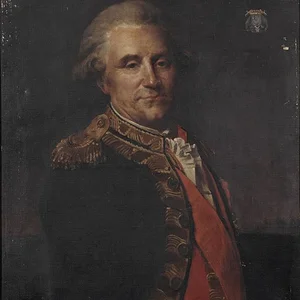
Antoine-Jean-Marie Thévenard
1733 — 1815
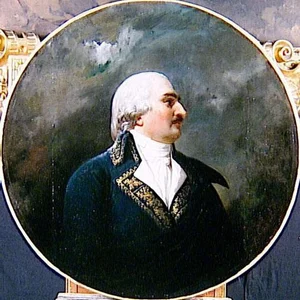
Auguste Marie Henri Picot de Dampierre
1756 — 1793
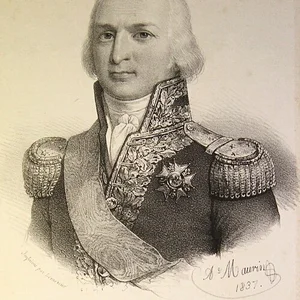
Justin Bonaventure Morard de Galles
1741 — 1809
Lazare Carnot
1753 — 1823
François Séverin Marceau
1769 — 1796
Jean-Paul Marat
1743 — 1793