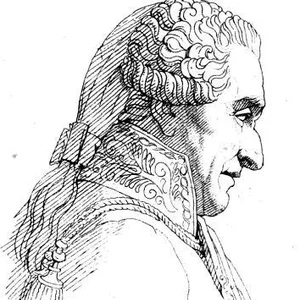

French jurist and statesman (1726–1806), he courageously defended Louis XVI before the Convention in 1792. He was one of the four principal authors of the Civil Code promulgated in 1804, a foundational work of modern French law.
François Denis Tronchet(1726 — 1806)
François Denis Tronchet
France
8 min read
Frequently asked questions
Key Facts
- Born in Paris in 1726, he became one of the most respected lawyers at the Paris Bar under the Ancien Régime
- In December 1792, he agreed to defend Louis XVI before the National Convention at great personal risk
- Appointed a member and then president of the Court of Cassation, he played a central role in organizing the post-revolutionary judicial system
- In 1800, First Consul Bonaparte appointed him as one of the four members of the commission tasked with drafting the Civil Code
- The Civil Code was promulgated in 1804; Tronchet died in 1806, recognized as one of its founding fathers
Works & Achievements
One of the most courageous defense briefs in French legal history, this memorial argued that the Convention could not act as both prosecutor and judge, and demanded that the French people be consulted by referendum on the king's fate.
The first draft submitted to the Council of State by the four-member drafting commission, this preliminary text of several hundred articles laid the groundwork for the definitive Civil Code, particularly regarding the law of persons, family, and property.
A landmark legislative achievement co-drafted with Portalis, Bigot de Préameneu, and Maleville, this text of 2,281 articles unified French civil law by synthesizing Roman law, northern customary law, and revolutionary principles; it remains in force today under the name of the *Code civil*.
Over thirty years, Tronchet produced numerous legal opinions and pleadings that carried great authority at the Paris bar, helping to shape pre-revolutionary legal doctrine and laying the groundwork for his later work on codification.
Anecdotes
At 66, Tronchet unhesitatingly agreed to defend Louis XVI before the National Convention in December 1792, at the risk of his own life. Malesherbes, his co-counsel, confided to him: “I know it means risking my head, but refusing would be to dishonor myself.” Tronchet shared this conviction and took the floor despite the jeers of part of the assembly.
Tronchet was the oldest of the four drafters of the Civil Code, aged 74 when the commission was created in August 1800. His long experience with Ancien Régime law was invaluable in reconciling legal traditions with revolutionary principles. He was particularly passionate in defending the principle of equal inheritance among children — a direct legacy of the Revolution — against proponents of primogeniture.
The commission of four drafters of the Civil Code (Portalis, Tronchet, Bigot de Préameneu, and Maleville) accomplished a remarkable legal feat: they produced a complete draft in barely four months, between August and November 1800. This text of 2,281 articles, the fruit of centuries of Roman law and French customs, would govern the civil life of the French for more than two centuries.
Before the Revolution, Tronchet was one of the most respected lawyers at the Paris bar. His contemporaries nicknamed him “the upright jurist” for his moral rigor as much as for his encyclopedic knowledge of the law. When Napoleon chose him to codify French civil law, he relied on this reputation as an incorruptible man as much as on his legal expertise.
Primary Sources
Citizens, Louis asks you for judges, and you are not his judges. He asks you for judges, and you have already pronounced your verdict. He asks you for time to produce his supporting documents, and that time is denied him.
Civil laws must regulate the relations between men with clarity and equity. They must draw at once from Roman law, from the customs of our provinces, and from the principles enshrined by the Revolution.
The Third Estate of Paris mandates its representatives to secure civil equality, the reform of the laws, and the abolition of privileges contrary to natural justice and the common good.
M. Tronchet observes that the proposed provision raises a difficulty concerning the nature of the right of property: a distinction must be drawn between absolute ownership and the easements that limit it without destroying it.
Key Places
Home to Paris's highest courts, the Palais de Justice was the main stage of Tronchet's career. It was here that he argued dozens of landmark cases and served as president of the Court of Cassation until his appointment to the Senate.
It was at Versailles, in this hall converted into a deliberative chamber, that Tronchet took part in the Estates-General of 1789 as a representative of the Third Estate of Paris. These sessions would set the French Revolution in motion.
It was at the Council of State, housed in the Palais des Tuileries during the Consulate, that the drafting sessions of the Civil Code took place between 1801 and 1804. Tronchet presented and defended the articles he had written there, often directly before Napoleon Bonaparte.
It was in this hall, then the seat of the National Convention, that Tronchet and his co-counsel took the floor in December 1792 to defend Louis XVI at his historic trial.
François Denis Tronchet lived and died in Paris, the city where he spent the greater part of his life and legal career, from his early days as a lawyer under the Ancien Régime to his death in 1806.
Typical Objects

An indispensable tool for 18th-century jurists, the trimmed goose quill allowed legal briefs, pleadings, and articles of law to be written with calligraphic precision. Tronchet used it to set down the first articles of the Civil Code during the work of the commission of 1800.

The black robe had been the official garment of barristers at the Paris Bar since the Ancien Régime, a symbol of their role as defenders and their membership in the legal profession. Tronchet wore it throughout his career, including during the trial of Louis XVI.

These thick volumes compiled court rulings and legal commentaries, forming the living memory of French law. Tronchet drew on them to build his courtroom arguments and, later, to reconcile customary law with Roman law in the Civil Code.

The first printed copy of the Civil Code, this compact book of 2,281 articles unified for the first time the law applicable to all French citizens, from birth to death. Tronchet was one of its four principal drafters, and the text remains the cornerstone of French private law to this day.

Until the Revolution, magistrates and barristers wore a white powdered wig as a sign of dignity and membership in the legal elite. Tronchet abandoned this accessory after 1789, as did many of his contemporaries who came to see the wig as a cumbersome symbol of the Ancien Régime.

The red wax seal affixed to official legal documents guaranteed their authenticity and enforceability. As president of the Court of Cassation, Tronchet used this type of seal to validate the rulings of France's highest court.
School Curriculum
Vocabulary & Tags
Key Vocabulary
Daily Life
Morning
Tronchet rose early to study case files and annotate legal texts before hearings, following the habits of jurists of his era. His mornings began with reading the rulings of the Court of Cassation and drafting his notes in a study lined with volumes of jurisprudence.
Afternoon
Afternoons were devoted to sessions of the Court of Cassation or, during the years 1801–1803, to meetings of the Council of State for the discussion of the Civil Code. These sessions could last several hours, with Napoleon actively participating and questioning the drafters on each article with remarkable precision.
Evening
In the evenings, Tronchet rejoined his family and sometimes received fellow jurists or parliamentarians for learned discussions on the law. In the manner of the men of letters of his century, he frequented Parisian salons where the great legal and political questions of the day were debated.
Food
Like the prosperous Parisian bourgeoisie of his time, Tronchet ate roasted meats, market vegetables, and white bread. Lunch and dinner were important social occasions, often extended by professional conversations among jurists and men of letters.
Clothing
Outside his official duties, Tronchet wore the sober attire of the revolutionary bourgeoisie: a dark cloth coat with skirts, a buttoned waistcoat, and a white cravat. After 1789, he abandoned the powdered wig of the *Ancien Régime*, adopting the natural hairstyle fashionable in republican circles.
Housing
Tronchet lived in a bourgeois apartment in central Paris, close to the Palais de Justice. His home included a study lined with law books, a dining room for entertaining, and comfortable rooms reflecting the prosperity of a prominent Parisian lawyer held in high regard by his peers.
Historical Timeline
Period Vocabulary
Liens externes & ressources
Références
Œuvres
Mémoire pour la défense de Louis XVI (avec Malesherbes et Raymond de Sèze)
Décembre 1792
Projet de Code civil des Français (commission de l'an VIII)
Novembre 1800
Code civil des Français (co-rédacteur principal)
21 mars 1804
Consultations et mémoires juridiques
1760-1790
Rechercher
See also
Related Characters
Charles-Maurice de Talleyrand-Périgord
1754 — 1839
Claude Ambroise Régnier
1746 — 1814
Abbé Henri Grégoire
1750 — 1831
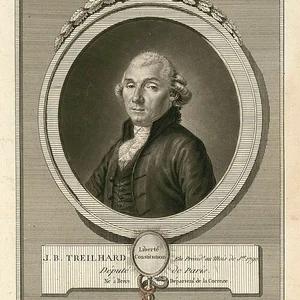
Jean-Baptiste Treilhard
1742 — 1810
Charlotte Corday
1768 — 1793
Joseph Agricol Viala
1778 — 1793