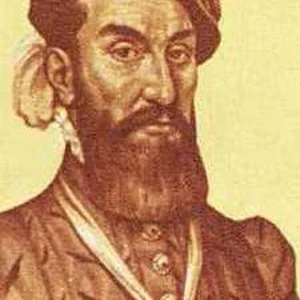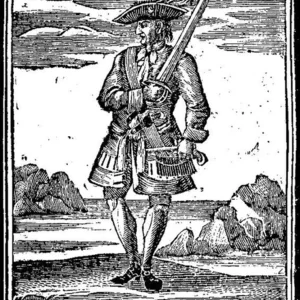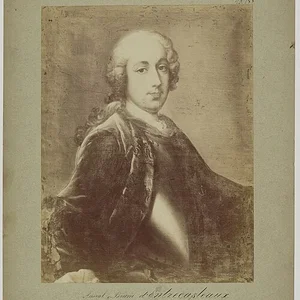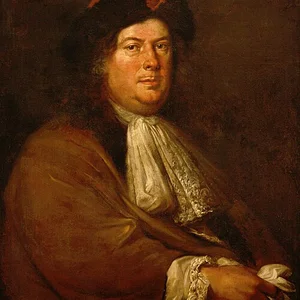

Jean Bart (1650-1702) was a privateer and naval officer from Dunkirk in the service of Louis XIV. Born into a family of sailors, he distinguished himself through his victories against the English and Dutch fleets and was raised to the nobility by the king.
Jean Bart(1650 — 1702)
Jean Bart
Royaume de France
7 min read
Frequently asked questions
Key Facts
- Born on 21 October 1650 in Dunkirk, into a family of Flemish sailors
- First fought in the navy of the United Provinces before serving France after 1672
- In 1694, resupplied a famine-stricken France by recapturing a grain convoy seized by the Dutch (Battle of Texel)
- Raised to the nobility by Louis XIV in 1694 and appointed squadron commander in 1697
- Died on 27 April 1702 in Dunkirk
Works & Achievements
A rowing escape across the English Channel after his capture by the English, a feat that forged his legend.
The recovery of around a hundred ships laden with grain during the famine, a decisive service rendered to the kingdom.
Elevation to the nobility as a reward for his victories, a rare honor for a man born into a family of common sailors.
The destruction of an escorted Dutch merchant convoy, confirming his mastery of privateering warfare.
Leadership of the privateer fleet that broke through enemy blockades and harassed the adversary's maritime trade.
Rising to one of the highest ranks in the royal navy, the crowning achievement of his military career.
Anecdotes
In 1689, taken prisoner by the English and locked up in Plymouth, Jean Bart refused to admit defeat. With his friend the officer Forbin, he sawed through the bars of his cell, seized a small rowing boat and rowed across the English Channel for more than two days, with almost no sleep, until he reached the coast of Brittany. The escape caused a great stir and reinforced his reputation as a fearless man.
In 1694, France was suffering from a terrible famine. The Dutch captured a vast convoy of ships loaded with grain coming from the Baltic. Off the coast of Texel, Jean Bart attacked the enemy fleet, recaptured about a hundred ships and brought the grain back to French ports. For this service rendered to the kingdom, Louis XIV ennobled him that same year.
The son of a humble family of Dunkirk sailors, Jean Bart spoke bluntly and stood out at the court of Versailles, among the powdered courtiers. Tradition holds that, when the king announced to him “Jean Bart, I have appointed you squadron commander,” he simply replied: “Sire, you have done well.” The famous anecdote illustrates his sailor's frankness in the face of royal etiquette.
Before serving Louis XIV, Jean Bart had learned the sea in the navy of the United Provinces, under the command of the great Dutch admiral Michiel de Ruyter. When war broke out between France and Holland in 1672, he left that service to fight under the French flag, becoming one of the king's most feared privateers.
A specialist in the “guerre de course” (commerce raiding), Jean Bart scoured the North Sea and the English Channel to capture enemy merchant ships. At the head of the Dunkirk squadron, he repeatedly broke through the English and Dutch blockades, bringing back “prizes” that enriched the kingdom and disrupted the enemy's trade.
Primary Sources
The King, in reward for the distinguished services rendered at sea against his enemies and for the valour of which he has given brilliant proof, raises Jean Bart and his posterity to the dignity of nobility.
Jean Bart, that famous privateer of Dunkirk, whose boldness and exploits at sea had made his name a terror to the English and the Dutch.
The Sieur Jean Bart, having encountered the Dutch fleet that was escorting the grain ships, attacked and defeated them, and brought the convoy back into our ports.
His Majesty is very pleased with the conduct of the Sieur Bart and urges him to continue to pursue the enemies of the realm.
Key Places
Home port and birthplace of Jean Bart, base of the king's privateer squadron against England and the United Provinces.
English port where Jean Bart was imprisoned in 1689, before his spectacular escape across the English Channel.
Site of the recapture of the grain convoy in 1694, a victory that earned Jean Bart his ennoblement.
Shoal in the North Sea where Jean Bart wiped out an escorted Dutch convoy in 1696.
Court of Louis XIV where the Dunkirk privateer, ennobled and made squadron commander, was presented to the king.
Breton shore reached by Jean Bart and Forbin after rowing across the English Channel from Plymouth in 1689.
Liens externes & ressources
Références
Œuvres
Évasion de Plymouth
1689
Reprise du convoi de blé du Texel
1694
Anoblissement par Louis XIV
1694
Victoire du Dogger Bank
1696
Commandement de l'escadre de Dunkerque
années 1690
Nomination de chef d'escadre
1697