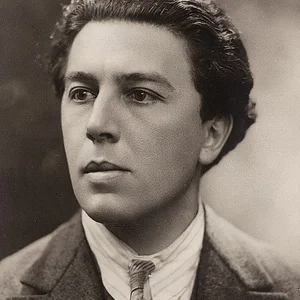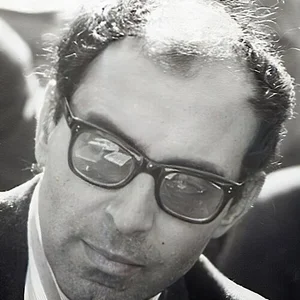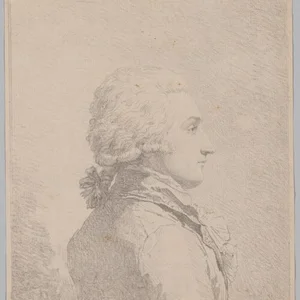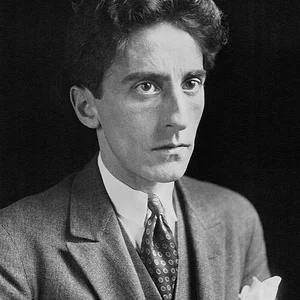

Jean Cocteau (1889-1963) was a French poet, novelist, playwright, illustrator, and filmmaker. An unclassifiable figure of the avant-garde, he worked across every art form and embodies the spirit of modern creativity in the early 20th century.
Jean Cocteau(1889 — 1963)
Jean Cocteau
France
6 min read
Frequently asked questions
Famous Quotes
« Film is a modern form of writing whose ink is light.»
« Tact in audacity lies in knowing how far one can go too far.»
Key Facts
- 1889: born in Maisons-Laffitte, near Paris
- 1929: publication of the novel Les Enfants terribles
- 1930: directs his first film, The Blood of a Poet
- 1946: release of the film Beauty and the Beast
- 1955: elected to the Académie française; died in 1963
Works & Achievements
Ballet created with Satie, Picasso and the Ballets Russes; a founding work of the avant-garde and the origin of the word “surrealism.”
An aesthetic manifesto championing a clear French music freed from German and Impressionist influences.
A cult novel about a brother and sister sealed off in their own world, one of Cocteau's most widely read works.
A play for a single actress speaking on the telephone, now a classic of the stage and adapted into an opera by Poulenc.
Cocteau's first film, a dreamlike exploration of artistic creation and of passing through the mirror.
A hit family drama, a model of interwar theater, which Cocteau himself brought to the screen.
A filmed fairy tale that became a masterpiece of fantasy cinema, famous for its sets and magical visual effects.
A film transposing the myth of Orpheus into modern Paris, where mirrors open onto the world of the dead.
Anecdotes
Around 1912, the young Cocteau asked Sergei Diaghilev, director of the Ballets Russes, how he might please him. Diaghilev shot back: “Astonish me!” Cocteau would make this phrase the motto of his entire life, and in 1917 he created the ballet Parade to rise to the challenge.
On 18 May 1917, at the Théâtre du Châtelet, Parade brought together the music of Erik Satie, the sets of Pablo Picasso, and the choreography of Léonide Massine. The score mixed in the sounds of a typewriter and a siren: the audience cried scandal. In the programme, the poet Guillaume Apollinaire used the word “surrealism.”
In 1936, the newspaper Paris-Soir sent Cocteau to retrace the journey of Phileas Fogg, the hero of Jules Verne. Accompanied by his friend Marcel Khill, he circled the globe within the deadline and even met Charlie Chaplin aboard an ocean liner.
After the sudden death of his young friend, the writer Raymond Radiguet, in 1923, Cocteau sank into grief and opium addiction. He underwent several detoxification cures and turned this ordeal into a book illustrated with his own drawings, Opium (1930).
In 1950, at Saint-Jean-Cap-Ferrat, a friend lent him the Villa Santo Sospir. Cocteau began by drawing on a single wall, then could not stop: he covered walls and ceilings with mythological figures. He said he had “tattooed” the house.
Primary Sources
Tact in audacity lies in knowing how far you can go too far.
A poet always has too many words in his vocabulary, a painter too many colors on his palette, a musician too many notes on his keyboard.
Everything we do in life, even love, we do aboard an express train hurtling toward death. To smoke opium is to step off the moving train.
Children believe what we tell them and do not question it. I ask of you a little of that childlike innocence and, to bring us all good luck, let me say four magic words, the true “Open Sesame” of childhood: Once upon a time…
Key Places
Town in the Yvelines where Jean Cocteau was born in 1889 into a cultured, middle-class family.
Cocteau lived on the rue de Montpensier, beneath the arcades of the Palais-Royal, where he worked and entertained his artist friends.
Stage where the ballet Parade premiered in May 1917, with Satie, Picasso and the Ballets Russes.
Small fishermen's chapel that Cocteau decorated entirely with frescoes in 1957.
Villa on the Côte d'Azur whose walls and ceilings Cocteau “tattooed” with mythological drawings from 1950 onward.
Town in the Essonne where Cocteau died in 1963; there he decorated the Saint-Blaise-des-Simples chapel, where he is buried.
Typical Objects

Cocteau smoked opium for years; the pipe and its paraphernalia (lamp, needle) accompanied this ritual, which he described in his book *Opium*.

Cocteau drew with a continuous, highly recognizable line, often dotted with stars. His drawings illustrate his books and adorn walls and chapels.

A pioneer of poetic cinema, Cocteau directed *The Blood of a Poet*, *Beauty and the Beast* and *Orpheus*, inventing magical special effects.

In his film *Orpheus*, mirrors are the doors through which one passes into the world of the dead. For Cocteau, the mirror becomes a symbol of passage and death.

Cocteau often signed his drawings with a star, which became his personal emblem and the hallmark of his universe.

Elected to the *Académie française* in 1955, Cocteau received a ceremonial sword decorated with motifs he had designed himself, including a profile and a lyre.
School Curriculum
Vocabulary & Tags
Key Vocabulary
Daily Life
Morning
Cocteau liked to work in the morning in his apartment at the Palais-Royal, often in bed, surrounded by books, papers, and drawings. He needed solitude and silence to write and draw.
Afternoon
The afternoon was devoted to meetings: theatre and film collaborators, painters and musicians such as Picasso, Stravinsky, and the composers of *Les Six*, and his friend the actor Jean Marais.
Evening
In the evening, Cocteau frequented theatres, salons, and cabarets, including the famous *Le Bœuf sur le toit* during the Roaring Twenties. A brilliant conversationalist, he made his talk sparkle there late into the night.
Food
Slim and high-strung, Cocteau ate little and was especially fond of coffee. During his periods of opium addiction, his appetite dropped sharply.
Clothing
In his youth, he cultivated the refined look of the Parisian dandy: elegant suits, expressive hands adorned with rings. On the French Riviera, he adopted a more relaxed style.
Housing
He lived for a long time in an apartment under the arcades of the Palais-Royal in Paris, stayed in villas on the French Riviera, and finally settled in the Maison du Bailli in Milly-la-Forêt.
Historical Timeline
Period Vocabulary
Liens externes & ressources
Références
Œuvres
Le Coq et l'Arlequin
1918
Les Enfants terribles
1929
Les Parents terribles
1938