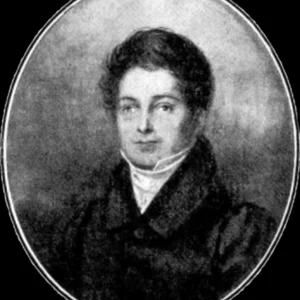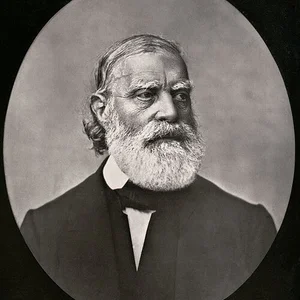

French physician born in 1774, a pioneer of special education and otolaryngology. He is famous for having tried to educate Victor of Aveyron, “the wild child,” laying the foundations of teaching methods for children with disabilities.
Jean Marc Gaspard Itard(1774 — 1838)
Jean Itard
France
6 min read
Frequently asked questions
Key Facts
- Born on 24 April 1774 in Oraison, Provence.
- From 1800 onward, he took charge of the education of Victor of Aveyron, the “wild child” discovered in the Tarn region.
- As physician at the National Institute for Deaf-Mutes in Paris, he developed innovative educational methods there.
- Considered one of the founders of otolaryngology thanks to his treatise on diseases of the ear (1821).
- Died on 5 July 1838 in Paris; his work would go on to inspire Maria Montessori and the field of special education.
Works & Achievements
First memoir detailing his method for educating Victor of Aveyron; a founding text of special education.
Second report to the Minister of the Interior, a clear-eyed and nuanced assessment of five years spent educating the wild child.
A pioneering work that systematized the study of ear disorders and made Itard a founder of otolaryngology.
A study in which Itard described for the first time a disorder corresponding to what would later be called Tourette syndrome.
A set of exercises based on the senses (touch, sight, hearing) that would inspire Édouard Séguin and later Maria Montessori.
On his death, Itard bequeathed part of his fortune to fund the instruction of deaf children, extending his lifelong commitment.
Anecdotes
In 1800, hunters captured a wild, naked, mute boy of about twelve in the woods of the Aveyron. Many scholars judged him an idiot and beyond help, but the young physician Itard chose to take up the challenge: he took the boy in, named him Victor, and set about educating him for five years.
One day Itard noticed that Victor, indifferent to loud noises like a pistol shot, would immediately turn around at the crack of a walnut being broken behind him. This observation convinced him that the child could hear perfectly well but had never learned to connect sounds with language.
To teach Victor the meaning of words, Itard used cut-out letters and objects: he invented exercises that resembled genuine educational games, two centuries before the modern methods for children with learning difficulties.
Maria Montessori, the famous Italian educator, would later acknowledge her debt to Itard: she translated and studied his writings, and built part of her method on his ideas of learning through the senses.
Itard was one of the first physicians to take a scientific interest in the ear and in deafness. He worked at the National Institute for Deaf-Mutes in Paris and is considered one of the founders of otolaryngology.
Primary Sources
Cast upon this globe without physical strength and without innate ideas, unable of himself to obey the constitutional laws of his organization, man can find only within the bosom of society the eminent place destined for him in nature.
Everything therefore had to be started over; but the early efforts had not been wasted on the child, and his progress was rapid.
The study of disorders of the organ of hearing has hitherto been too neglected, and it is to remedying this that I have devoted long years of observation.
Key Places
Village in Provence where Jean Itard was born in 1774, into a middle-class family.
Institution where Itard was appointed physician in 1800 and conducted his research on deafness and the education of Victor.
Department in southern France where the young “wild child” whom Itard tried to educate was captured in 1800.
Place where the young Itard, without an official diploma, began as a surgeon's assistant-major during the Revolutionary Wars.
Capital where Itard spent most of his career, was elected to the Academy of Medicine, and died in 1838.
Typical Objects

Cardboard or metal characters that Itard had Victor handle to teach him to recognize words and associate them with objects. One of the first sensory teaching materials.

A flared instrument held to the ear to amplify sounds, used to examine and assist hearing-impaired people. Itard employed it in his research on hearing.

A small, thin instrument that doctors inserted into the ear canal to examine or treat the ear. A pioneering tool of the emerging field of otolaryngology.

Boards and drawings pairing images with text that Itard used to help Victor understand language. An ancestor of visual learning aids.

A case holding the practitioner's instruments: probes, lancets and vials. A symbol of clinical medicine flourishing in the early 19th century.

A journal in which Itard meticulously recorded Victor's daily progress. This rigorous observation foreshadows modern scientific methods in psychology and pedagogy.
School Curriculum
Vocabulary & Tags
Key Vocabulary
Daily Life
Morning
As physician at the Institute for Deaf-Mutes, Itard began his day by visiting the pupils and examining diseased ears. He devoted his mornings to careful observation and to seeing patients.
Afternoon
The afternoon was dedicated to Victor's education: pronunciation exercises, handling letters and objects, and sessions to stimulate the senses. Itard recorded every bit of progress in his notebooks.
Evening
In the evening, he read the works of the philosophers and physicians of his time, wrote up his reports, and corresponded with the scholars of the Society of the Observers of Man.
Food
The diet of a Parisian bourgeois in the early 19th century was built around bread, soup, meats, and seasonal vegetables. Coffee, then booming in popularity, accompanied the long working days.
Clothing
Itard wore the sober attire of a physician of the era: a dark frock coat, a high-collared shirt, a knotted cravat, and a waistcoat. A top hat and cane completed the silhouette of the respectable practitioner.
Housing
He lived in Paris, partly within the Institute for Deaf-Mutes itself, in urban apartments lit by candlelight and heated by wood — typical of the city under the Empire and the Restoration.
Historical Timeline
Period Vocabulary
Liens externes & ressources
Références
Œuvres
De l'éducation d'un homme sauvage
1801
Rapport sur les nouveaux développements de Victor de l'Aveyron
1806
Traité des maladies de l'oreille et de l'audition
1821
Mémoire sur le mutisme par lésion des fonctions intellectuelles
1828
Méthode d'éducation sensorielle de Victor
1801-1806
Legs pour l'éducation des sourds-muets
1838