 flip
flipPan-bagnat Niçois of the fugitive
Pan-bagnat Niçois of the fugitive
Why this dish? In Nice in 1940-1941, Moulin ran the Galerie Romanin, a front as an art lover that covered his first Resistance contacts. Pan-bagnat — a round bread soaked in oil, filled and pressed — is the quintessential Niçois snack: nourishing, portable, eaten with one hand, perfect for a man who never stays put and lunches between discreet meetings.
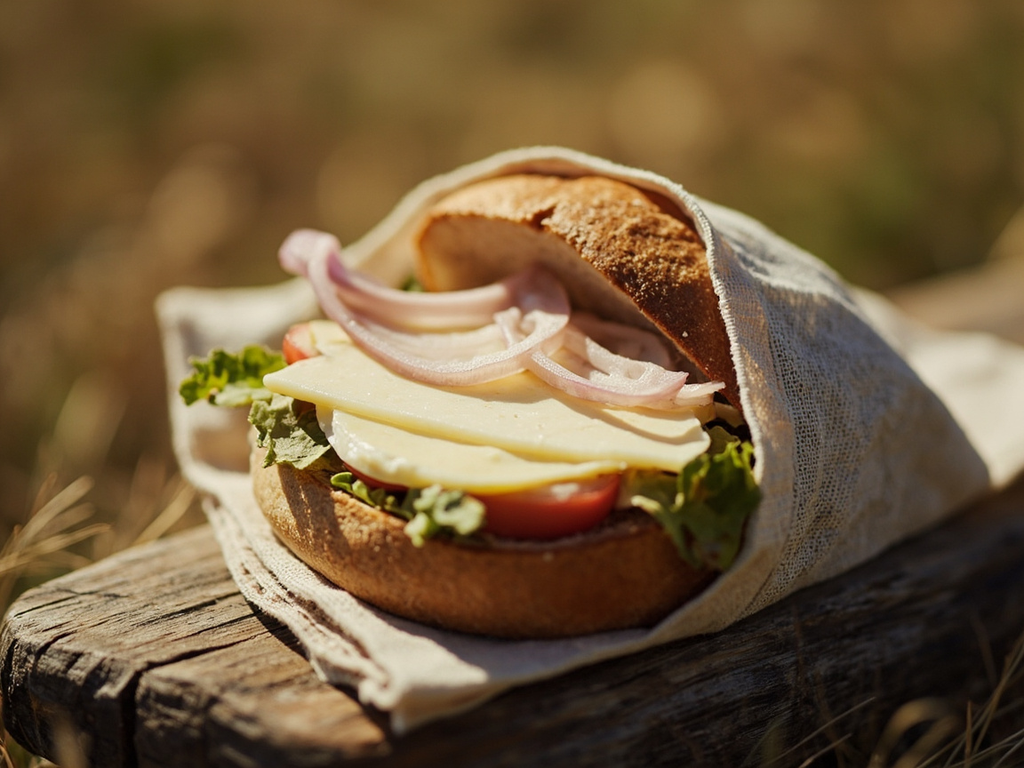
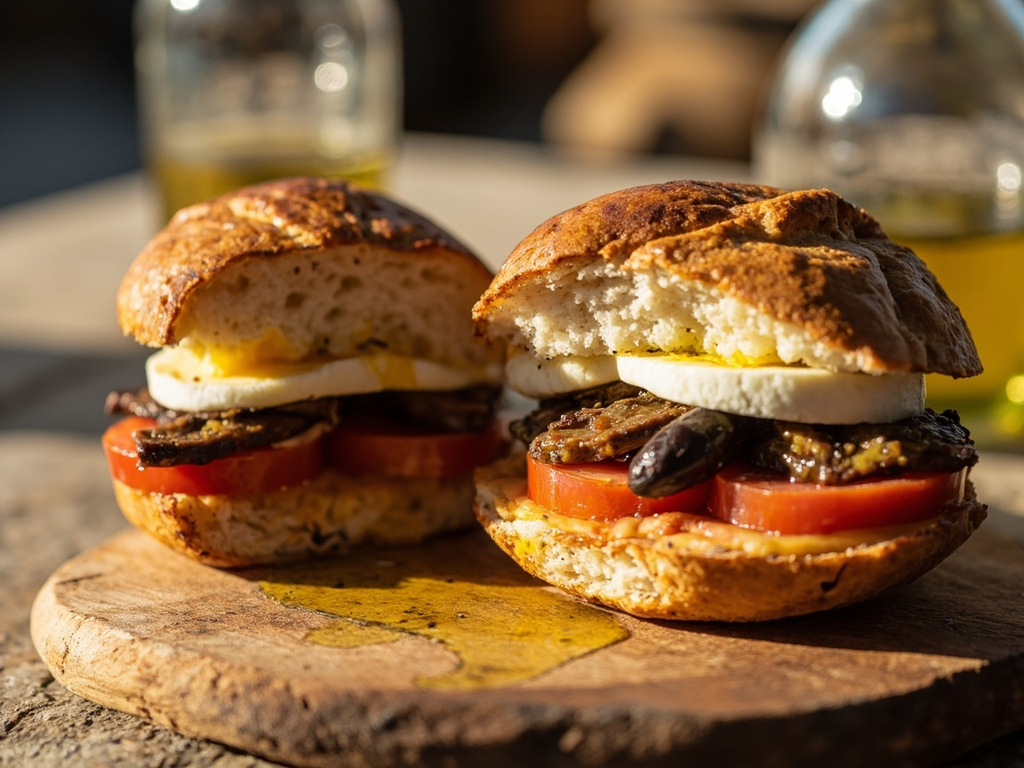
A round bread generously soaked in olive oil, filled with southern vegetables, hard-boiled egg, and anchovies, then pressed so the flavours meld. The sandwich of the County of Nice, ideal to slip into a pocket in the morning and eat later on a bench.
In Nice, we don't say sandwich, we say pan-bagnat — the bathed bread. You split a nice round loaf, rub it with garlic, drown it in olive oil until it glistens, then fill it with whatever the market offers that day, a hard-boiled egg, a few anchovies, some salad. You press it under a plate, carry it away, and eat it wherever you can, without noise. A busy man has no time to sit down; this one slips into a pocket and keeps you company all afternoon.
- •Round country bread — one individual loaf (base)
- •Olive oil — generous (soul of the pan-bagnat)
- •Garlic — one clove (flavor)
- •Hard-boiled egg — one (nourishing filling)
- •Salted anchovies — a few (salty umami)
- •Tomato, onion, lettuce — according to market (freshness)
Pan-bagnat Niçois of the fugitive
A round bread generously soaked in olive oil, filled with southern vegetables, hard-boiled egg, and anchovies, then pressed so the flavours meld. The sandwich of the County of Nice, ideal to slip into a pocket in the morning and eat later on a bench.
Why this dish? In Nice in 1940-1941, Moulin ran the Galerie Romanin, a front as an art lover that covered his first Resistance contacts. Pan-bagnat — a round bread soaked in oil, filled and pressed — is the quintessential Niçois snack: nourishing, portable, eaten with one hand, perfect for a man who never stays put and lunches between discreet meetings.
In Nice, we don't say sandwich, we say pan-bagnat — the bathed bread. You split a nice round loaf, rub it with garlic, drown it in olive oil until it glistens, then fill it with whatever the market offers that day, a hard-boiled egg, a few anchovies, some salad. You press it under a plate, carry it away, and eat it wherever you can, without noise. A busy man has no time to sit down; this one slips into a pocket and keeps you company all afternoon.
Ingredients (period version)
- Round country bread — one individual loaf (base)
- Olive oil — generous (soul of the pan-bagnat)
- Garlic — one clove (flavor)
- Hard-boiled egg — one (nourishing filling)
- Salted anchovies — a few (salty umami)
- Tomato, onion, lettuce — according to market (freshness)
Ingredients
- Small round bread with firm crumb — 1 (base)
- Extra virgin olive oil — 3 tbsp (soul of the pan-bagnat)
- Garlic — 1 clove (flavor)
- Hard-boiled egg — 1 (nourishing filling)
- Anchovy fillets — 3 to 4 (salty umami)
- Ripe tomato — 1 (tangy freshness)
- Spring onion, lettuce leaves, black olives — to taste (garnish)
- Wine vinegar — a dash (acidity)
Method
- Open the bread in half through the thickness without separating completely, and rub the inside with garlic.
- Drizzle both sides generously with olive oil and a dash of vinegar.
- Fill with salted tomato slices, onion, sliced hard-boiled egg, anchovies, olives, and lettuce.
- Close the bread, press firmly under a weighted plate for 15 to 30 minutes so the bread absorbs the oil.
- Wrap in a cloth and carry: it is best after resting.
How it was made : Pan-bagnat is a popular, ancient snack from the County of Nice, originally made to use up stale bread revived with oil. Under the Occupation, in the South, its ingredients (oil, vegetables, canned anchovies) remained more accessible than elsewhere, even if eggs and white bread were scarce.
The contemporary twist : Serve it whole and well pressed, cut cleanly in half to reveal the layers, tied with a strand of raffia: the Resistance fighter's 'meal prep', ahead of its time.
Jean Moulin · Charactorium