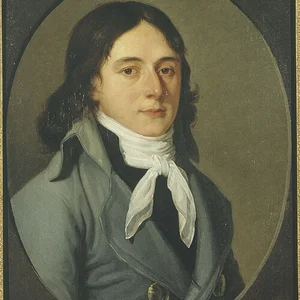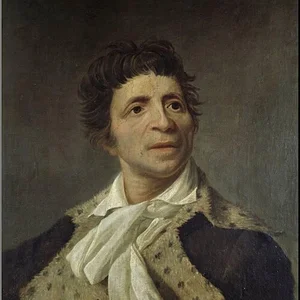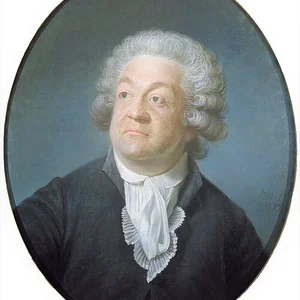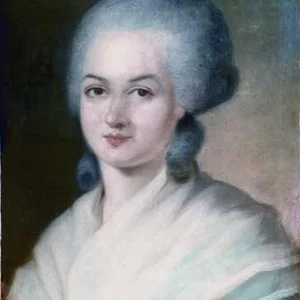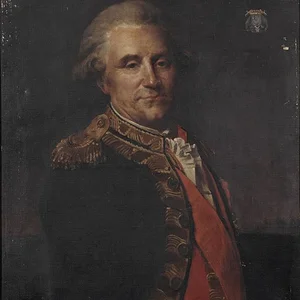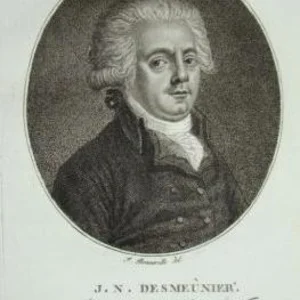

French politician and writer (1751-1814), deputy to the Estates-General of 1789 and member of the National Constituent Assembly. He later became a senator under the Napoleonic First Empire.
Jean-Nicolas Démeunier(1751 — 1814)
Jean-Nicolas Démeunier
France
8 min read
Frequently asked questions
Key Facts
- Born in 1751 in Dompaire (Vosges)
- Elected to the Estates-General in 1789, he sat in the National Constituent Assembly (1789-1791)
- Author of L'Esprit des usages et des coutumes des différents peuples (1776), a work of comparative ethnography
- Appointed senator under the Napoleonic First Empire
- Died in Paris in 1814
Works & Achievements
A multi-volume ethnographic work comparing the customs, beliefs, and institutions of peoples from around the world. Démeunier's first major publication, written at age 25, it reveals his interest in human diversity in the spirit of the Enlightenment.
A major encyclopedic contribution written in dialogue with Thomas Jefferson. Démeunier offers a detailed portrait of the institutions, laws, and society of the young American democracy — an important text for the spread of republican ideas in France.
A series of encyclopedic articles on political economy, diplomacy, and foreign institutions, demonstrating the breadth of Démeunier's political and geographical knowledge in service of the Enlightenment encyclopedic project.
A collection of speeches and reports delivered during the founding constitutional debates. Démeunier distinguished himself in discussions on the organization of powers and civil liberties, drawing on his knowledge of foreign institutions to serve France.
Anecdotes
While Démeunier was preparing his article on the United States for the *Encyclopédie Méthodique*, he sought the help of Thomas Jefferson, then the American ambassador in Paris. Jefferson sent him detailed notes and corrections on the institutions of the young American democracy, giving rise to a valuable intellectual correspondence. This exchange illustrates Paris's role as a crossroads of republican ideas on the eve of the Revolution.
Elected as a deputy of the Third Estate for Paris to the Estates-General of 1789, Démeunier actively participated in drafting the Constitution of 1791. He served on the constitutional committee, one of the most important bodies of the National Constituent Assembly, helping to lay the legal foundations of the new France. His encyclopedic work on foreign institutions had made him a recognized expert on constitutional systems.
At just 25 years old, Démeunier published *L'Esprit des usages et des coutumes des différents peuples* (1776), an ambitious work comparing the customs and traditions of peoples from around the world. This pioneering work, in the tradition of the Enlightenment, sought to understand humanity in all its diversity by applying reason to the study of societies. It earned him a reputation as a learned man of letters well before the Revolution.
Under the First Empire, Napoleon Bonaparte appointed Démeunier to the Conservative Senate, rewarding his long political commitment. This appointment illustrates the Emperor's strategy of bringing numerous former moderate revolutionaries into the fold, offering them honorific positions in exchange for their loyalty to the new regime.
Primary Sources
Thomas Jefferson provided Démeunier with detailed annotations for his article on the United States in the *Encyclopédie Méthodique*, correcting errors and supplementing information about American institutions. These exchanges reflect the French Enlightenment's keen interest in American democracy.
Démeunier offers a comprehensive overview of the institutions, laws, and society of the United States of America, drawing on information supplied by Jefferson and other diplomatic sources. This text stood as one of the first systematic presentations of American democracy for a French audience.
The minutes of the National Constituent Assembly's sessions record Démeunier's interventions, particularly on constitutional questions and the organization of governmental powers. These speeches attest to his active role in building the institutional framework of revolutionary France.
A pioneering work comparing the customs, religions, and institutions of peoples from every continent, seeking to draw out universal principles from human diversity. Démeunier applies the Enlightenment's comparative method to the study of societies.
Key Places
Birthplace of Jean-Nicolas Démeunier, in Burgundy. Like many provincial men of letters in the 18th century, he left his home region to build a career in Paris among intellectual and political circles.
Site of the opening of the Estates-General on May 5, 1789. Démeunier sat there as a deputy of the Third Estate for Paris, taking part in the crucial early weeks that led to the proclamation of the National Assembly and the French Revolution.
Hall where the National Constituent Assembly convened after relocating to Paris in October 1789. Démeunier took part in the foundational constitutional debates held there until September 1791.
Seat of the Conservative Senate under the Consulate and later the Imperial Senate under Napoleon. Démeunier served there as a senator, participating in the legislative work of the Napoleonic regime until his death in 1814.
The intellectual heart of Enlightenment France, home to philosophers, encyclopédistes, and men of letters. Démeunier settled here and moved in literary and political circles, frequenting the salons where new ideas were in constant circulation.
Typical Objects

The primary tool of the man of letters in the 18th century. Démeunier drafted his encyclopedic articles, speeches, and correspondence with a goose quill dipped in ink held in a glass or earthenware inkwell placed on his desk.

A continuation of Diderot and d'Alembert's *Encyclopédie*, organized by subject. Démeunier contributed to the volumes on political economy and diplomacy, most notably writing the article on the United States in dialogue with Jefferson.

A document drawn up by representatives of each estate before the Estates-General of **1789**, listing grievances and desired reforms. Démeunier, elected as a deputy of the Third Estate, was its direct political heir and brought these demands to the Assembly.

Deputies of the Third Estate wore a plain black coat with no embroidery or ornamentation, in contrast to the nobility and clergy. This attire symbolized the moral austerity claimed by the Third Estate in opposition to the privileges of the upper orders.

France's first constitutional text, drafted by the National Constituent Assembly of which Démeunier was a member. This foundational document established a constitutional monarchy and proclaimed the rights of citizens.

Under the First Empire, Napoleon granted his senators a landed estate known as a *sénatorerie*, along with a comfortable income. This material privilege secured the loyalty of Senate members to the imperial regime.
School Curriculum
Vocabulary & Tags
Key Vocabulary
Daily Life
Morning
Démeunier began his day early, in keeping with the habits of men of letters in the 18th century. He devoted the morning hours to reading and writing, working on his encyclopedic articles or his intellectual correspondence. His study, lined with books and papers, was the heart of his daily activity.
Afternoon
Afternoons were often given over to political and social life. During the Revolution, he attended the National Assembly to take part in sometimes heated debates on the Constitution. Later, under the Empire, he sat in sessions of the Senate at the Palais du Luxembourg or received visitors.
Evening
Parisian men of letters spent their evenings in literary and philosophical salons — the quintessential spaces of intellectual exchange in the 18th century. Démeunier might rub shoulders there with fellow encyclopedists, parliamentarians, or foreign diplomats such as Jefferson during his stays in Paris.
Food
The table of a bourgeois man of letters of the era was simple but decent: soups, vegetables, roasted meats, white bread, and Burgundy wines. During the revolutionary years, food shortages affected all of Paris, and even representatives of the people sometimes had to make do with the frugal fare that circumstances imposed.
Clothing
Démeunier wore the dress of enlightened men of letters and the bourgeoisie: a redingote or French-cut coat in dark cloth, breeches, stockings, and buckled shoes. As a deputy of the Third Estate, he wore the prescribed black coat. Under the Empire, the rank of senator required an embroidered coat in imperial colors for official ceremonies.
Housing
Settled in Paris, Démeunier likely occupied an apartment in a building on the Left Bank, close to the centers of power and intellectual circles. This type of bourgeois dwelling included a reception room, a study well stocked with books and documents, and service quarters.
Historical Timeline
Period Vocabulary
Liens externes & ressources
Références
Œuvres
L'Esprit des usages et des coutumes des différents peuples
1776
Article États-Unis dans l'Encyclopédie Méthodique (Économie politique et diplomatique)
1786
Contributions à l'Encyclopédie Méthodique — volumes Économie politique
1784-1788
Rapports et discours à l'Assemblée nationale constituante
1789-1791