 flip
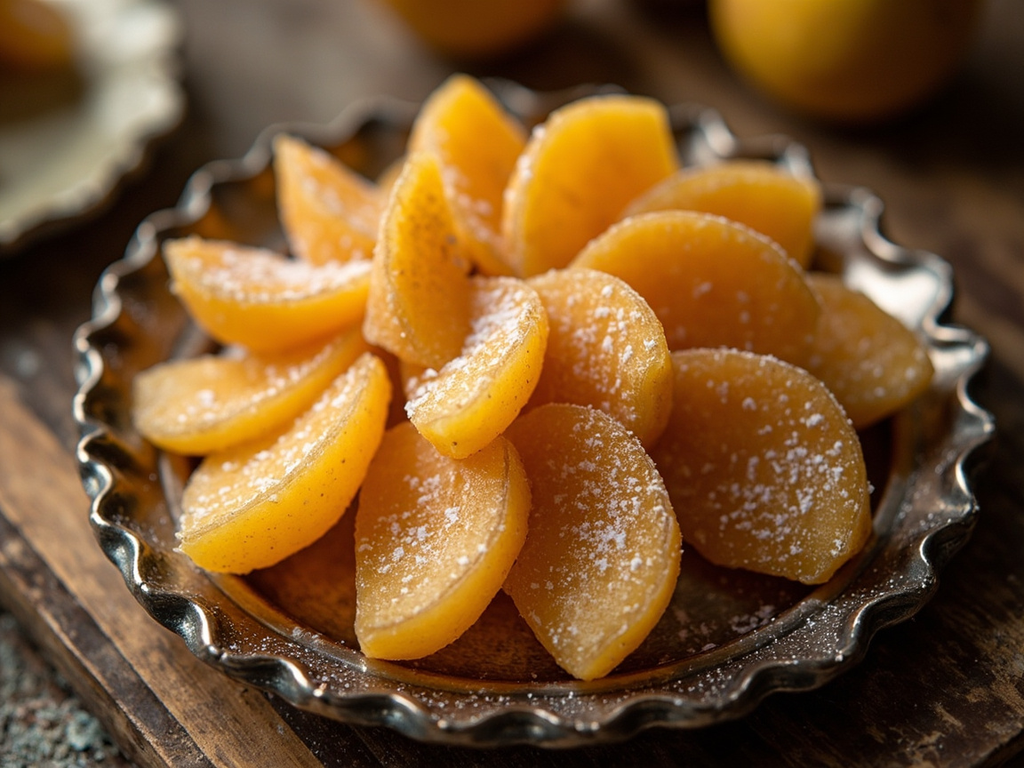
Cotignac — pâte de coing
Cotignac — pâte de coing
Why this dish? Dry preserves close the great meals of the 17th century and keep all winter. Cotignac, a fragrant quince paste, was a famous sweet—it was even offered to visiting kings. For a man of letters receiving at home after the theater, it is the refined treat presented with wine.
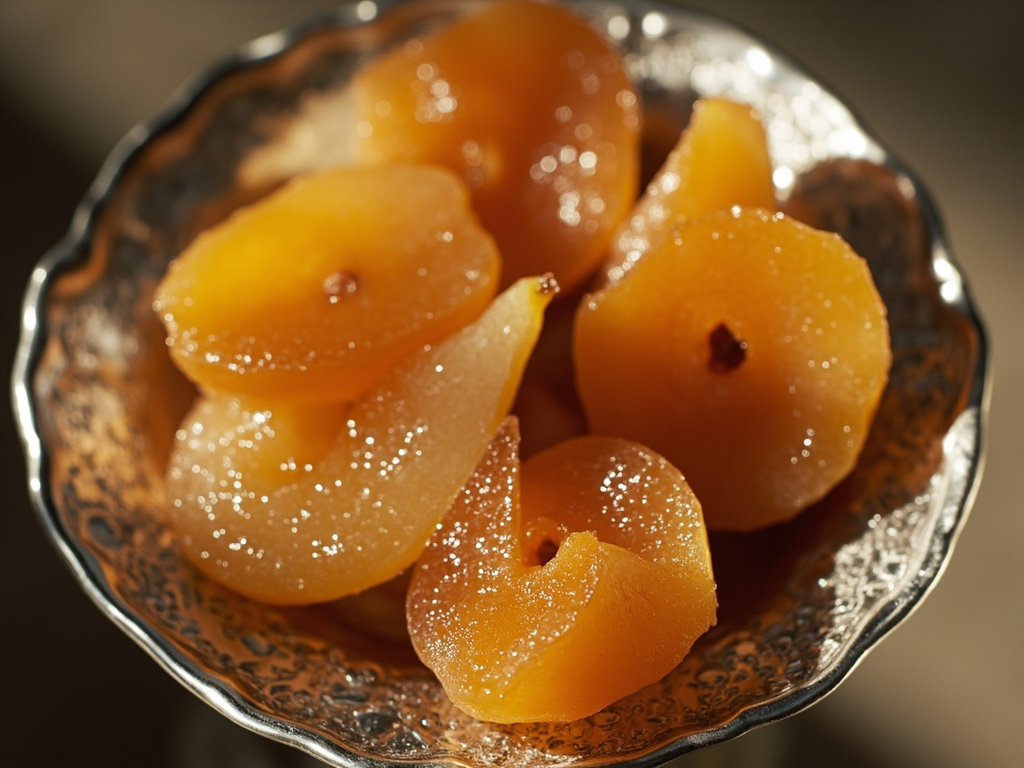
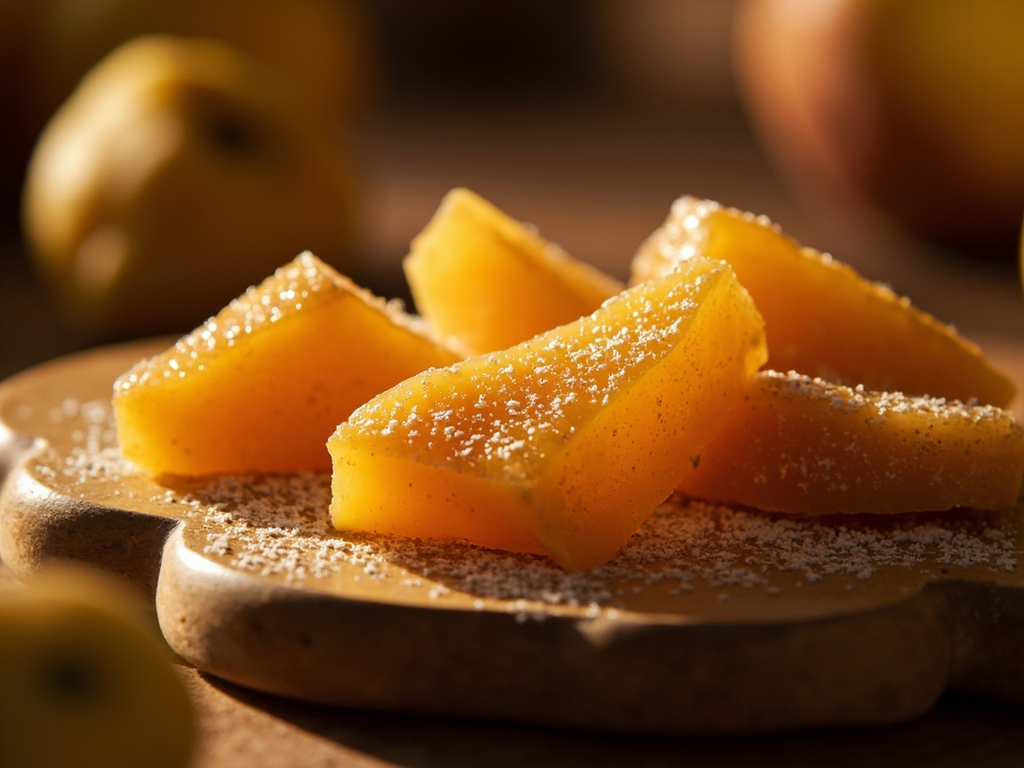
A dense, translucent fruit paste made from quinces slowly cooked with sugar until set. Cut into diamonds, it keeps for weeks and wonderfully accompanies the end of a meal or a visit.
Here is a sweet that demands patience, a virtue that theater has taught me well. The quince, that tart and fragrant fruit that no one would eat raw, becomes under sugar an amber paste. You must cook it, strain it, then put it back on the fire and stir it without ceasing until it pulls away from the bottom of the pot. Then you cut it into small diamonds and keep it all winter in boxes. I gladly offer it to my guests as we leave the table, with a finger of wine: nothing better to prolong the conversation.
- •Coings bien mûrs — plusieurs (fruit de base, riche en pectine)
- •Sucre (ou miel) — presque autant que de pulpe (conservation et prise de la pâte)
- •Eau — ce qu'il faut (première cuisson des coings)
Cotignac — pâte de coing
A dense, translucent fruit paste made from quinces slowly cooked with sugar until set. Cut into diamonds, it keeps for weeks and wonderfully accompanies the end of a meal or a visit.
Why this dish? Dry preserves close the great meals of the 17th century and keep all winter. Cotignac, a fragrant quince paste, was a famous sweet—it was even offered to visiting kings. For a man of letters receiving at home after the theater, it is the refined treat presented with wine.
Here is a sweet that demands patience, a virtue that theater has taught me well. The quince, that tart and fragrant fruit that no one would eat raw, becomes under sugar an amber paste. You must cook it, strain it, then put it back on the fire and stir it without ceasing until it pulls away from the bottom of the pot. Then you cut it into small diamonds and keep it all winter in boxes. I gladly offer it to my guests as we leave the table, with a finger of wine: nothing better to prolong the conversation.
Ingredients (period version)
- Coings bien mûrs — plusieurs (fruit de base, riche en pectine)
- Sucre (ou miel) — presque autant que de pulpe (conservation et prise de la pâte)
- Eau — ce qu'il faut (première cuisson des coings)
Ingredients
- Quinces — 1 kg (base fruit)
- Sugar — 700 g (approx. weight of pulp) (preservation and texture)
- Lemon juice — 1 tablespoon (brightens flavor and color)
- Water — to cover (initial cooking)
Method
- Wash the quinces, rubbing off the fuzz, cut into quarters without peeling or removing seeds (rich in pectin). Cover with water and cook until very tender (≈30-40 min).
- Drain, remove cores and seeds, then pass the pulp through a sieve or food mill to obtain a smooth purée.
- Weigh the purée, return it to a heavy-bottomed saucepan with about its weight in sugar and the lemon juice.
- Cook over low heat, stirring constantly with a wooden spoon, 30 to 45 minutes, until the paste thickens and pulls away from the bottom, leaving a trail.
- Spread to about 1.5 cm thickness in a dish lined with parchment paper, smooth, and let dry in the air for 24 to 48 hours.
- Cut into diamonds, optionally roll in sugar, and store in an airtight container.
How it was made : Orléans cotignac was a renowned specialty since the Middle Ages, traditionally presented in small round spruce boxes. Before sugar became widespread, it was made with honey. Dry preserves like this allowed autumn fruits to be kept long after the season, at a time without refrigeration.
The contemporary twist : Serve the diamonds with a pressed cheese (comté, manchego): the quince-cheese pairing is a classic that will delight modern palates.
Sources : Nicolas de Bonnefons, Les Délices de la campagne, 1654 · Marie-Antoine Carême (pour la tradition de la pâte de coing), Le Pâtissier royal parisien, 1815
Jean Racine · Charactorium