 flip
flipNorman apple and cinnamon tourte
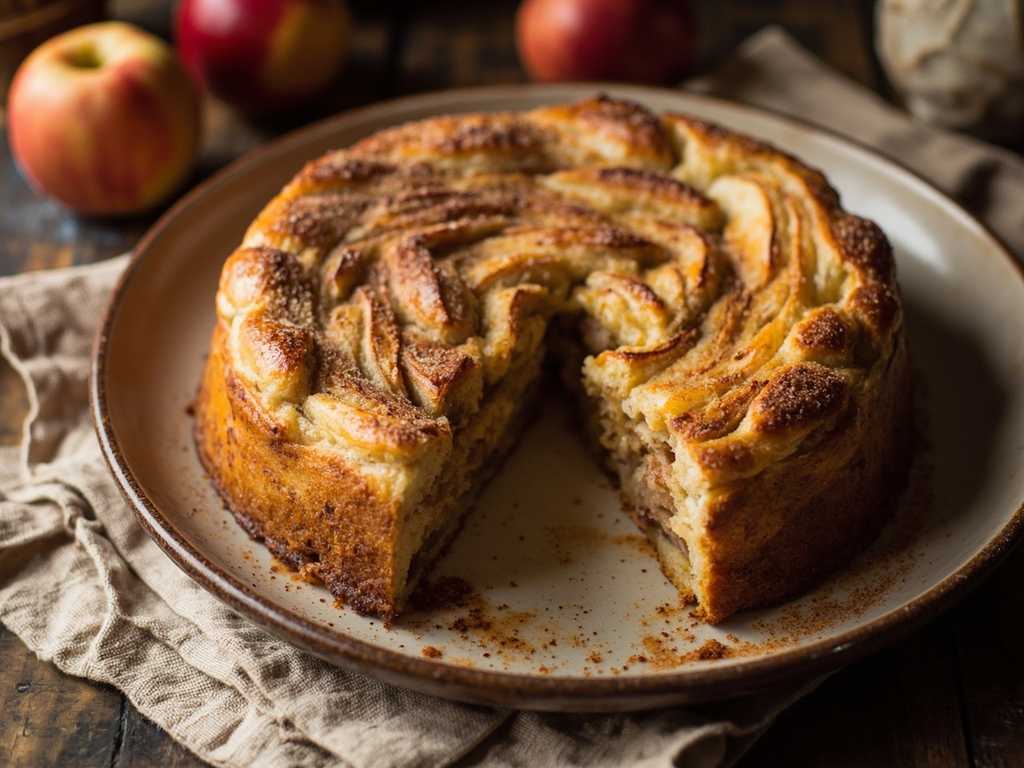
Norman apple and cinnamon tourte
Why this dish? A direct tribute to Corneille's Norman roots: the apple, fruit of the Rouen orchard, keeps all winter and is baked into a sweet tourte. It is the taste of the playwright's childhood, transposed onto the Parisian tablecloth.
A golden tourte of melting apples, perfumed with cinnamon and bound with a little butter and sugar. Sweet and tangy, it closes the meal with orchard fruits that can be stored from one season to the next.
Here is a bit of my Normandy on your Paris table. At home, we keep the apples in the fruit store all winter, on straw, and when the craving for sweetness comes we fill a crust with them, with sugar and cinnamon that comes from afar. Peel them, slice them thinly, sugar without excess for the apple has its own tartness, and let them confit under the pastry. Warm, it perfumes the whole house with the scent of my native land; and even a maker of tragedies is entitled, come evening, to a little sweet tenderness.
- •Orchard apples — several (filling)
- •Sugar — moderately (sweetness)
- •Cinnamon — a pinch (signature spice)
- •Butter — a knob (melting richness)
- •Butter pastry — two sheets (crust)
Norman apple and cinnamon tourte
A golden tourte of melting apples, perfumed with cinnamon and bound with a little butter and sugar. Sweet and tangy, it closes the meal with orchard fruits that can be stored from one season to the next.
Why this dish? A direct tribute to Corneille's Norman roots: the apple, fruit of the Rouen orchard, keeps all winter and is baked into a sweet tourte. It is the taste of the playwright's childhood, transposed onto the Parisian tablecloth.
Here is a bit of my Normandy on your Paris table. At home, we keep the apples in the fruit store all winter, on straw, and when the craving for sweetness comes we fill a crust with them, with sugar and cinnamon that comes from afar. Peel them, slice them thinly, sugar without excess for the apple has its own tartness, and let them confit under the pastry. Warm, it perfumes the whole house with the scent of my native land; and even a maker of tragedies is entitled, come evening, to a little sweet tenderness.
Ingredients (period version)
- Orchard apples — several (filling)
- Sugar — moderately (sweetness)
- Cinnamon — a pinch (signature spice)
- Butter — a knob (melting richness)
- Butter pastry — two sheets (crust)
Ingredients
- Apples (reinette or boskoop) — 5 (filling)
- All-butter shortcrust pastry — 2 rolls (or homemade) (crust)
- Sugar — 60 g (sweetness)
- Ground cinnamon — 1 tsp (signature spice)
- Butter — 30 g (melting richness)
- Egg yolk — 1 (glaze)
Method
- Peel the apples and cut them into thin slices. Mix with sugar and cinnamon.
- Line a mold with one sheet of pastry. Arrange the apples in tight layers, dot with butter.
- Cover with the second sheet, seal the edges, and cut a steam vent.
- Glaze with egg yolk. Bake at 180°C for 40 to 45 minutes until the crust is golden and the apples are tender.
- Serve warm, optionally dusted with a little sugar.
How it was made : Normandy has been the land of eating apples and cider apples since the Middle Ages. Fruits were stored on racks in the fruit store to last through winter. Cinnamon, an expensive imported spice arriving via trade routes, signaled a refined dessert. Sugar remained a costly product, used sparingly.
The contemporary twist : A drizzle of salted butter caramel (Guérande salt) on the side, and the tourte becomes a chef's 'tarte normande'.
Pierre Corneille · Charactorium