 flip
flipHerb-Roasted Lamb for the Passing Guest
Herb-Roasted Lamb for the Passing Guest
Why this dish? Killing a lamb from the flock was an act of celebration and honor — Job's sons regularly held banquets (mishteh) (Job 1:4). A man of high status and hospitality, Job had meat prepared to honor a guest or mark a happy day, before the ordeal.
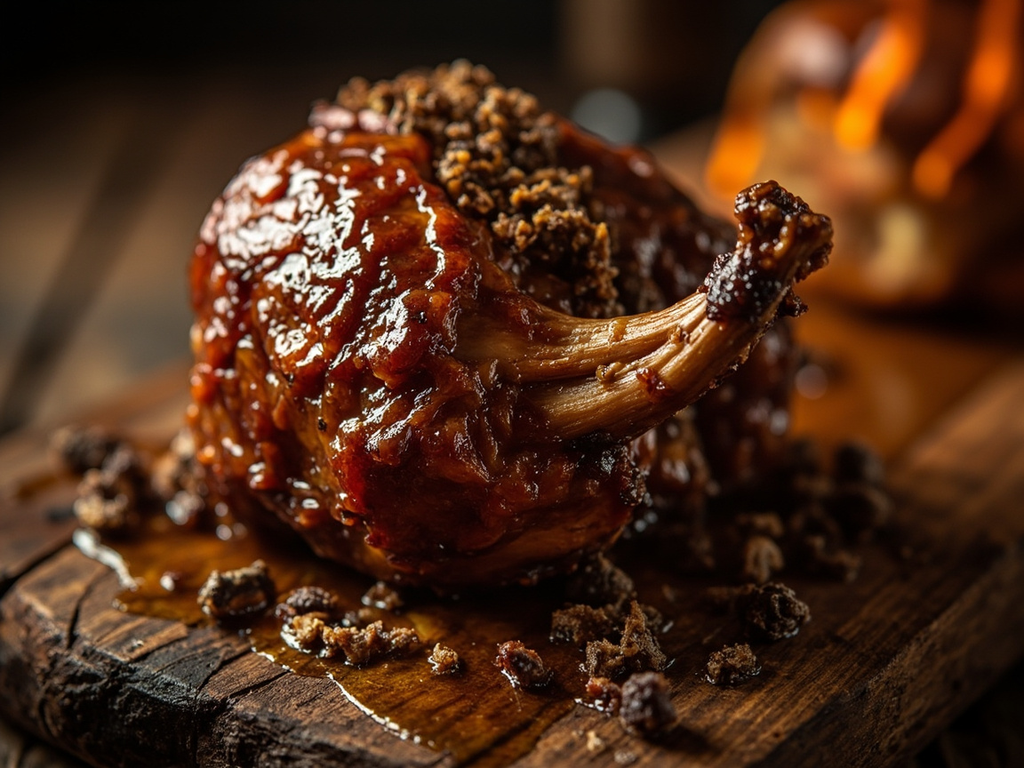
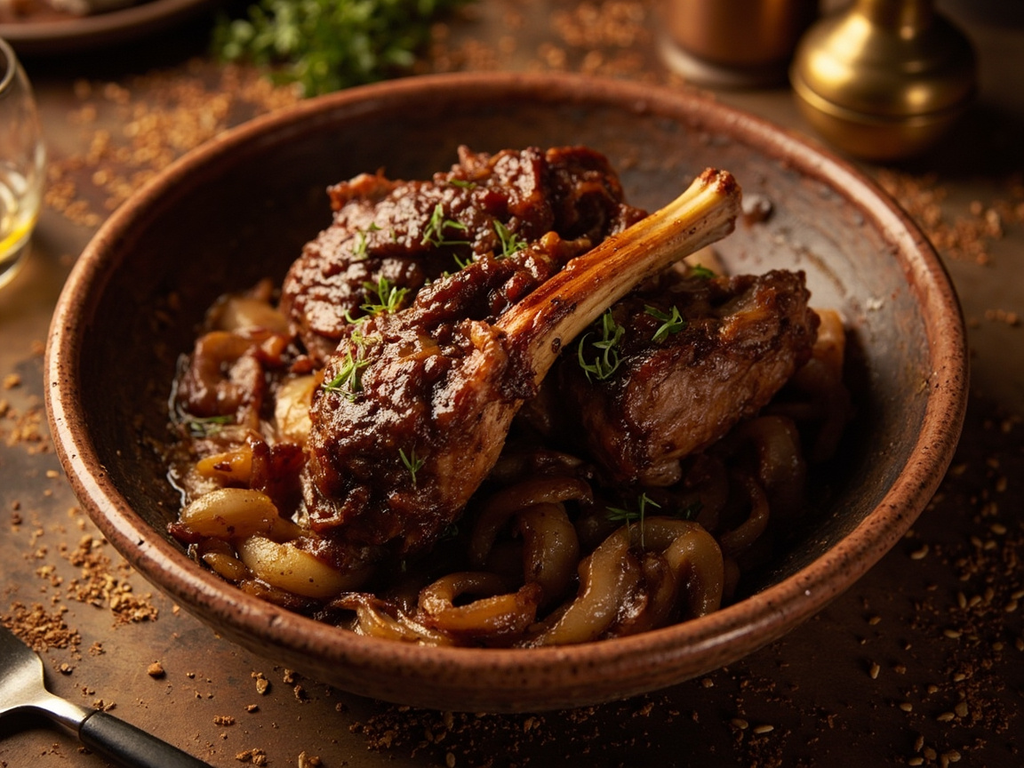
A quarter of lamb rubbed with salt, cumin, and coriander, roasted slowly until the meat falls apart, perfumed with onion and a hint of honey that caramelizes the crust. A dish for great days, to be shared from the same platter.
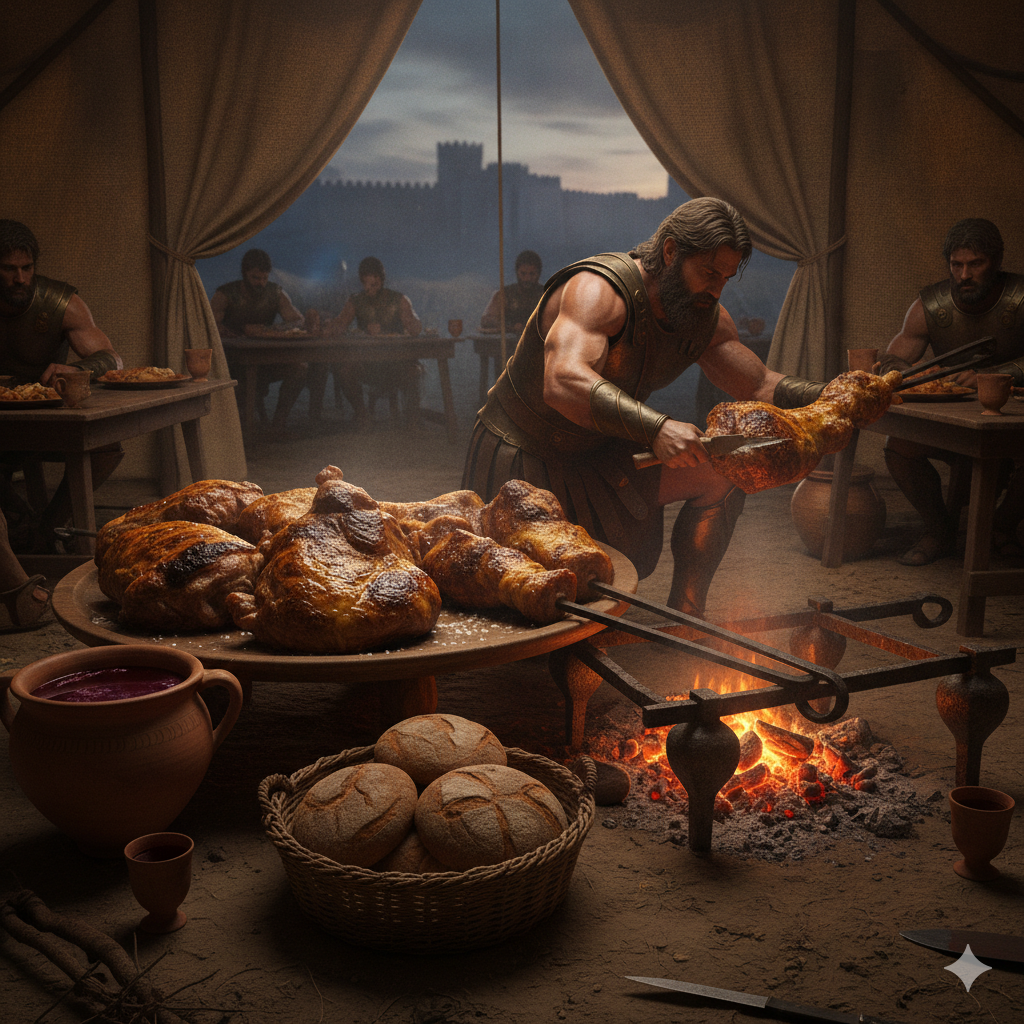
In the days of my prosperity, when a weary traveler pushed open the flap of my tent, I did not let him leave with an empty belly: we chose from the flock a lamb without blemish. We rubbed it with salt and the bitter herbs of the desert, laid it on the slow coals until its fat sang. The table overflowed, and the joy of the satisfied stranger was worth more to me than silver. See: this is how you honor a man, by sharing the best beast.
- •Lamb shoulder or leg from the flock — a quarter (centrepiece)
- •Salt — by hand (seasoning and preservation)
- •Cumin and coriander seeds, crushed — a pinch of each (aroma)
- •Onions — a few (base)
- •Honey — a drizzle (glaze)
- •Olive oil — as needed (coating)
Herb-Roasted Lamb for the Passing Guest
A quarter of lamb rubbed with salt, cumin, and coriander, roasted slowly until the meat falls apart, perfumed with onion and a hint of honey that caramelizes the crust. A dish for great days, to be shared from the same platter.
Why this dish? Killing a lamb from the flock was an act of celebration and honor — Job's sons regularly held banquets (mishteh) (Job 1:4). A man of high status and hospitality, Job had meat prepared to honor a guest or mark a happy day, before the ordeal.
In the days of my prosperity, when a weary traveler pushed open the flap of my tent, I did not let him leave with an empty belly: we chose from the flock a lamb without blemish. We rubbed it with salt and the bitter herbs of the desert, laid it on the slow coals until its fat sang. The table overflowed, and the joy of the satisfied stranger was worth more to me than silver. See: this is how you honor a man, by sharing the best beast.
Ingredients (period version)
- Lamb shoulder or leg from the flock — a quarter (centrepiece)
- Salt — by hand (seasoning and preservation)
- Cumin and coriander seeds, crushed — a pinch of each (aroma)
- Onions — a few (base)
- Honey — a drizzle (glaze)
- Olive oil — as needed (coating)
Ingredients
- Lamb shoulder — 1.5 kg (centrepiece)
- Salt — 2 tsp (seasoning)
- Ground cumin — 1 tsp (aroma)
- Crushed coriander seeds — 1 tsp (aroma)
- Onions — 3 (base)
- Honey — 1 tbsp (glaze)
- Olive oil — 3 tbsp (coating)
Method
- Rub the lamb with oil, salt, cumin, and coriander. Let rest for 1 hour at room temperature.
- Arrange sliced onions in the bottom of a dish, place the lamb on top, add half a glass of water.
- Cover and roast at 150°C for 3 hours, until the meat falls apart.
- Brush with honey, increase to 210°C, and roast uncovered for 15 minutes to brown.
- Let rest 10 minutes, then serve shredded by hand with barley bread.
How it was made : Meat was an occasional luxury, reserved for feasts, guests, and sacrifices. The animal was slaughtered on the spot, roasted whole over embers or in a heated pit. Salt was used both for seasoning and for preserving uneaten portions.
The contemporary twist : Serve the shredded lamb in the barley flatbread as a large 'sandwich' to share at the center of the table, a revamped patriarchal banquet style.
Sources : Book of Job, 1:4 · Oded Borowski, Daily Life in Biblical Times, 2003
Job · Charactorium