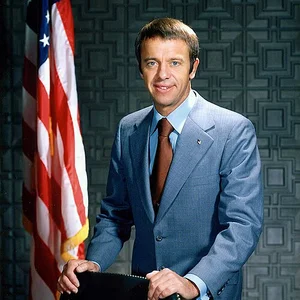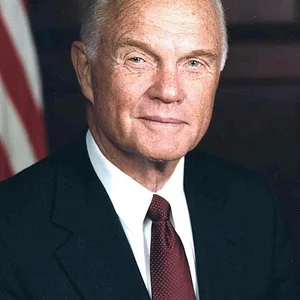

John Glenn was the first American to orbit the Earth on February 20, 1962, aboard the Friendship 7 capsule. A military pilot and Korean War hero, he later became a senator from Ohio and returned to space in 1998 at age 77.
John Glenn(1921 — 2016)
John Glenn
États-Unis
9 min read
Frequently asked questions
Famous Quotes
« To sit back and let the Cape Fear run through Virginia would be a terrible thing.»
« We are the first people who have gone to space. We are the first people who have orbited the Earth.»
Key Facts
- February 20, 1962: first American to orbit the Earth aboard Friendship 7 (3 orbits in 4h55)
- 1943–1965: military career as a fighter pilot, veteran of World War II and the Korean War
- 1974–1999: Democratic senator from Ohio
- October 29, 1998: return to space at age 77 aboard Discovery, setting the record as the oldest astronaut
- 1962: welcomed as a national hero, ticker-tape parade in New York before 4 million people
Works & Achievements
Glenn completed three orbits around the Earth in 4 hours and 55 minutes aboard the Mercury-Atlas 6 capsule. The mission restored American confidence in the Space Race against the USSR and instantly made Glenn a national hero.
Glenn flew 149 combat missions during World War II and the Korean War, then became a test pilot at NASA. His exceptional piloting expertise was a decisive factor in his selection as one of the Mercury Seven.
Glenn represented Ohio in the U.S. Senate for 25 years, working on defense issues, space policy, and nuclear non-proliferation. He also ran in the Democratic presidential primary in 1984.
Aboard the Space Shuttle Discovery, Glenn became the oldest astronaut in history. His participation enabled scientific research on aging in weightlessness, opening new medical perspectives.
Memoirs co-written with Nick Taylor tracing Glenn's entire life, from his childhood in Ohio to his career in space and politics. The book is a valuable historical source on the golden age of the American space program.
Founded at The Ohio State University, this institute dedicated to training future public leaders bears Glenn's name. It embodies his commitment to public service and active citizenship.
Anecdotes
At the launch of Friendship 7 on February 20, 1962, fellow astronaut Scott Carpenter called out over the radio: “Godspeed, John Glenn!” — a phrase that has gone down in the history of space exploration. Glenn orbited the Earth three times in just under five hours, instantly becoming a national hero.
While in orbit, Glenn observed thousands of tiny glowing specks surrounding his capsule, which he called “fireflies.” These mysterious sparkling particles turned out to be ice crystals formed by condensation on the capsule walls — an unexpected discovery that puzzled NASA engineers.
During the Korean War, Glenn was nicknamed “Magnet Ass” by his fellow pilots, because his planes were regularly hit by enemy fire yet he was never shot down. A remarkably daring pilot, he flew a total of 149 combat missions between Korea and World War II.
In 1998, at age 77, John Glenn returned to space aboard the shuttle Discovery (mission STS-95), becoming the oldest astronaut in history. His presence on board enabled scientific studies on the similarities between aging and the effects of weightlessness on the human body.
As he passed over Australia during his 1962 orbital flight, the residents of Perth had turned on all their lights to greet the astronaut from the ground. Glenn could clearly see the illuminated city from space — a gesture of human solidarity that moved him deeply.
Primary Sources
We live in a world where every man's horizons are expanding, where each of us must come to know our neighbors better — not just the neighbor next door, but the neighbor on the other side of the world.
The final countdown is something you've been waiting years for. When you're sitting there in that capsule, you suddenly realize the whole machine was built by the lowest bidder.
Astronaut Glenn reported observing luminous particles resembling fireflies around the capsule during the third dawn passage. These particles appeared to originate from the outer surface of the capsule.
The space race is not a race for glory. It is a race for knowledge, for mastery of our environment, for a better understanding of the universe in which we live.
When I saw the Earth from orbit for the first time, I understood how fragile and precious our planet is. It is not an experience one can put into words — you have to live it to truly understand it.
Key Places
John Glenn's hometown, where he was born on July 18, 1921. A small town in the American Midwest, it is today proud of its most famous son and has dedicated a museum to him.
The NASA launch site from which Glenn lifted off aboard Friendship 7 on February 20, 1962. This site was the departure point for all major American missions of the Mercury and Apollo era.
The town where Glenn grew up and studied at Muskingum College. He returned there as a hero after his orbital flight, and the town has paid him many tributes.
NASA's astronaut headquarters, where Glenn trained intensively for his space missions. The center has also controlled all American crewed missions since its founding in 1961.
In 1962, the residents of Perth lit up their entire city to greet Glenn as he passed overhead aboard Friendship 7. The astronaut could clearly make out the city from space — a memory he often recalled.
The federal capital where Glenn was welcomed as a hero after his orbital flight, and where he served as a U.S. Senator from Ohio from 1974 to 1999. He delivered his celebrated address before Congress there on February 26, 1962.
Typical Objects

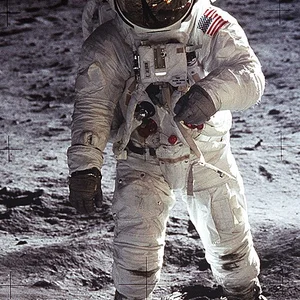
Pressurized silver suit worn by Glenn during his 1962 orbital flight, designed to protect him in case of capsule depressurization. It became the iconic symbol of America's first astronauts.

The conical Mercury-Atlas capsule in which Glenn completed three orbits around the Earth. The name “Friendship 7” was chosen by Glenn himself as a tribute to friendship between peoples.

A military launch vehicle adapted by NASA to propel Mercury capsules into orbit. Its use for crewed flights was controversial, as its reliability record was not without blemish.

A consumer camera that Glenn took into space to photograph Earth from orbit. The images he brought back helped shape humanity's vision of Earth seen from the cosmos.

An American jet fighter that Glenn flew during the Korean War. He shot down several Soviet MiGs during aerial combat missions over the Korean Peninsula.

An essential part of the Mercury space suit, the helmet allowed Glenn to breathe pure oxygen in orbit and protected him in case of emergency. It was connected to the suit by an airtight seal.

A procedures guide detailing every step of the flight, from pre-launch checklists to emergency protocols. Glenn knew it by heart but kept it within reach throughout the entire mission.
School Curriculum
Vocabulary & Tags
Key Vocabulary
Tags
Daily Life
Morning
In the weeks leading up to the launch of Friendship 7, Glenn rose at dawn for intense physical training sessions: running, swimming, and resistance exercises. He then spent hours in flight simulators rehearsing every procedure until it became second nature.
Afternoon
Afternoons were devoted to technical briefings with NASA engineers, studying flight manuals, and running emergency simulations. Glenn also attended coordination meetings with Mission Control and his fellow Mercury astronauts.
Evening
In the evenings, Glenn would typically return home to his family. A deeply family-oriented man who held firm to his Midwestern values, he would read, correspond with citizens who wrote to him, and maintain a balanced personal life despite the intense media pressure.
Food
Like all Mercury astronauts, Glenn followed a strict diet controlled by NASA physicians, high in protein and low in fat. In orbit, he consumed freeze-dried foods in tubes or compressed cubes — purely functional nutrition with no culinary pleasure whatsoever.
Clothing
On a day-to-day basis at the base, Glenn wore his U.S. Marine Corps lieutenant colonel's uniform. For training, he put on khaki flight suits. The pressurized silver spacesuit was worn only during actual flights and final simulations.
Housing
Glenn and his family lived in a suburban house in Arlington, Virginia, typical of the American middle class in the 1960s. Far from luxurious, this ordinary home life stood in sharp contrast to the immense fame he had gained after his orbital flight.
Historical Timeline
Period Vocabulary
Liens externes & ressources
Références
Œuvres
Mission Friendship 7 — premier vol orbital américain
20 février 1962
Carrière militaire et de pilote d'essai (1943-1964)
1943–1964
Sénateur de l'Ohio (4 mandats)
1974–1999
Mission STS-95 — retour dans l'espace à 77 ans
29 octobre–7 novembre 1998
John Glenn: A Memoir (autobiographie)
1999
Institut John Glenn pour les affaires publiques (Ohio State University)
2012