 flip
flipKovászos uborka (sun-fermented cucumbers)
Kovászos uborka (sun-fermented cucumbers)
Why this dish? In the Hungarian cuisine that nourished von Neumann, every fatty paprika dish calls for its sour accompaniment. These cucumbers fermented in the summer sun, preserved in jars, were the tangy touch on Budapest's summer tables.
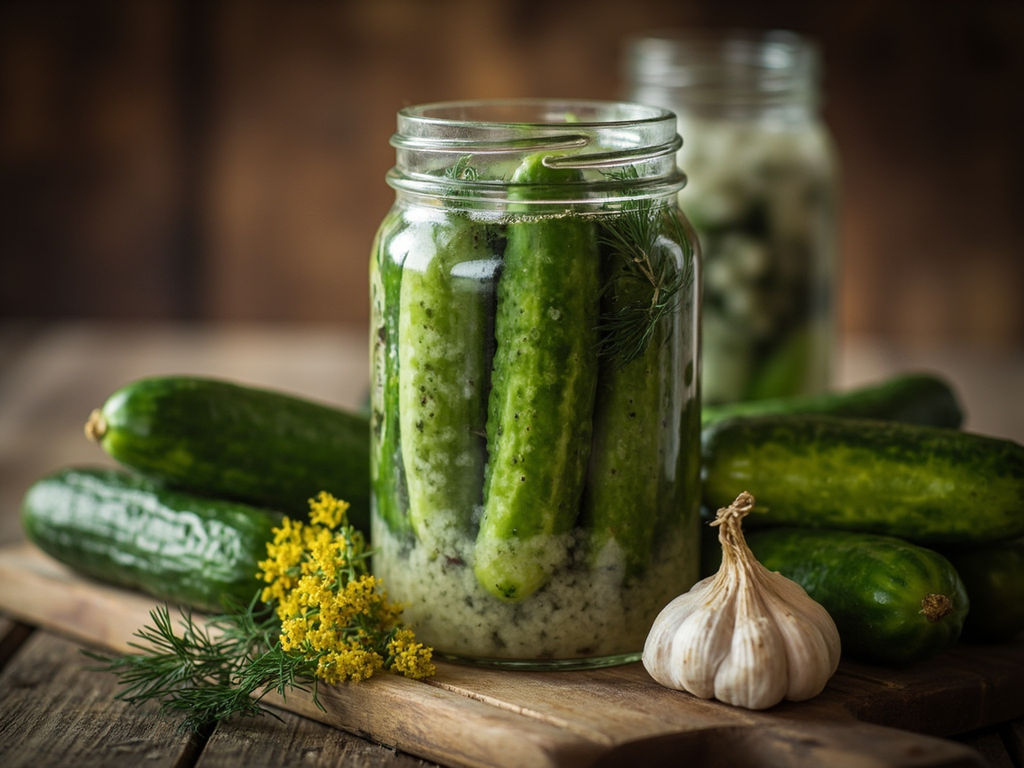
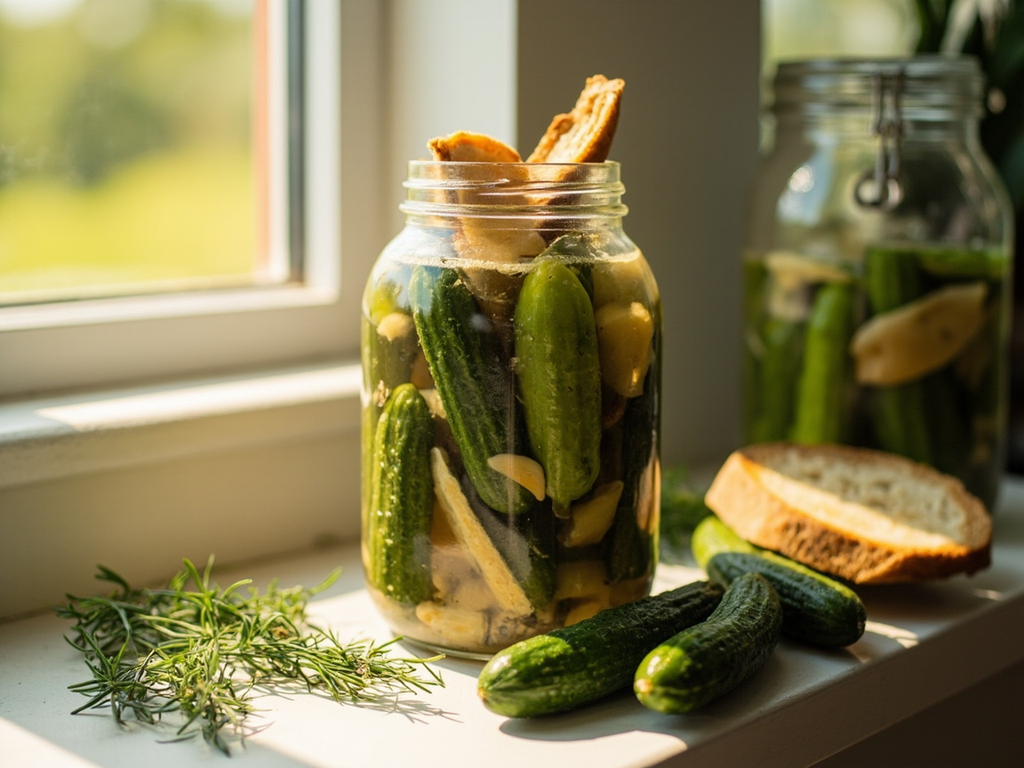
Cucumbers fermented for a few days in a brine perfumed with dill and garlic, under the summer sun. Crunchy, tangy, slightly effervescent: a living preserve that enlivens rich dishes.
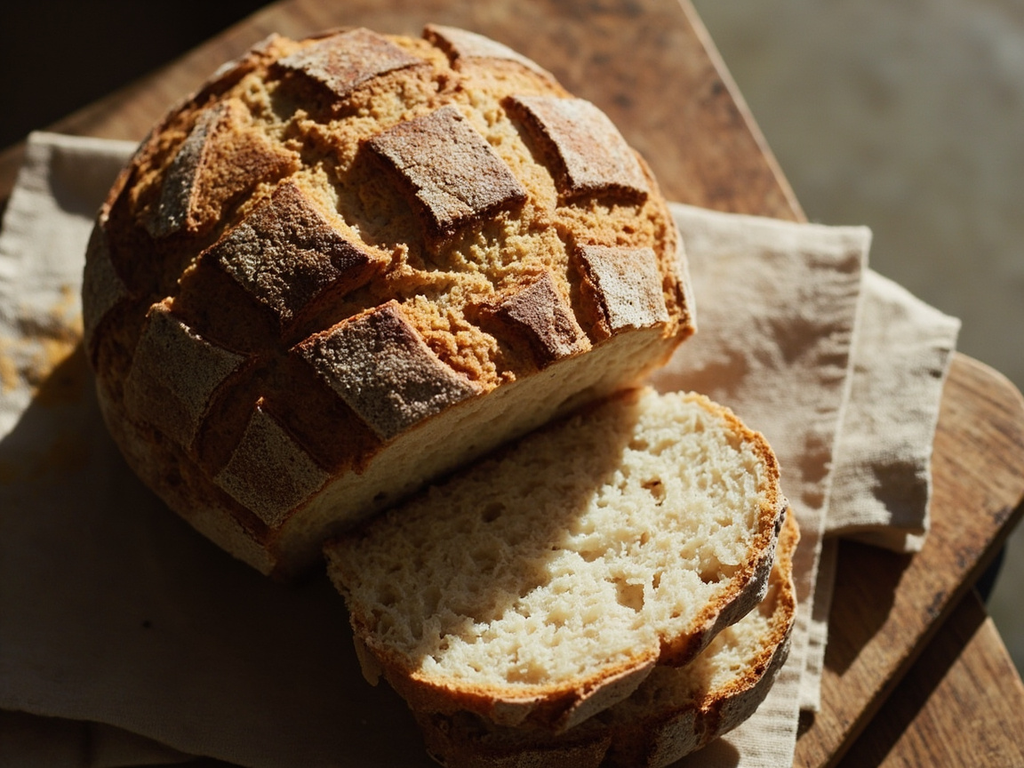
In summer in Budapest, my mother would place a large glass jar on the windowsill in full sun, with a slice of rye bread floating inside — that's what starts the fermentation, a chain reaction whose chemistry I only understood much later. In three or four days of heat, the water turns cloudy and the cucumbers become crunchy and tangy. You eat them chilled alongside a fatty dish, and the balance is perfect: a bit like a function and its derivative, one calls for the other. As a child, I would check the jar every morning to see if it was ready.
- •Firm cucumbers — enough to fill a jar (base vegetable)
- •Water and salt — brine (fermentation medium)
- •Dill umbels — a few sprigs (aroma)
- •Garlic — several cloves (aroma)
- •Slice of rye bread — 1 (fermentation starter)
Kovászos uborka (sun-fermented cucumbers)
Cucumbers fermented for a few days in a brine perfumed with dill and garlic, under the summer sun. Crunchy, tangy, slightly effervescent: a living preserve that enlivens rich dishes.
Why this dish? In the Hungarian cuisine that nourished von Neumann, every fatty paprika dish calls for its sour accompaniment. These cucumbers fermented in the summer sun, preserved in jars, were the tangy touch on Budapest's summer tables.
In summer in Budapest, my mother would place a large glass jar on the windowsill in full sun, with a slice of rye bread floating inside — that's what starts the fermentation, a chain reaction whose chemistry I only understood much later. In three or four days of heat, the water turns cloudy and the cucumbers become crunchy and tangy. You eat them chilled alongside a fatty dish, and the balance is perfect: a bit like a function and its derivative, one calls for the other. As a child, I would check the jar every morning to see if it was ready.
Ingredients (period version)
- Firm cucumbers — enough to fill a jar (base vegetable)
- Water and salt — brine (fermentation medium)
- Dill umbels — a few sprigs (aroma)
- Garlic — several cloves (aroma)
- Slice of rye bread — 1 (fermentation starter)
Ingredients
- Small pickling cucumbers — 1 kg (base vegetable)
- Water — 1 L (brine)
- Non-iodized salt — 40 g (4%) (preservation)
- Fresh dill — 1 bunch (aroma)
- Garlic — 4 cloves (aroma)
- Slice of sourdough rye bread — 1 (starter)
Method
- Score the cucumbers at both ends. Pack them upright and tightly in a large jar with the dill and garlic.
- Dissolve the salt in the water and pour this brine over the cucumbers to cover them completely.
- Place the slice of rye bread on the surface (it provides the ferments), then cover with a plate without sealing airtight.
- Place in the sun or a warm spot for 3 to 5 days: the brine will turn cloudy, that's a good sign.
- When the cucumbers are tangy and translucent, remove the bread, seal the jar, and store in a cool place. Serve well chilled.
How it was made : Sun lacto-fermentation (kovászos uborka, literally "sourdough cucumber") is a traditional Hungarian summer technique, distinct from vinegar pickles. Before refrigerators, it was a way to transform and briefly preserve summer cucumbers while obtaining a living, probiotic accompaniment.
The contemporary twist : Serve them sliced into rounds with a drizzle of oil and a sprinkle of paprika, in a small appetizer glass for a modern touch.
Sources : George Lang, The Cuisine of Hungary, 1971 · Tradition estivale hongroise (kovászos uborka)
John von Neumann · Charactorium