 flip
flipOgurtsy solyonye — Dill Brine Cucumbers
Ogurtsy solyonye — Dill Brine Cucumbers
Why this dish? Pickling is the Russian art of surviving winter. On every table, even the humblest, a jar of salted cucumbers accompanies bread, soup, or is eaten alone. It is the queen of zakuski, present in every Moscow apartment kitchen like Anna's.
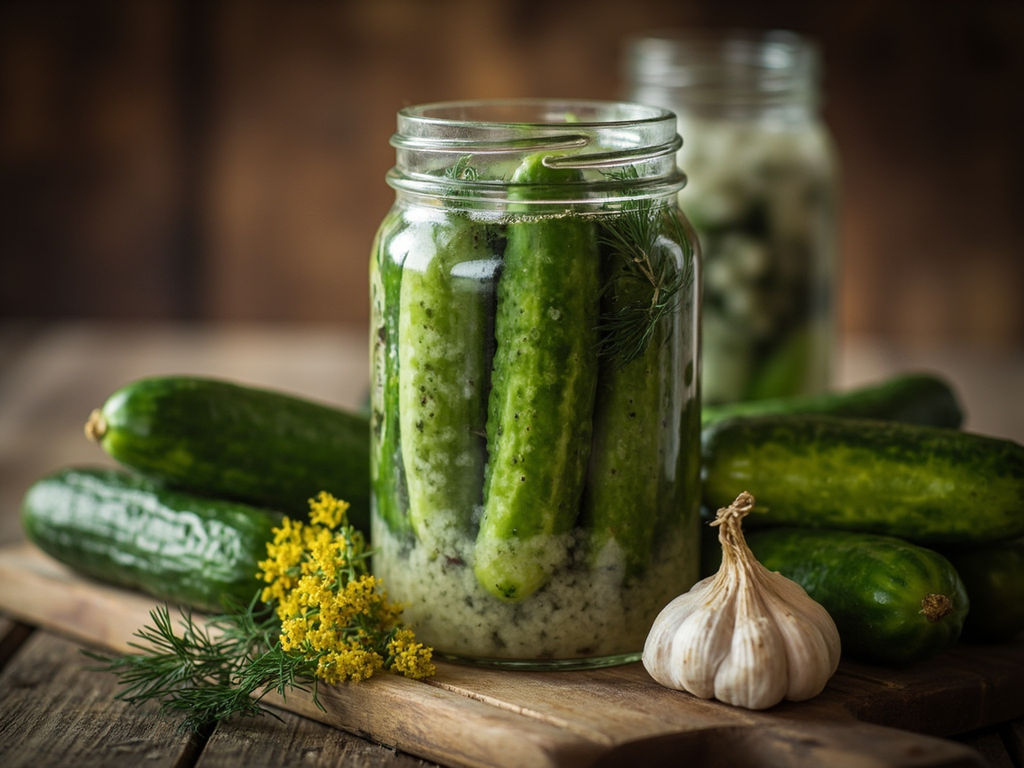
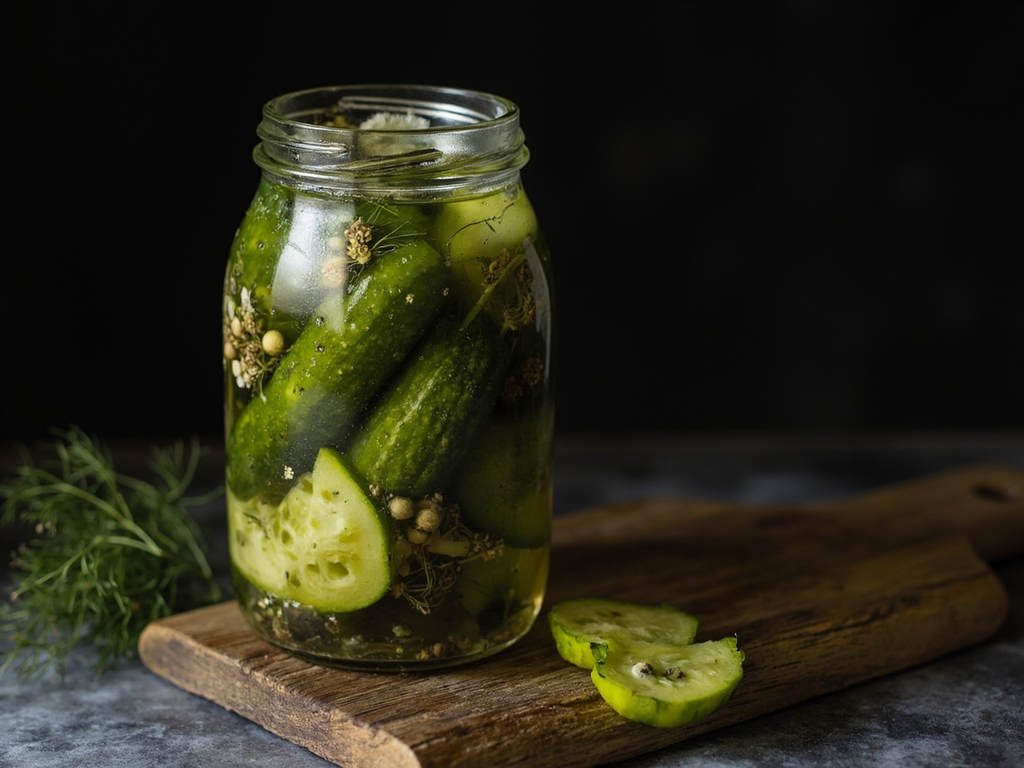
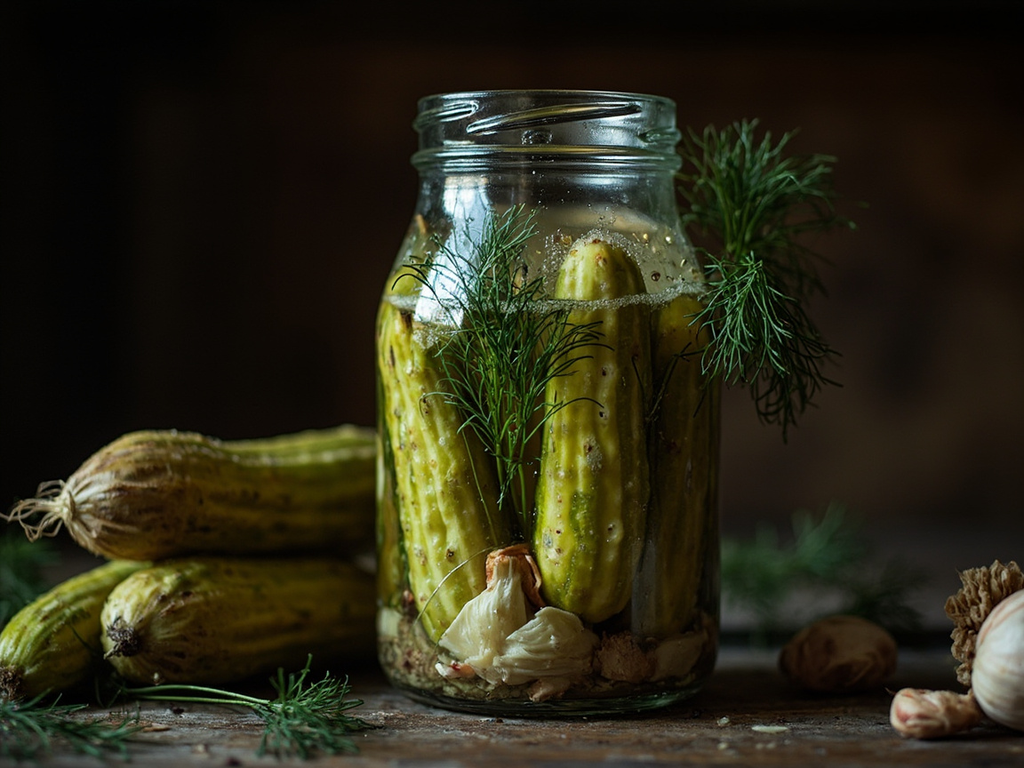
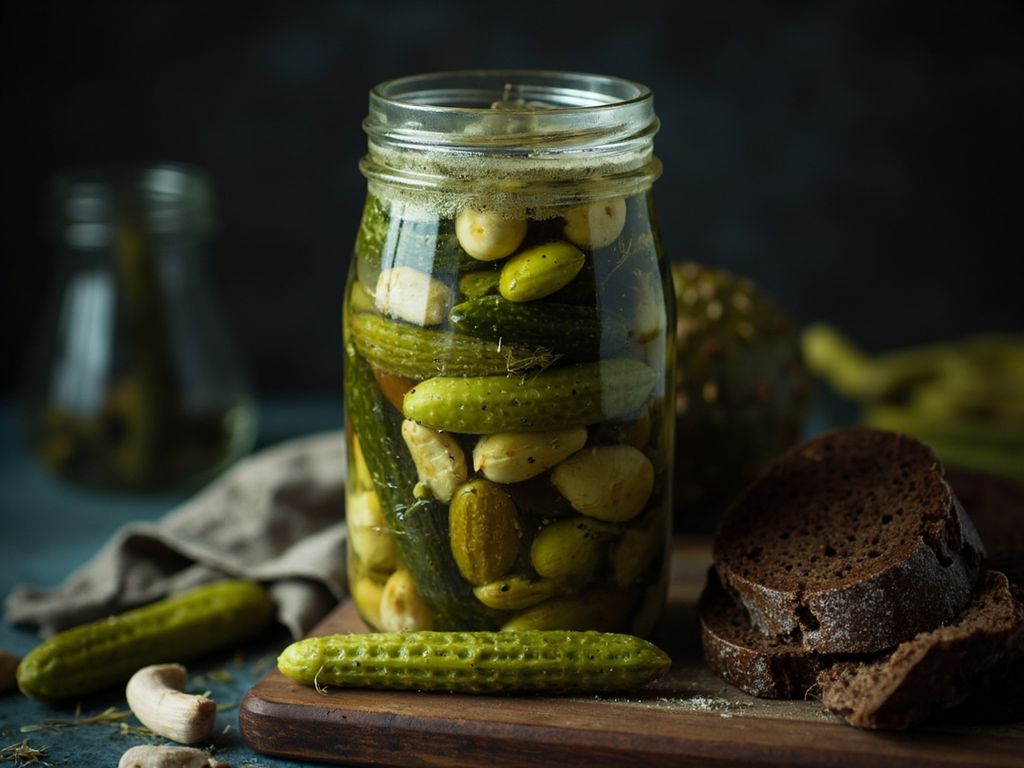
Cucumbers fermented in a brine with dill, garlic, and blackcurrant leaves: crunchy, tangy, sharply salty, with the lactic tang of true lacto-fermentation. Nothing like vinegar pickles — here it's salt and time that do the work.
We throw nothing away, we prepare everything for winter — it's in the bones of this country. In autumn, we fill jars with cucumbers, with dill in flower, garlic, a blackcurrant leaf for crunch, and brine. Then we wait, let the salt and the cold of the window do their work. Open a jar in February, when outside everything is white and silent, and you hold a bit of summer in reserve — acidic, alive, stubborn.
- •Small firm cucumbers — a full jar (base)
- •Dill in flower (stems and umbels) — a few branches (signature flavor)
- •Garlic — several cloves (pungency)
- •Blackcurrant and horseradish leaves — a few (crunch, tannins)
- •Coarse salt — for brine (fermentation, preservation)
Ogurtsy solyonye — Dill Brine Cucumbers
Cucumbers fermented in a brine with dill, garlic, and blackcurrant leaves: crunchy, tangy, sharply salty, with the lactic tang of true lacto-fermentation. Nothing like vinegar pickles — here it's salt and time that do the work.
Why this dish? Pickling is the Russian art of surviving winter. On every table, even the humblest, a jar of salted cucumbers accompanies bread, soup, or is eaten alone. It is the queen of zakuski, present in every Moscow apartment kitchen like Anna's.
We throw nothing away, we prepare everything for winter — it's in the bones of this country. In autumn, we fill jars with cucumbers, with dill in flower, garlic, a blackcurrant leaf for crunch, and brine. Then we wait, let the salt and the cold of the window do their work. Open a jar in February, when outside everything is white and silent, and you hold a bit of summer in reserve — acidic, alive, stubborn.
Ingredients (period version)
- Small firm cucumbers — a full jar (base)
- Dill in flower (stems and umbels) — a few branches (signature flavor)
- Garlic — several cloves (pungency)
- Blackcurrant and horseradish leaves — a few (crunch, tannins)
- Coarse salt — for brine (fermentation, preservation)
Ingredients
- Pickling cucumbers (small, firm) — 1 kg (base)
- Non-chlorinated water — 1 L (brine)
- Coarse salt (non-iodized) — 50 to 60 g (5-6% brine)
- Dill (preferably in umbels) — 1 large bunch (signature flavor)
- Garlic — 4 cloves (pungency)
- Blackcurrant (or oak) leaves — 3-4 (tannins, crunch)
- Black peppercorns — 1 tsp (spice)
Method
- Soak cucumbers in cold water for 2-3 h to firm them up.
- Prepare brine: dissolve salt in water (5-6%).
- Pack cucumbers into a clean jar with dill, crushed garlic, blackcurrant leaves, and peppercorns.
- Cover completely with brine; weigh down so nothing floats (a water-filled bag or small plate).
- Ferment at room temperature for 3 to 5 days (brine will turn cloudy and bubble — good sign), taste.
- When acidity is to your liking, close and store in a cool place. Eat with rye bread, or add to soup.
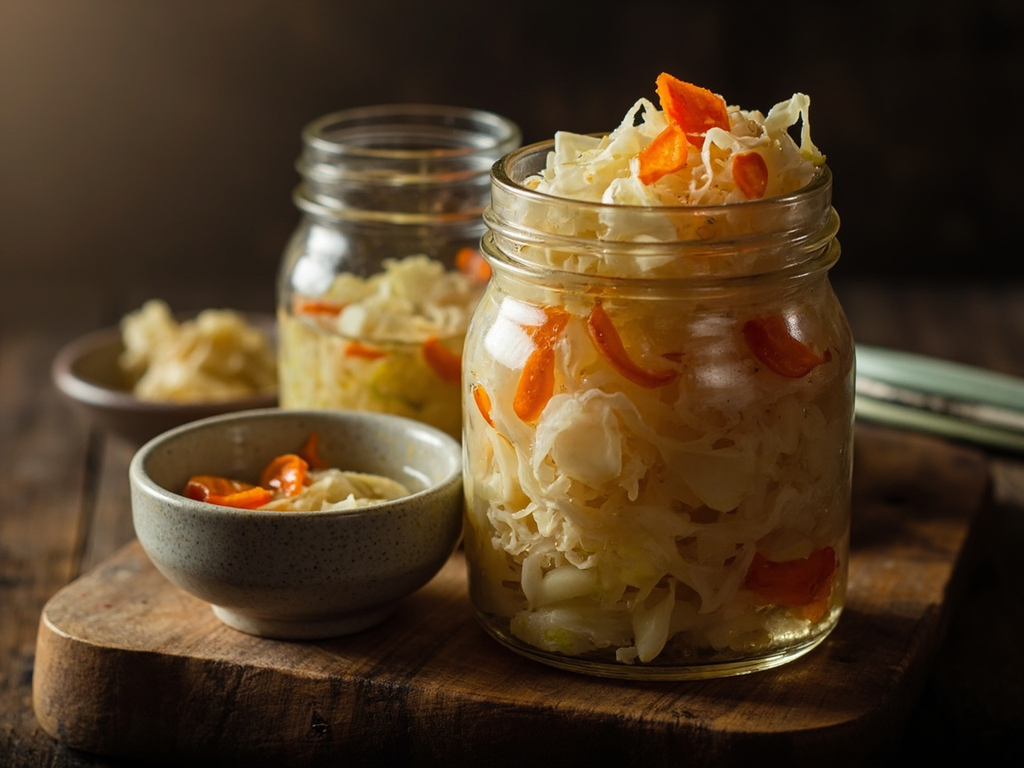
How it was made : Lacto-fermentation (not vinegar) is the traditional Russian method, predating industrial sterilization. Barrels of cucumbers, cabbage (Slavic sauerkraut), and apples fermented in cellars; salt and lactic acid bacteria ensured preservation all winter and provided vitamins and probiotics precious in a climate without fresh vegetables.
The contemporary twist : Pour a splash of their brine into a glass of cold summer soup, or — with a wink to Russian tradition — as a hangover remedy: "rassol" is drunk in one gulp.
Sources : William Pokhliobkin, National History of Russian Cuisine · Darra Goldstein, Beyond the North Wind: Russia in Recipes and Lore
Anna Politkovskaya · Charactorium