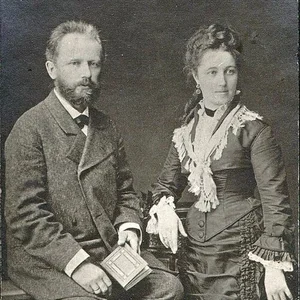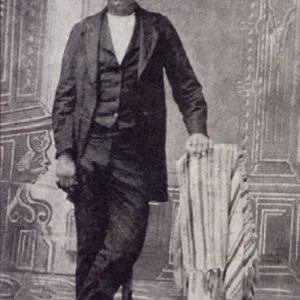

American outlaw from Texas, regarded as one of the most feared gunfighters of the Wild West. He claimed more than 40 killings before being imprisoned, then became a lawyer after his release, before being shot dead in 1895.
John Wesley Hardin(1853 — 1895)
John Wesley Hardin
États-Unis
6 min read
Frequently asked questions
Key Facts
- Born on May 26, 1853, in Bonham, Texas, the son of a Methodist preacher
- Said to have committed his first killing around 1868, at the age of 15
- Arrested in 1877 and sentenced to 25 years in prison for the murder of a deputy sheriff
- Studied law in prison and became a lawyer after his release in 1894
- Shot dead on August 19, 1895, in El Paso by John Selman
Works & Achievements
Autobiography written at the end of his life, the main source on his career and the centerpiece of his gunfighter legend.
After sixteen years in prison spent studying law, Hardin became a lawyer, one of the most unexpected reinventions in the West.
Hardin opened a law practice in the border town, attempting to lead a respectable life just before his death.
His outlaw career during the Texas Reconstruction made him one of the most feared gunslingers of the Old West.
Anecdotes
John Wesley Hardin owes his name to the founder of Methodism, John Wesley: his father was an itinerant Methodist preacher in Texas. The contrast is striking between this religious heritage and the career of one of the bloodiest outlaws of the Wild West.
By his own account, Hardin killed his first man at just 15 years old, in 1868: a former slave named Mage, during an altercation. Fearing he would not get a fair trial under the military occupation of Texas during Reconstruction, the teenager fled and went into hiding.
In 1871, during a cattle drive to Abilene, Kansas, Hardin crossed paths with the famous marshal Wild Bill Hickok. In his autobiography, Hardin boasts of having stood up to the legend of the law, but the two men avoided a direct confrontation.
Captured in 1877 on a train in Pensacola, Florida, by the Texas Rangers, Hardin was sentenced to 25 years in prison. Behind the bars of Huntsville Penitentiary, he studied law, became superintendent of the prison's Sunday school, and obtained his release in 1894 before passing the bar exam.
On August 19, 1895, Hardin was shot in the back of the head by John Selman while playing dice at the counter of the Acme Saloon in El Paso. The lawyer-gunfighter, who claimed more than forty killings, died as he had lived: by the gun.
Primary Sources
I was born on May 26, 1853, in Bonham, Fannin County, Texas. My father, James G. Hardin, was a Methodist preacher who traveled around the country.
Everyone in Texas at that time knew that to surrender meant to be murdered, and that no white man had any chance of obtaining justice if he was accused of killing a Black man. So I went into hiding.
John Wesley Hardin, the most feared killer in Texas, was shot dead last night at the Acme Saloon by officer John Selman, who shot him in the head from behind.
Key Places
Town in Fannin County where Hardin was born in 1853, the son of a Methodist preacher.
Cow town at the end of the Chisholm Trail, where Hardin drove cattle in 1871 and rubbed shoulders with Wild Bill Hickok.
Town where Hardin shot deputy sheriff Charles Webb in 1874, the crime for which he was convicted.
State prison where Hardin served his sentence from 1878 to 1894 and studied law.
Border town where Hardin briefly practiced as a lawyer and was shot dead at the Acme Saloon in 1895.
Port where the Texas Rangers captured Hardin aboard a train in 1877, ending his time on the run.
Typical Objects

The handgun emblematic of the gunslingers, with a revolving cylinder and six shots. Hardin handled his Colts with a dreaded speed and credited them with his reputation.

Hardin carried his pistols in holsters sewn inside a vest, grips turned inward. This cross-draw carry allowed for a lightning-fast draw.

Gambling set the rhythm of life in the saloons of the West. Hardin was an inveterate gambler and was shot down while playing dice at the bar.

A wide felt hat, Stetson-style, protecting against the sun and the dust of the trails. It was part of the outfit of the Texan cattle driver.

Essential gear for the cowboy during the long cattle drives to Kansas. Hardin earned his living as a trail driver before becoming an outlaw.

In prison, Hardin studied law from textbooks and passed the bar exam after his release. A symbol of his surprising reinvention as a lawyer.
School Curriculum
Vocabulary & Tags
Key Vocabulary
Tags
Daily Life
Morning
In his cattle-driving days, Hardin rose at dawn to saddle his horse and round up the cattle that had scattered during the night. While on the run, every morning called for caution: spotting unfamiliar faces and keeping his weapons within reach.
Afternoon
Afternoons were spent in the saddle, pushing the herds along dusty trails, or moving from town to town to escape his pursuers. In prison, his days were filled with hard labor and then the study of law textbooks.
Evening
In the evening, Hardin frequented the saloons, places of drinking, card games and betting. These nights of gambling and alcohol, where the slightest quarrel could turn deadly, were the setting for several of his fatal confrontations.
Food
The cowboy's diet was built on beef, beans, cornbread and strong coffee prepared around the campfire. In town, people ate at the saloon counter or in boarding houses; in prison, the fare was meager and monotonous.
Clothing
Hardin wore the Texas cowboy's outfit: shirt, vest, sturdy trousers, boots and a wide felt hat. A distinctive feature: a vest fitted with sewn-in holsters to carry his revolvers across his chest.
Housing
An outlaw on the run, Hardin had no fixed home: he slept under the stars on the trails, in rented rooms, or with relatives and accomplices. He later spent sixteen years in a cell at the Huntsville penitentiary.
Historical Timeline
Period Vocabulary
Liens externes & ressources
Références
Œuvres
The Life of John Wesley Hardin, as Written by Himself
publiée en 1896
Réussite de l'examen du barreau du Texas
1894
Cabinet d'avocat à El Paso
1895
Réputation de gunfighter (plus de 40 meurtres revendiqués)
1868-1877