 flip
flipThe Sunday Asado
The Sunday Asado
Why this dish? Borges, son of a middle-class porteño family attached to the Creole epic and the myths of the gauchos, celebrated in his poetry the knife, the pampa, and the men of the South; asado is the culinary rite of that national imaginary which he knew intimately.
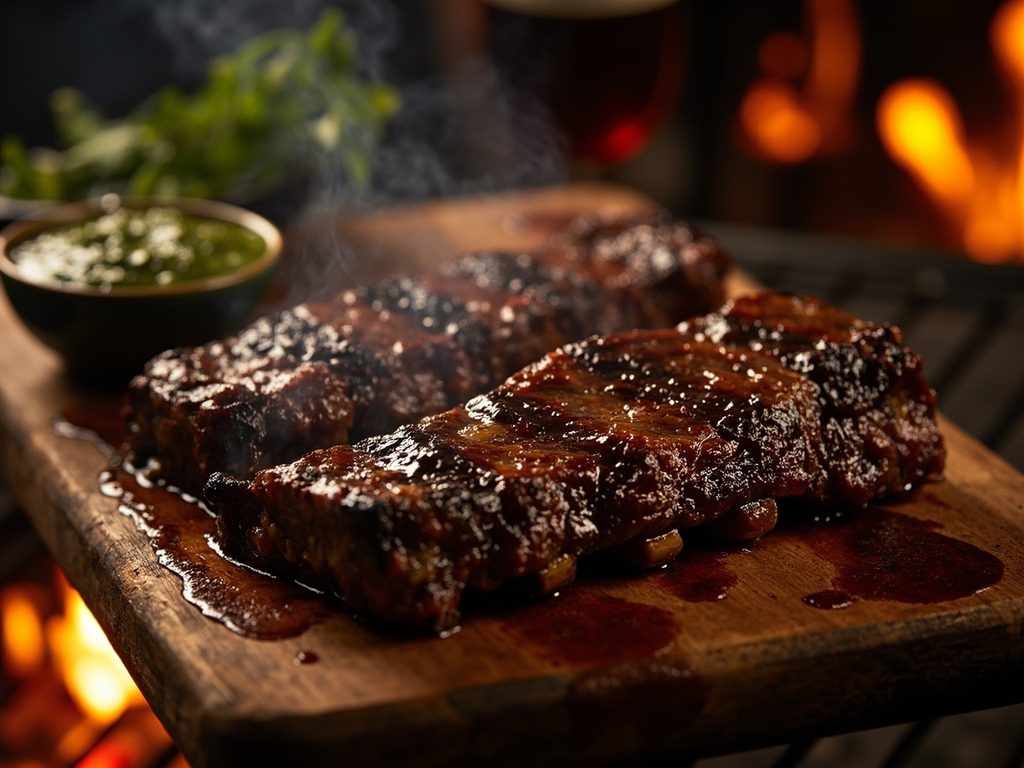
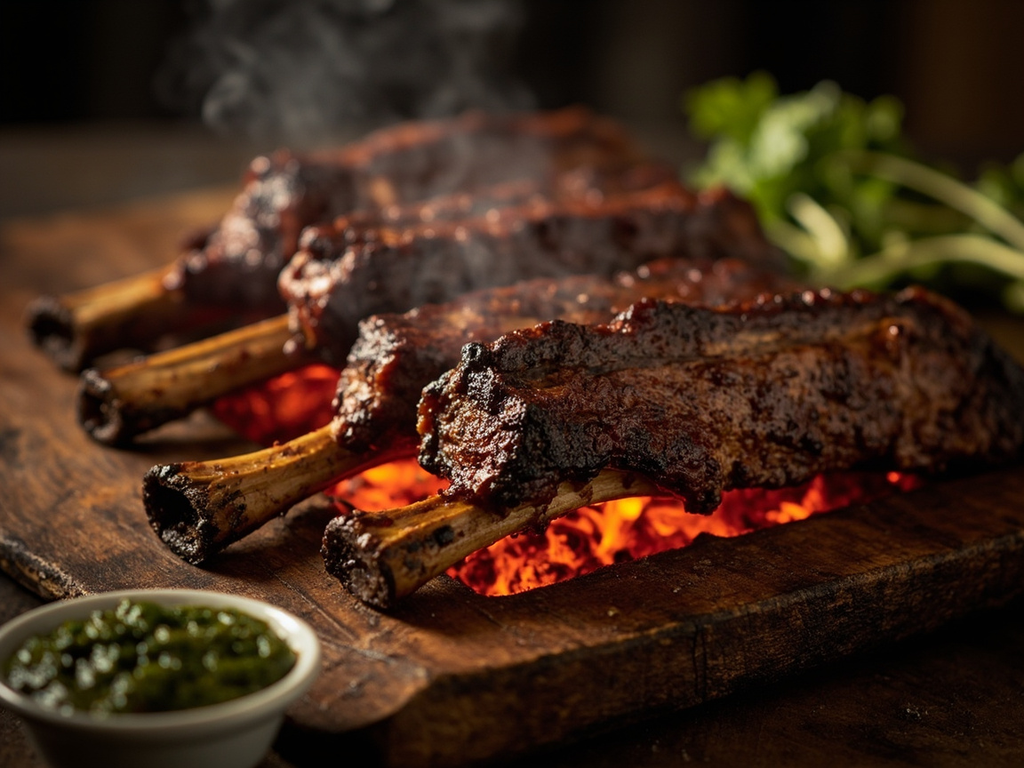
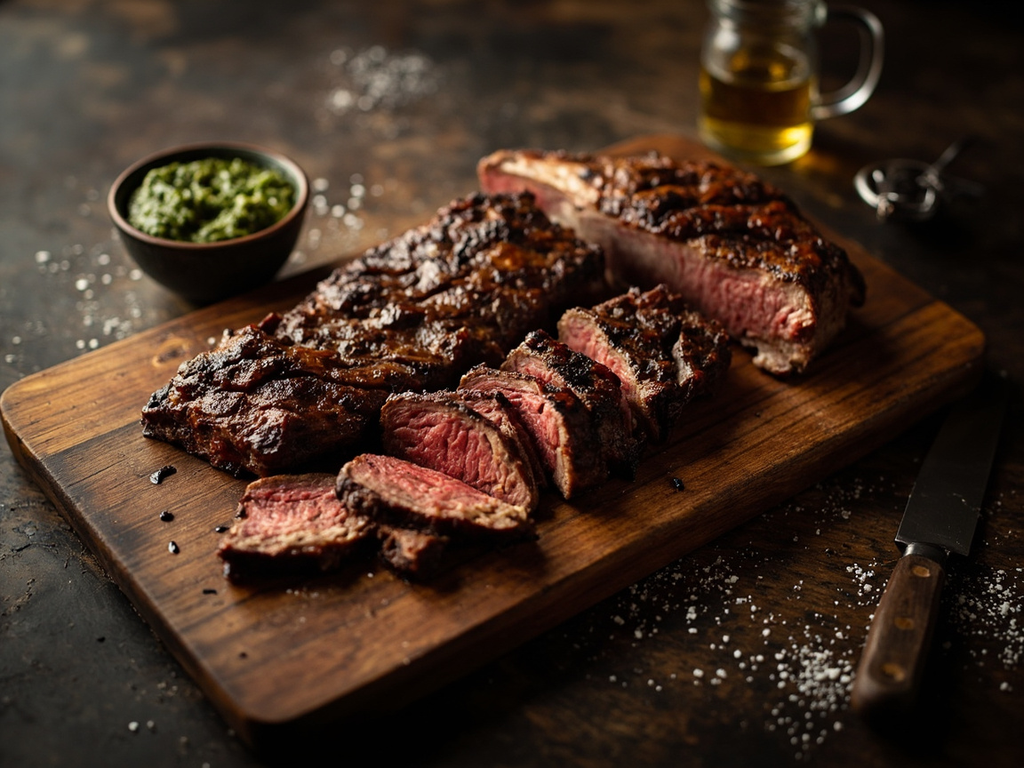
Large cuts of beef grilled slowly over embers, salted with coarse salt, eaten with family around the parrilla. The festive meal par excellence, without sophistication, where the patience of the fire matters.
Asado, like the milonga, belongs to the criolla mythology, and one does not touch it without respect. The secret lies in little: coarse salt, gray embers rather than flames, and time — that virtue that the hurried ignore. You leave the meat far from the fire, never prick it with a fork that would make the blood run, you turn it only once. My father saw it, I think, as a matter for men of the South, for those gauchos I so dreamed of; for me, it was above all Sunday, family, and the smell of the pampa coming through the window of Buenos Aires.
- •Beef ribs and cuts (tira de asado, vacío) — in proportion to the number of diners (main meat)
- •Coarse salt (sal gruesa) — generously (seasoning, crust)
- •Charcoal or hardwood — enough for a long fire (embers)
The Sunday Asado
Large cuts of beef grilled slowly over embers, salted with coarse salt, eaten with family around the parrilla. The festive meal par excellence, without sophistication, where the patience of the fire matters.
Why this dish? Borges, son of a middle-class porteño family attached to the Creole epic and the myths of the gauchos, celebrated in his poetry the knife, the pampa, and the men of the South; asado is the culinary rite of that national imaginary which he knew intimately.
Asado, like the milonga, belongs to the criolla mythology, and one does not touch it without respect. The secret lies in little: coarse salt, gray embers rather than flames, and time — that virtue that the hurried ignore. You leave the meat far from the fire, never prick it with a fork that would make the blood run, you turn it only once. My father saw it, I think, as a matter for men of the South, for those gauchos I so dreamed of; for me, it was above all Sunday, family, and the smell of the pampa coming through the window of Buenos Aires.
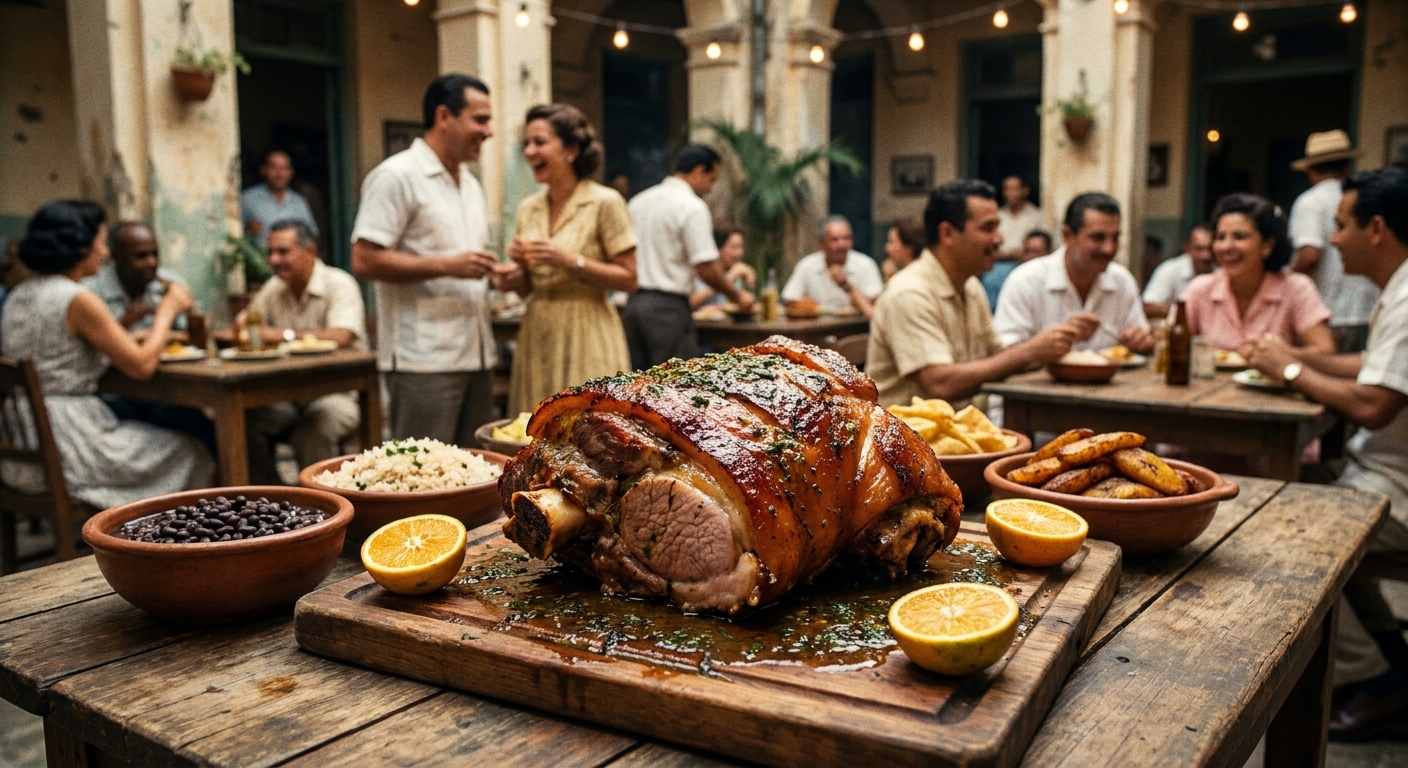
Ingredients (period version)
- Beef ribs and cuts (tira de asado, vacío) — in proportion to the number of diners (main meat)
- Coarse salt (sal gruesa) — generously (seasoning, crust)
- Charcoal or hardwood — enough for a long fire (embers)
Ingredients
- Beef short ribs (tira de asado) — 1.2 kg (main meat)
- Flank steak or bavette (vacío) — 800 g (complementary tender meat)
- Coarse salt — 3–4 tbsp (salty crust)
- Chimichurri (parsley, garlic, oregano, vinegar, oil, a little garlic and chili flakes) — 1 bowl (accompanying sauce)
Method
- Light the charcoal in advance and wait for gray embers, without flames (allow 30–40 min).
- Generously salt the meat with coarse salt just before cooking.
- Place the pieces bone-side or fat-side down, at a good distance from the embers, for slow cooking.
- Cook for 30 to 50 minutes depending on thickness, turning only once and never piercing the meat.
- Prepare the chimichurri by mixing chopped parsley and garlic, oregano, vinegar, oil, salt, and a little chili flakes; let it rest.
- Serve the sliced meat, chimichurri on the side, with bread and a simple salad.
How it was made : Asado descends from the great grills of the pampa, where gauchos roasted meat on a cruz (cross on a stake) near the open fire. In the city, in the 20th century, it became domesticated on the family parrilla, but kept its code: slow fire, coarse salt, meat handled little. Chimichurri, a Creole sauce, accompanies without masking.
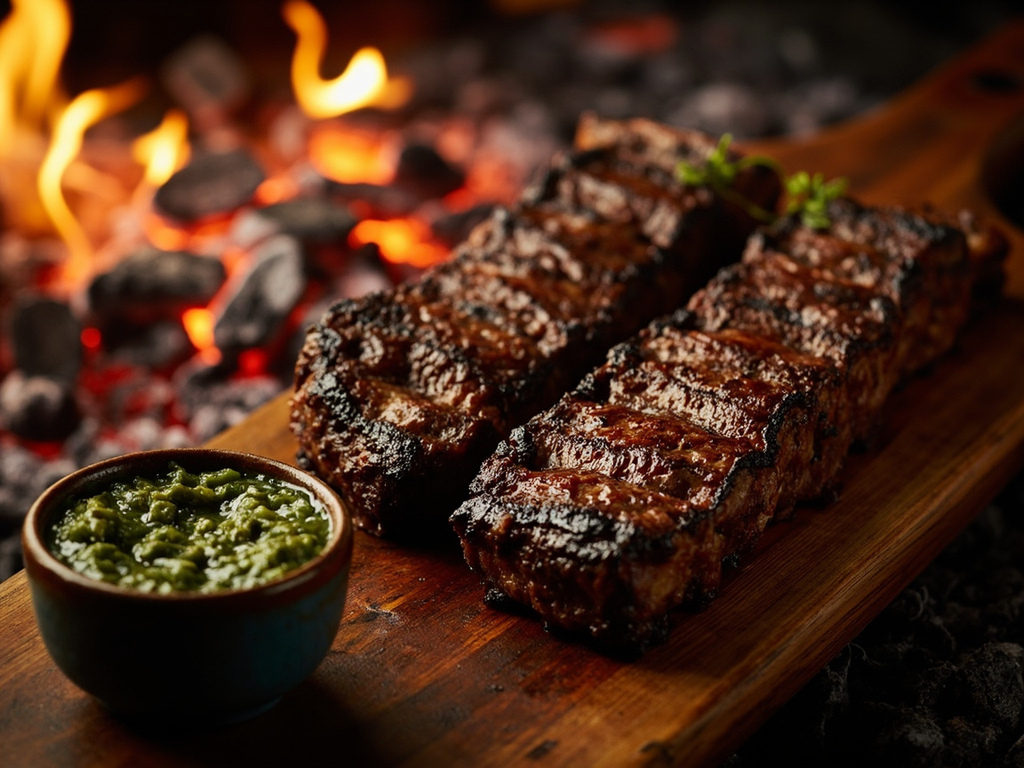
The contemporary twist : Serve the pieces on a rustic wooden board with three chimichurris (classic, smoked, fresh herbs) and name the dish 'El Sur', as a nod to Borges's short story.
Jorge Luis Borges · Charactorium