 flip
flipPirão de Peixe — River Fish with Cassava Porridge
Pirão de Peixe — River Fish with Cassava Porridge
Why this dish? In Mato Grosso, among the Nambikwara and the Bororo, my days of walking ended around a fire where we grilled fish caught in the plateau's rivers. Cassava flour, poured into the broth, formed the pirão that filled the bellies of the whole expedition. It is the daily meal of Tristes Tropiques.
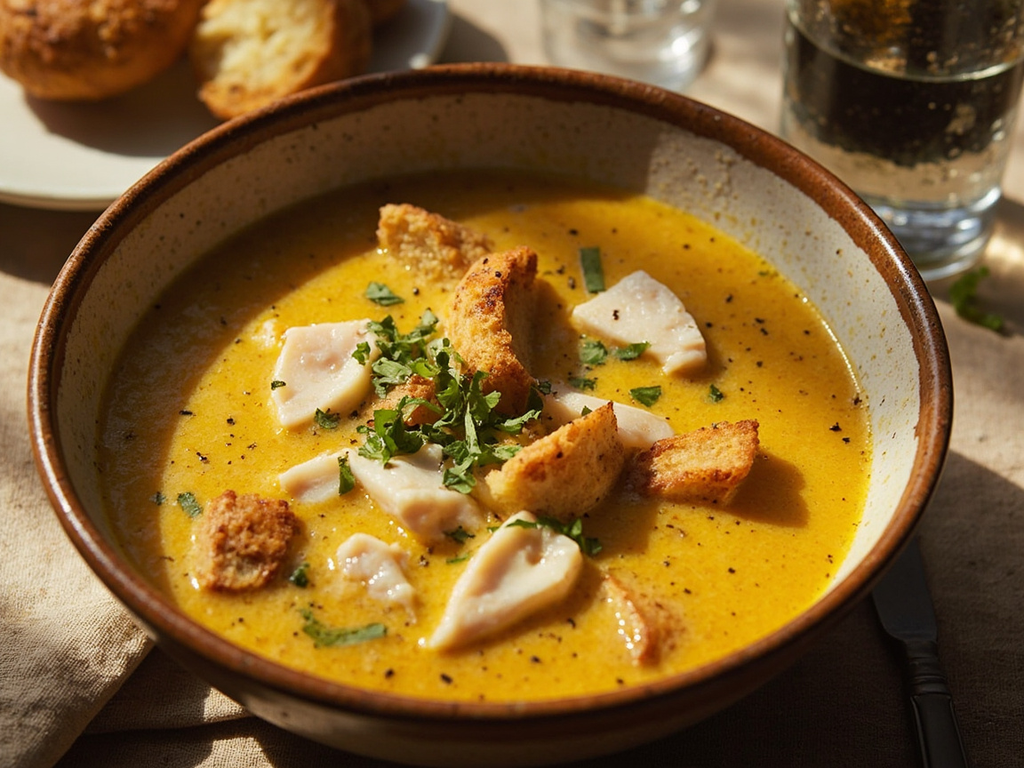
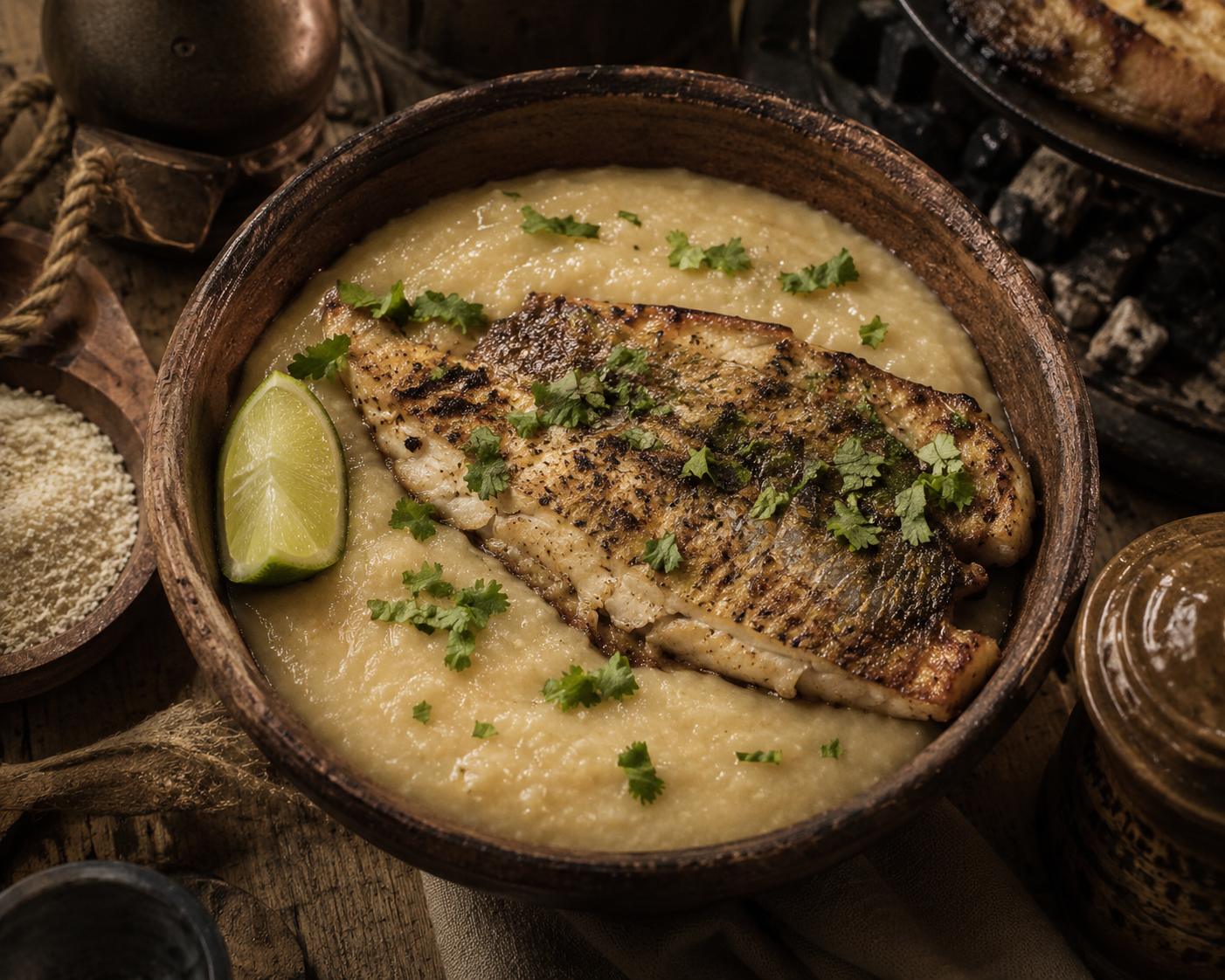
A grilled freshwater fish, whose bones and head are used to make a broth. Cassava flour is stirred into the broth until a creamy porridge, called pirão, forms, and is eaten with the grilled flesh. Rustic, nourishing, and unpretentious.
You see, in the tropics, luxury is not where you expect it. When the fish came out of the river and sizzled on the embers, I slowly poured the cassava flour into the broth, stirring unceasingly, as a thousand generations of Indians of the plateau had done before me. One does not eat for the pleasure of a jaded palate, but to embrace the rhythm of a land. And I confess to you: this grey porridge, shared at nightfall, seemed truer to me than many Parisian dinners.
- •River fish (pacu, dourado, traíra) — one nice piece per person (grilled protein)
- •Roasted cassava flour (farinha) — two handfuls (binder, staple starch)
- •Boiled river water — enough (broth)
- •Salt — according to supply (seasoning)
Pirão de Peixe — River Fish with Cassava Porridge
A grilled freshwater fish, whose bones and head are used to make a broth. Cassava flour is stirred into the broth until a creamy porridge, called pirão, forms, and is eaten with the grilled flesh. Rustic, nourishing, and unpretentious.
Why this dish? In Mato Grosso, among the Nambikwara and the Bororo, my days of walking ended around a fire where we grilled fish caught in the plateau's rivers. Cassava flour, poured into the broth, formed the pirão that filled the bellies of the whole expedition. It is the daily meal of Tristes Tropiques.
You see, in the tropics, luxury is not where you expect it. When the fish came out of the river and sizzled on the embers, I slowly poured the cassava flour into the broth, stirring unceasingly, as a thousand generations of Indians of the plateau had done before me. One does not eat for the pleasure of a jaded palate, but to embrace the rhythm of a land. And I confess to you: this grey porridge, shared at nightfall, seemed truer to me than many Parisian dinners.
Ingredients (period version)
- River fish (pacu, dourado, traíra) — one nice piece per person (grilled protein)
- Roasted cassava flour (farinha) — two handfuls (binder, staple starch)
- Boiled river water — enough (broth)
- Salt — according to supply (seasoning)
Ingredients
- Firm white fish fillets (sea bass, tilapia, dorade) — 600 g (grilled protein)
- Fish trimmings (head, bones) or fish stock — 1 liter broth (base for pirão)
- Cassava flour (farinha de mandioca, Brazilian grocery) — 150 g (thickener)
- Onion — 1 (broth aromatic)
- Fresh cilantro — a few sprigs (freshness)
- Salt, lime juice — to taste (seasoning)
Method
- Prepare a broth by simmering 1 liter of water with the fish trimmings, onion, and salt for 20 min, then strain.
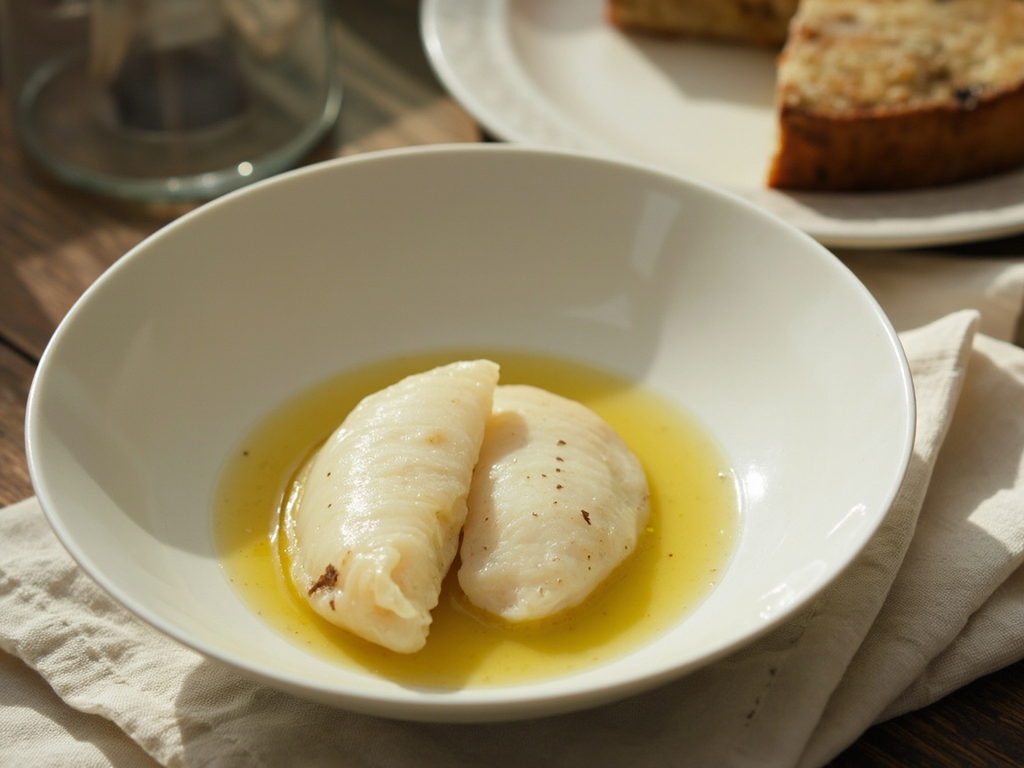
- Salt the fillets and grill on a plancha or very hot grill, 3 min per side, until colored.
- Bring the strained broth to a simmer and pour in the cassava flour in a rain, whisking constantly to avoid lumps.
- Cook for 5 min while stirring: the porridge should coat the spoon.
- Serve the pirão in a bowl, place the grilled fish on top, sprinkle with cilantro and a squeeze of lime.
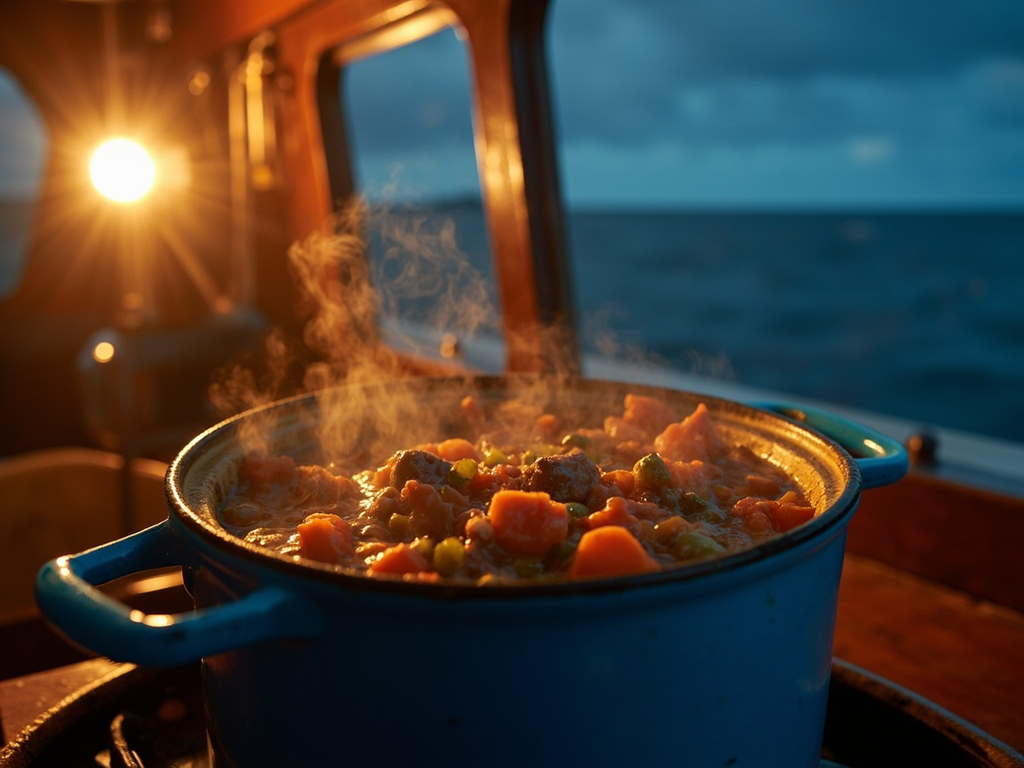
How it was made : In the field, no refined broth: we simply threw the farinha into the fish cooking water, sometimes directly on the embers in a gourd. The cassava flour, already roasted and thus imperishable, was carried in woven baskets and formed the caloric reserve of the expedition.
The contemporary twist : Serve the pirão in a verrine topped with a grilled fish shaving: a 'gastro' nod to an ethnographic survival dish.
Claude Lévi-Strauss · Charactorium