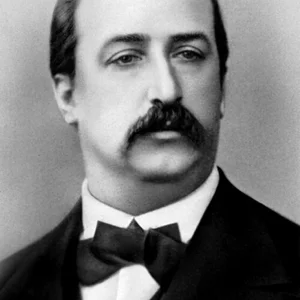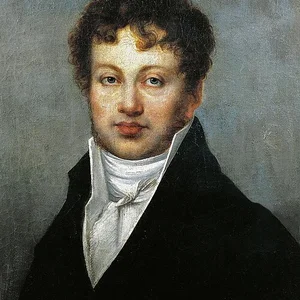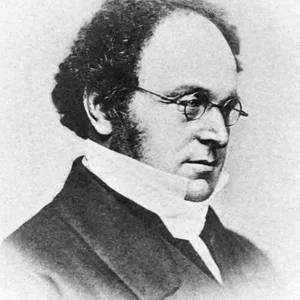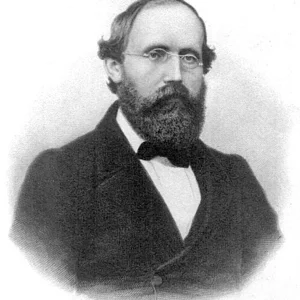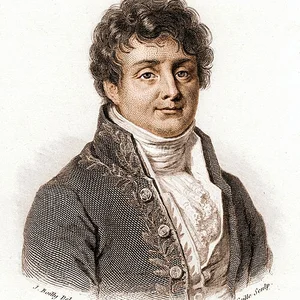

French mathematician and physicist (1768–1830), Fourier is renowned for his work on heat propagation and mathematical analysis. He developed the decomposition of functions into trigonometric series, known as the Fourier series.
Joseph Fourier(1768 — 1830)
Joseph Fourier
France
8 min read
Frequently asked questions
Famous Quotes
« Mathematics is to the natural sciences what logic is to the other sciences.»
Key Facts
- 1768: Born in Auxerre into a modest family
- 1798: Takes part in Napoleon's expedition to Egypt as a scientist
- 1807: Presents his theory of heat propagation to the Académie des sciences
- 1822: Publishes his major work Théorie analytique de la chaleur
- 1827: Describes the phenomenon known today as the greenhouse effect
Works & Achievements
The first major memoir submitted to the Institut de France, introducing the decomposition of functions into trigonometric series. Rejected by Lagrange, this foundational text remained unpublished but laid the groundwork for Fourier analysis.
A masterwork published after fifteen years of struggle against academic skepticism. This treatise revolutionizes mathematical physics by developing Fourier series and partial differential equations to model the diffusion of heat.
Fourier wrote the sweeping preface of this encyclopedic monument commissioned by Napoleon on ancient and modern Egypt. This landmark text brought him recognition far beyond mathematical circles.
In this memoir, Fourier anticipates the concept of the greenhouse effect by showing that the Earth's atmosphere retains solar heat, making the planet warmer than it would otherwise be. This pioneering work would go on to influence climatology two centuries later.
As permanent secretary of the Académie des sciences, Fourier delivered eulogies for great scientists, including one for Newton. These addresses, admired for their style, reveal his encyclopedic command of science.
Anecdotes
Orphaned at nine, Joseph Fourier was taken in by the Church and sent to the military school at Auxerre. By the age of twelve, he was copying mathematics textbooks by candlelight to memorize them. His teachers were so impressed that they predicted an exceptional future for this tailor's son.
In 1798, Napoleon took him to Egypt as scientific secretary of the Institut d'Égypte. Fourier walked alongside the great pyramids, took part in excavations, and wrote the monumental preface to the *Description de l'Égypte*. The scorching desert heat reportedly left such a mark on him that it inspired his later work on the propagation of heat.
Appointed prefect of Isère by Napoleon in 1802, Fourier never stopped doing mathematics. He managed the department by day and filled his notebooks with equations by night. He oversaw the draining of the Bourgoin marshes — a vast public works project — all while writing his memoirs on heat.
His landmark 1807 paper on the propagation of heat was rejected by the jury of the Institut de France, which included Lagrange and Laplace. Lagrange found the use of trigonometric series to represent arbitrary functions unacceptable. Fourier had to wait fifteen years before his ideas were recognized and published as a book in 1822.
In his final years, Fourier was obsessed with heat: he kept his apartments overheated, wore several coats layered on top of one another even in summer, and stifled his visitors. This strange behavior, which some attributed to memories of Egypt, was probably linked to a thyroid condition. He died in 1830 after tripping on a staircase, his weakened body unable to withstand the fall.
Primary Sources
Heat, like gravity, penetrates every substance in the universe; its rays occupy all parts of space. The purpose of our work is to demonstrate the laws which this element obeys.
An arbitrary function can be expressed as a series of sines and cosines of multiples of the arc, and this representation encompasses all possible values of the function over a given interval.
The memorable expedition to Egypt drew the attention of civilized nations to this country, celebrated for so many monuments and upheavals. It gave rise to important works that do honor to our age.
The temperature of the terrestrial globe may be increased by the interposition of the atmosphere, because heat finds it easier to penetrate the air in the form of light than to escape from it in the form of dark heat.
Key Places
Joseph Fourier's birthplace, where he was born in 1768 and raised at the military school after spending time in an orphanage. It was here that his precocious mathematical talents first came to light.
Fourier taught mathematical analysis there from the school's founding in 1795, alongside the greatest French scientists of the day. It was in this intellectual crucible that he began formalizing his earliest thinking on heat.
Fourier served as prefect of Isère from 1802 to 1815, residing in Grenoble. It was in this Alpine city, between administrative duties and late-night study, that he wrote the bulk of his work on the propagation of heat.
Fourier helped found the Institut d'Égypte in Cairo in 1798 and served as its permanent secretary. His immersion in the heat of the desert left a lasting mark on his research into thermodynamics.
Fourier presented his landmark memoirs there, weathered criticism from Lagrange and Laplace, and eventually became its permanent secretary in 1822 — the crowning achievement of his scientific career.
Typical Objects

An essential instrument in Fourier's experiments on the propagation of heat through solids and fluids. It measured temperature differences with precision, feeding the values that drove his equations.

Fourier filled countless notebooks with trigonometric formulas and partial differential equations, often working late into the night after his days as prefect. These manuscripts bear witness to an exceptional mathematical rigor.

Scholars of the early nineteenth century drafted their memoirs with a trimmed goose-quill pen, scratching and correcting on laid paper. The memoirs Fourier submitted to the Institut de France were written in his own hand.

Fourier brought back antique objects from Egypt that adorned his Parisian desk — tangible reminders of the expedition that had turned his gaze toward heat and vanished civilizations.

A forerunner of the slide rule, this logarithmic tool allowed the mathematicians and engineers of the era to carry out complex multiplications and divisions without lengthy arithmetic.

In his Parisian apartments, Fourier kept one or more cast-iron stoves burning at all times, whatever the season, surrounding his body with the very heat he had spent his entire life studying.
School Curriculum
Vocabulary & Tags
Key Vocabulary
Daily Life
Morning
Fourier rose early to handle administrative correspondence, particularly during his years as prefect in Grenoble. His mornings began with reading reports from his sub-prefects and signing official decrees — this was the hour of the diligent civil servant, not yet of the scholar.
Afternoon
Afternoons were often devoted to hearings, visits to public works sites, or, in Paris, sessions at the Académie des sciences. Fourier was renowned for his ability to juggle official duties and mathematical reflections, which he would scribble on whatever scrap of paper was at hand.
Evening
Once night fell, Fourier retreated to his overheated study and worked on his mathematical memoirs until the small hours. His contemporaries report that he would tirelessly reread his own calculations, searching for the elegance of a proof he never considered quite perfect.
Food
Fourier ate simply, like many scholars of his era who gave little thought to gastronomy. The Parisian meals of the early nineteenth century for a comfortable civil servant included soups, braised meats, vegetables, and wholegrain bread; coffee and table wine were daily staples.
Clothing
In his role as imperial prefect, Fourier wore the embroidered coat of the prefectoral uniform, an outward symbol of Napoleonic authority. In his private life and later years, he was recognizable by his multiple layers of warm clothing — heavy greatcoats, stacked waistcoats — which he wore even on mild days.
Housing
During his prefecture, he lived in the Hôtel de la Préfecture in Grenoble, a vast official residence. In Paris, he occupied an apartment he kept at an extreme temperature, turning it into a veritable steam room by sealing windows and fireplaces shut to preserve the warmth he so cherished.
Historical Timeline
Period Vocabulary
Liens externes & ressources
Références
Œuvres
Mémoire sur la propagation de la chaleur dans les corps solides
1807
Théorie analytique de la chaleur
1822
Description de l'Égypte — Préface historique
1809
Mémoire sur les températures du globe terrestre et des espaces planétaires
1824
Éloge historique de Newton
1822