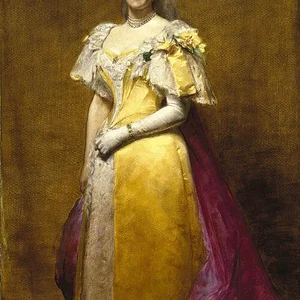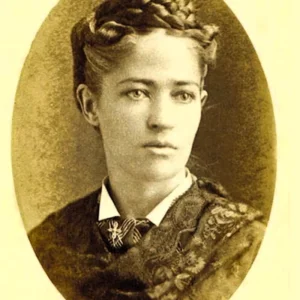

Josephine Cochrane was an American inventor who designed the first truly functional mechanical dishwasher, patented in 1886. A well-to-do woman from Illinois, she devised a machine using water jets to protect her porcelain dishes from breakage caused by her servants.
Josephine Cochrane(1839 — 1913)
Josephine Cochrane
États-Unis
6 min read
Frequently asked questions
Key Facts
- Born in 1839 in Ohio (United States), into a family that included engineers.
- Designed and patented in 1886 the first truly functional mechanical dishwasher using water jets.
- Presented her machine at the 1893 World's Fair in Chicago, where it won a prize.
- Founded a company to market her invention, initially to hotels and restaurants.
- Died in 1913; her company would give rise to the KitchenAid brand.
Works & Achievements
The first truly functional dishwashing machine, based on spraying water rather than scrubbing. It is the direct ancestor of the modern dishwasher.
The intellectual property title protecting her invention, which allowed her to manufacture and sell it legally.
The company founded by Cochrane to produce and sell her machines—a remarkable feat for a woman entrepreneur of the era.
A version of the machine adapted for large establishments, which became her first real commercial success thanks to their need for large-scale washing.
An award-winning public demonstration that brought her invention to international attention and earned it technical recognition.
Anecdotes
Exasperated at seeing her servants chip her precious china while washing dishes by hand, Josephine Cochrane is said to have declared: “If nobody else is going to invent a dishwashing machine, I'll do it myself!” She then shut herself away in the shed behind her house to design the device.
Her machine relied on an idea that was novel for the time: instead of scrubbing dishes with brushes, it used the pressure of jets of hot, soapy water. Cochrane carefully measured each plate, cup, and saucer to build custom wire racks that held the dishes in place within a turning wheel.
Widowed in 1883, Josephine Cochrane found herself deep in debt and had to turn her invention into a livelihood. She obtained her patent in 1886 and founded her own company — a very rare move for a woman in the 19th century.
Her dishwasher won a prize at the 1893 World's Fair in Chicago, praised for its sturdy design. Her first big customers were not housewives but hotels and restaurants, which had to wash enormous quantities of dishes quickly.
Cochrane's company outlived her and was later absorbed by a firm that gave rise to the KitchenAid brand, still known today. The home dishwasher, however, only became common in households in the mid-20th century, long after her death.
Primary Sources
Document describing a dishwashing machine in which the dishes are held in racks mounted on a wheel and sprayed by jets of water projected up from the bottom of the basin.
“If nobody else is going to invent a dishwashing machine, I'll do it myself.”
The dishwashing machine made by the Garis-Cochran Manufacturing Co. is honored by the Exposition's jury for its mechanical design and durability.
Key Places
Region in northeastern Ohio where Josephine Garis was born in 1839. She grew up in a family marked by technical ingenuity.
Town where Cochrane lived with her husband and where she designed her dishwasher in a shed behind her house. This is where her invention and her company were born.
Site of the 1893 World's Columbian Exposition, where Cochrane's machine was displayed and awarded a prize before a large international audience.
Major industrial city where Cochrane built up her business and where she died in 1913.
Typical Objects
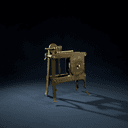
The machine invented by Cochrane sprayed hot soapy water onto the dishes instead of scrubbing them. A wheel, first cranked by hand and later driven by a motor, turned the racks beneath the jets.
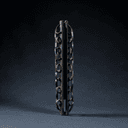
Cochrane measured each plate, cup, and saucer to design metal compartments that held the dishes firmly in place during washing. This was the key innovation that set her machine apart from earlier attempts.
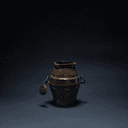
The body of the machine was a large copper tub into which hot soapy water was sprayed by a pump. Copper withstood repeated heat and moisture.
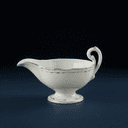
Fine porcelain, inherited from the family, was a precious and fragile possession that Cochrane sought to protect. It was the fear of seeing it chipped that is said to have sparked her invention.
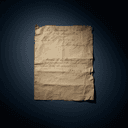
Patent no. 355,139, filed in 1886, described and protected the invention through drawings and technical explanations. It was the legal title that allowed Cochrane to bring her machine to market.
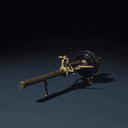
A pump propelled the water upward while a mechanism turned the wheel loaded with dishes. Originally hand-cranked, the system was later fitted with a motor.
School Curriculum
Vocabulary & Tags
Key Vocabulary
Tags
Daily Life
Morning
As a well-to-do woman from Illinois, Josephine Cochrane began her days in a middle-class home where the domestic work was handled by servants. After she was widowed and launched her business, her mornings filled up with commercial correspondence, technical drawings, and business appointments.
Afternoon
Part of her time was devoted to overseeing the development of her machines, first in the shed behind her house and later in her manufacturing workshop. She also met with hotel and restaurant managers to convince them to adopt her dishwasher.
Evening
Evenings were a time for entertaining, in a social world where the quality of one's dishware and table service mattered greatly to one's standing. It was precisely during these dinners, and the clearing-up afterward, that her obsession with protecting the china is said to have been born.
Food
The diet of a well-off American family in the late nineteenth century was plentiful and varied: meats, vegetables, bread, desserts, and fruit, all served on fine dishware. Meals were laid out in several courses, which generated a great many pieces to wash.
Clothing
Cochrane wore the attire of a lady of respectable Victorian society: long corseted dresses, petticoats, quality fabrics, and carefully styled hair. Her wardrobe reflected her social rank, even after she went into business.
Housing
She lived in Shelbyville in a spacious, comfortable house, typical of well-to-do Illinois families. It was in an outbuilding, an adjoining shed, that she set up her first inventor's workshop.
Historical Timeline
Period Vocabulary
Liens externes & ressources
Références
Œuvres
Lave-vaisselle mécanique à jets d'eau
1886
Brevet américain n° 355 139
28 décembre 1886
Garis-Cochran Manufacturing Company
1887
Modèle industriel pour hôtels et restaurants
années 1890
Présentation primée à l'Exposition de Chicago
1893