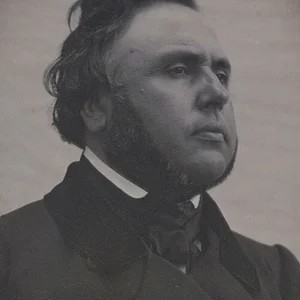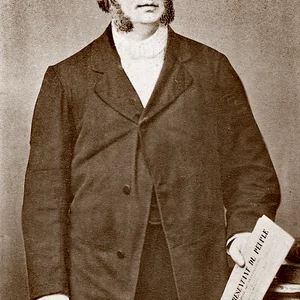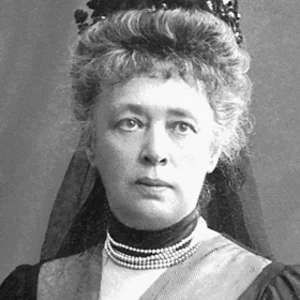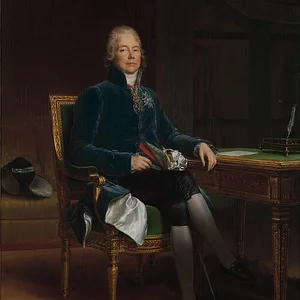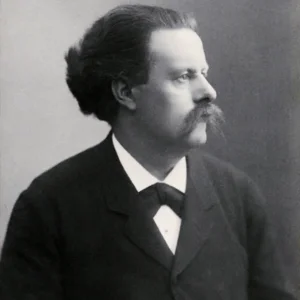

Jules Joffrin (1846–1890) was a labor activist and socialist municipal councillor in Paris. A representative of the possibilist current, he embodied reformist socialist engagement under the Third Republic. The Jules Joffrin metro station (line 12) keeps his memory alive in the 18th arrondissement.
Jules Joffrin(1846 — 1890)
Jules Joffrin
France
8 min read
Frequently asked questions
Key Facts
- Born in 1846 in Paris
- Socialist municipal councillor of Paris in the 18th arrondissement
- Activist of the possibilist current, the reformist branch of French socialism in the 1880s
- Died in 1890, at the age of 44
- The Jules Joffrin station (metro line 12, Paris) is dedicated to him
Works & Achievements
Joffrin's principal political achievement: elected to the Paris Municipal Council in the working-class neighbourhood of Montmartre, he championed the interests of the labouring classes, putting forward reforms on housing, social assistance, and municipal public services.
Joffrin was one of the leading figures of the Possibilist current born from the Saint-Étienne split. He helped define the strategy of capturing municipal governments as a lever for social transformation, laying the groundwork for "municipal socialism" in France.
His addresses at the Hôtel de Ville focused on the living conditions of Parisian workers: substandard housing, unemployment, and access to education. Recorded in the municipal minutes, they constitute the main testimony to his work as an elected representative.
Joffrin took part in the major workers' and socialist congresses that shaped the movement in France, particularly in the wake of the 1882 split. His role in defining the Possibilist programme was recognised by his contemporaries, including Paul Brousse.
Anecdotes
Jules Joffrin was a tailor by trade before entering politics. Like many skilled workers of his generation, it was the workshop that forged his class consciousness: the long days of toil, the insufficient wages, and the complete absence of social protections convinced him that workers had to take their fate into their own hands through political action, without waiting for a hypothetical revolution.
Joffrin was one of the leading figures of the 'possibilist' current within French socialism. Unlike the Guesdists, who championed revolution, the possibilists argued for winning control of town halls in order to introduce concrete reforms — municipal workshops, workers' housing, nurseries — by achieving 'what is possible' within the existing legal framework, without waiting for the great revolutionary night.
Elected to the Paris Municipal Council for the 18th arrondissement (Montmartre), Jules Joffrin sat at the Hôtel de Ville where he championed the demands of Parisian workers. He took an active part in debates on municipal services, seeking to transform the town hall into a tool at the service of the working classes — laying the groundwork for what would later be called 'municipal socialism.'
Jules Joffrin died in 1890, the very year the first May Day was celebrated on 1 May. His premature death at 44 robbed the labour movement of an experienced voice at the precise moment when municipal socialism was beginning to take hold in France. Decades later, the Jules Joffrin metro station (line 12) in the 18th arrondissement stood as Paris's tribute to this people's elected representative — one of the rare working-class militants to lend his name to a piece of the capital's infrastructure.
Primary Sources
The socialist workers set themselves the immediate task of winning control of town halls in order to introduce practical reforms: municipal workshops, assistance for the unemployed, and free secular education for all.
The Federation declares its intention to seize, by legal means, all public powers — both municipal and national — in order to transform the instruments of labor into the collective property of the working class.
Mr. Joffrin, municipal councillor for the 18th arrondissement, requests that the City of Paris examine the creation of affordable working-class housing in the popular neighborhoods of the northern capital.
The Possibilist socialists, led by Brousse and Joffrin, have won several seats on the Paris Municipal Council and now intend to influence the day-to-day running of the capital in favor of the laboring classes.
Citizen Joffrin argues that the municipal path is the surest way to achieve immediate improvements in the condition of workers, without waiting for a radical transformation of the social order that no one can foresee.
Key Places
A working-class and popular neighborhood where Jules Joffrin was elected to the city council. This district, a mix of craftsmen, workers, and lower middle class, was the social breeding ground for the Parisian municipal socialism he embodied.
The seat of the Municipal Council where Joffrin sat as a Socialist representative. It was here that he championed the demands of Parisian workers and advocated for municipal social reform projects.
A station opened in the 20th century in the 18th arrondissement, keeping the memory of the Socialist councillor alive in the very neighborhood he represented. It stands as a testament to Paris's recognition of this labor activist of the Third Republic.
A meeting and organizing hub for Parisian trade unions, founded in 1887. Activists like Joffrin coordinated the social and political action of the capital's workers here.
This dense urban fabric was home to garment workshops, small factories, and overcrowded tenements. It was in this environment that Joffrin came of age politically, surrounded by craftsmen and workers who shared his social aspirations.
Typical Objects

A heavy cast-iron instrument heated on the stove, this was the daily work tool of Joffrin in his trade as a tailor. It symbolizes the grueling conditions of Parisian garment workers and the working-class origins of the activist.

The socialist workers' press was the primary vehicle for information and political mobilization. Like the militants of his generation, Joffrin read and distributed these papers to spread possibilist ideas in workshops and cafés.

The badge of his office as an elected representative in Paris, the tricolor sash embodies the democratic legitimacy the possibilists sought to win. Joffrin wore it during sessions of the Municipal Council at the Hôtel de Ville.

The central instrument of the possibilist strategy: unlike the revolutionaries, Joffrin believed that social change would come through the ballot box. Winning the working-class vote was the top priority of his camp.

Membership in the Fédération des travailleurs socialistes de France (Federation of Socialist Workers of France) attested to belonging to the possibilist current. These cards symbolized organized commitment, setting members apart from mere sympathizers.

Tools of his original trade, they serve as a reminder that Joffrin was first and foremost a skilled worker — representative of the Parisian 'working-class aristocracy' that supplied many leaders to the reformist socialist movement.
School Curriculum
Vocabulary & Tags
Key Vocabulary
Daily Life
Morning
Jules Joffrin's day began early, like any Parisian working man. During his years as an activist, he would read the socialist press at the neighborhood café, keeping up with labor news and movement debates. Before his election, he was at his tailor's workshop from the first hours of the day, pressing iron and scissors in hand.
Afternoon
Once a city councillor, his afternoons were devoted to meetings at the Hôtel de Ville, municipal committee sessions, and constituency surgeries in the 18th arrondissement. He received workers, poorly housed tenants, and unemployed men who brought him their grievances, which he then raised in council debates with an intimate knowledge of their daily reality.
Evening
Evenings were the time for activist meetings: FTSF assemblies, electoral rallies in café back rooms, public lectures on municipal socialism. These late-night gatherings formed the living heart of Parisian labor politics under the Third Republic.
Food
Like most Parisian workers of the Third Republic, Joffrin ate simply: soup, bread, seasonal vegetables, and meat on Sundays. The cafés and guinguettes of northern Paris were social spaces where activists and workers gathered over a glass of red wine or a pale ale.
Clothing
As a tailor, Joffrin paid attention to his appearance: a dark jacket, buttoned waistcoat, trousers, and a bowler hat made up the respectable dress of the "aristocrat" labor activist. For his duties as an elected councillor, he wore carefully kept clothes, asserting his dignity without bourgeois ostentation.
Housing
Jules Joffrin lived in the 18th arrondissement, in the working-class streets of the Butte Montmartre. Workers' housing of the era was often cramped, poorly heated, and overcrowded — a reality Joffrin knew from the inside, and one that fed directly into his fight for municipal social housing.
Historical Timeline
Period Vocabulary
Liens externes & ressources
Références
Œuvres
Mandat de conseiller municipal du 18e arrondissement de Paris
1888-1890
Engagement fondateur dans la FTSF (Fédération des travailleurs socialistes de France)
1882-1890
Discours et interventions au Conseil municipal de Paris
1888-1890
Participation aux congrès socialistes français
1879-1889