 flip
flipProvençal Daube from His Table in Saignon
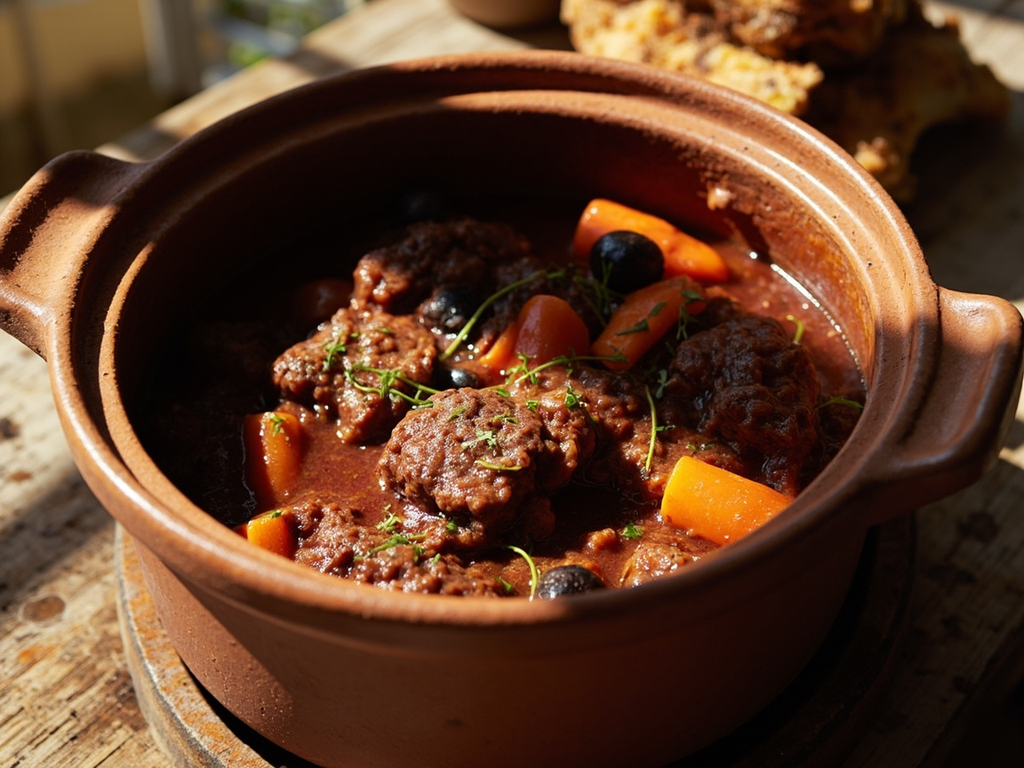
Provençal Daube from His Table in Saignon
Why this dish? Cortázar spent his summers in a house in Saignon, in the Vaucluse, and loved French cuisine, wine, and long meals with friends and writers. This Provençal daube with red wine — which simmers while you talk — embodies his life in Provence and the sobremesa transplanted under the southern sun.
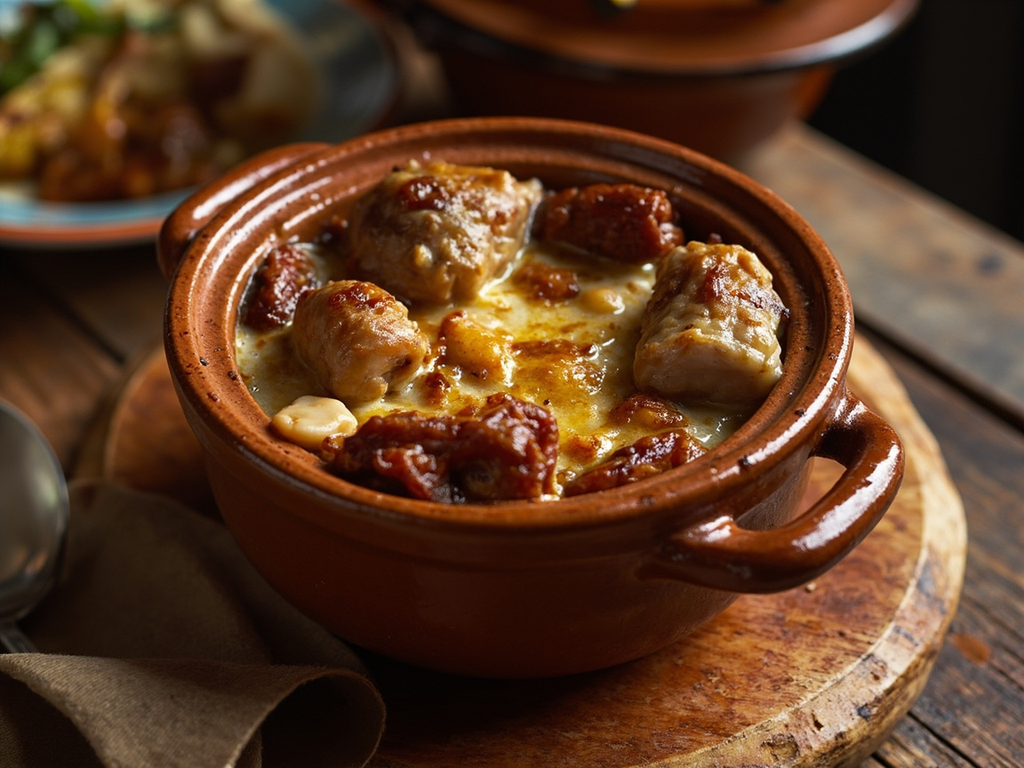
A beef stew marinated then slowly braised in red wine with onions, carrots, orange zest, olives, and herbs de Provence. A dish that simmers for hours and improves while waiting for guests, made for conversation that stretches on.
In Saignon time stretches differently, and a stew like this isn't rushed: you leave it in the red wine from the night before, with the orange peel and thyme, and the next day it cooks on its own while we set the world right at the table. You add some olives, pour in a good local wine, and when the friends arrive the whole house already smells of sobremesa. Cooking, like writing, rewards those who know how to wait.
- •Beef for braising — in large pieces (meat)
- •Regional red wine — enough to cover (marinade and braising)
- •Onions and carrots — generous (aromatic garnish)
- •Dried orange zest, thyme, bay leaf — a bouquet (Provençal flavor)
- •Black olives — a handful (southern saltiness)
- •Lard — a few slices (richness)
Provençal Daube from His Table in Saignon
A beef stew marinated then slowly braised in red wine with onions, carrots, orange zest, olives, and herbs de Provence. A dish that simmers for hours and improves while waiting for guests, made for conversation that stretches on.
Why this dish? Cortázar spent his summers in a house in Saignon, in the Vaucluse, and loved French cuisine, wine, and long meals with friends and writers. This Provençal daube with red wine — which simmers while you talk — embodies his life in Provence and the sobremesa transplanted under the southern sun.
In Saignon time stretches differently, and a stew like this isn't rushed: you leave it in the red wine from the night before, with the orange peel and thyme, and the next day it cooks on its own while we set the world right at the table. You add some olives, pour in a good local wine, and when the friends arrive the whole house already smells of sobremesa. Cooking, like writing, rewards those who know how to wait.
Ingredients (period version)
- Beef for braising — in large pieces (meat)
- Regional red wine — enough to cover (marinade and braising)
- Onions and carrots — generous (aromatic garnish)
- Dried orange zest, thyme, bay leaf — a bouquet (Provençal flavor)
- Black olives — a handful (southern saltiness)
- Lard — a few slices (richness)
Ingredients
- Beef chuck or cheek — 1.2 kg in large cubes (meat)
- Full-bodied red wine — 75 cl (marinade and braising)
- Onions — 2 (aromatic)
- Carrots — 3 (aromatic)
- Orange zest — 1 strip (flavor)
- Thyme, bay leaf — 1 bouquet garni (herbs de Provence)
- Pitted black olives — 100 g (saltiness)
- Lardons or smoked bacon — 150 g (richness)
- Garlic — 3 cloves (aromatic)
Method
- The day before, marinate the beef cubes in red wine with onions, carrots, garlic, orange zest, and herbs.
- Drain the meat (reserve the marinade), pat dry, and sear with the lardons in a heavy pot.
- Add the vegetables from the marinade, pour in the strained wine, and season lightly with salt.
- Cover and braise over very low heat for 3 hours, adding the olives at the end.
- Let rest, then reheat before serving — the daube is better the next day.
How it was made : The daube is the emblematic slow-cooked dish of Provence, traditionally cooked in a clay daubière by the fire. Orange zest and olives mark the southern identity; the long braising tenderized modest cuts and made the dish even better reheated.
The contemporary twist : Serve the daube over wide fresh pasta, Niçoise-style 'daube aux macaronis,' a nod to the friend gatherings that stretched into the night.
Julio Cortázar · Charactorium