 flip
flipIʻa maloʻo — salted and dried fish
Iʻa maloʻo — salted and dried fish
Why this dish? Kaʻahumanu was born in Hana, Maui, and spent her life traveling from island to island — Kona, Honolulu, Lāhainā — by outrigger canoe. On the ocean, there was no fresh poi or earth oven: salted fish dried in the sun was the safe canoe food, one that kept for days without spoiling. The queen regent, constantly moving between her domains, knew its salty taste by heart.
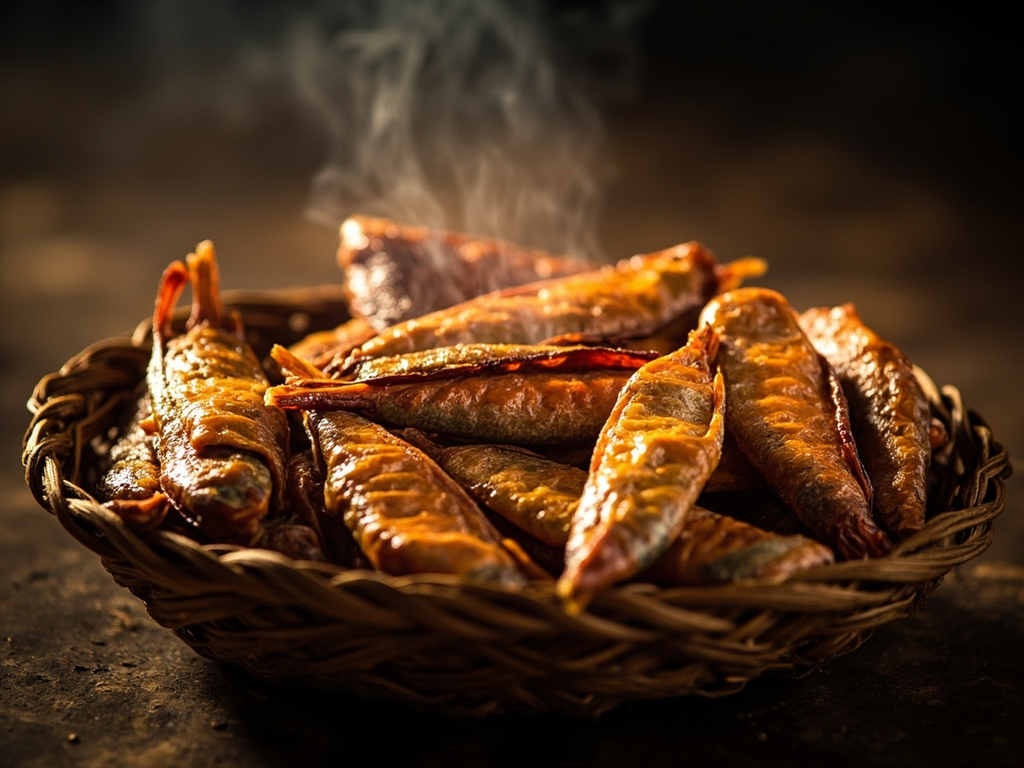
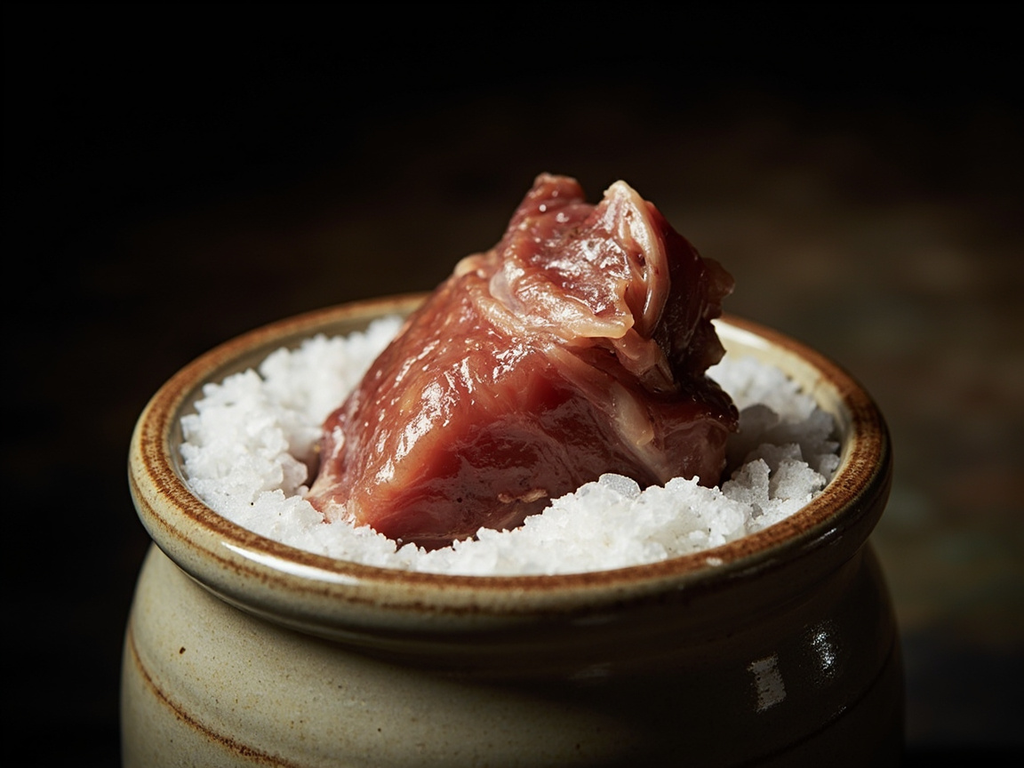
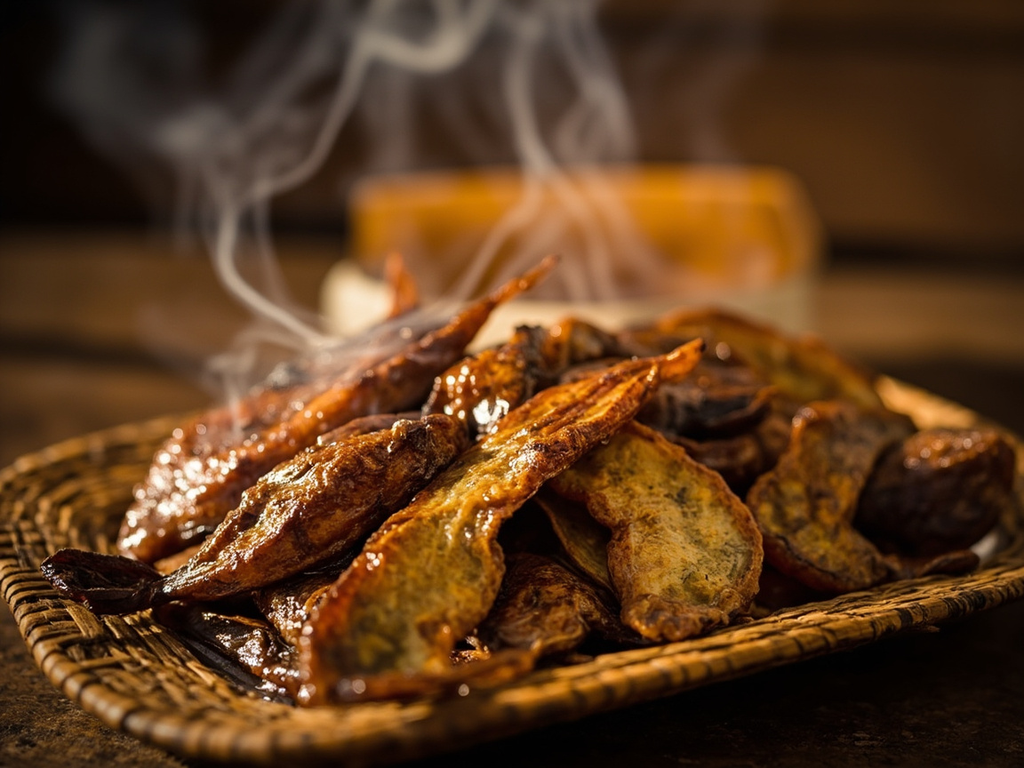
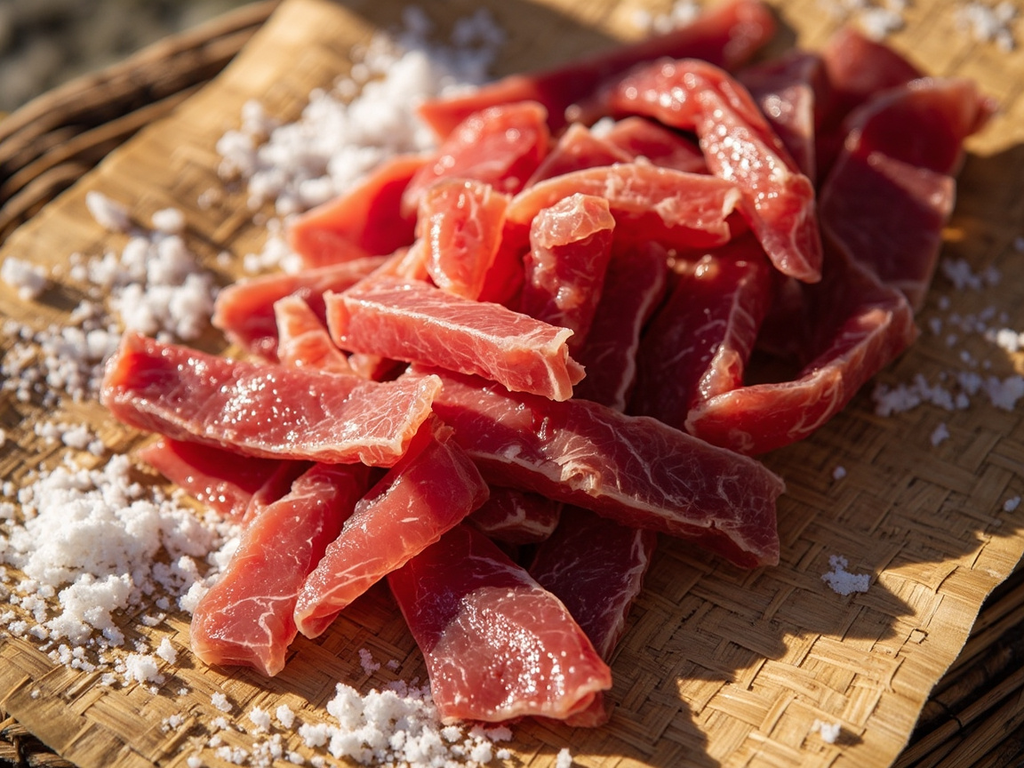
Fish fillets (tuna, bonito) opened, salted through, and dried in the sun and sea wind until firm and concentrated. They are nibbled as is, salty and powerful, or crumbled over poi. The nomadic pantry of the islands.
When the canoe glides between Maui and Hawaiʻi, we do not make fire on the water, my child. So we bring this: the fish we opened, rubbed with salt to the heart and offered to the sun and trade wind for days. It becomes hard and tasty, does not spoil, and a small piece is enough to hold a paddler's belly until the next island. At my table too we love it, crumbled over poi when fresh fish is scarce.
- •Fatty fish (aku/bonito, ʻahi/tuna) — several catches (fish to dry)
- •Sea salt (paʻakai) — abundantly (salting and preservation)
Iʻa maloʻo — salted and dried fish
Fish fillets (tuna, bonito) opened, salted through, and dried in the sun and sea wind until firm and concentrated. They are nibbled as is, salty and powerful, or crumbled over poi. The nomadic pantry of the islands.
Why this dish? Kaʻahumanu was born in Hana, Maui, and spent her life traveling from island to island — Kona, Honolulu, Lāhainā — by outrigger canoe. On the ocean, there was no fresh poi or earth oven: salted fish dried in the sun was the safe canoe food, one that kept for days without spoiling. The queen regent, constantly moving between her domains, knew its salty taste by heart.
When the canoe glides between Maui and Hawaiʻi, we do not make fire on the water, my child. So we bring this: the fish we opened, rubbed with salt to the heart and offered to the sun and trade wind for days. It becomes hard and tasty, does not spoil, and a small piece is enough to hold a paddler's belly until the next island. At my table too we love it, crumbled over poi when fresh fish is scarce.
Ingredients (period version)
- Fatty fish (aku/bonito, ʻahi/tuna) — several catches (fish to dry)
- Sea salt (paʻakai) — abundantly (salting and preservation)
Ingredients
- Very fresh tuna or bonito fillets — 500 g (fish to dry)
- Coarse sea salt — 3 to 4 tbsp (salting)
Method
- Open the fillets like a book so they are thin and even (1.5 cm thick).
- Rub and massage generously with coarse salt on all sides; let drain 1 to 2 hours in the fridge.
- Pat dry, then dry: in the sun and wind on a rack protected from insects (period method), or in a dehydrator / oven at 60 °C with door ajar for 6 to 10 hours.
- The fish is ready when firm, dry on the surface but still pliable inside.
- Store away from moisture; nibble as is or crumble over poi and vegetables.
How it was made : Hawaiians, great fishermen and navigators, mastered salting perfectly: salted-dried fish, but also simply salted fish kept moist (iʻa paʻakai). These provisions made long canoe voyages possible and fed villages between catches. Salt was harvested from natural salt pans, sometimes tinted with red clay (ʻalaea).
The contemporary twist : Crumbled over an avocado toast or vinegared rice, iʻa maloʻo becomes a "sea jerky" that would put any salty snack to shame.
Sources : Margaret Titcomb, Native Use of Fish in Hawaii (1972)
Ka'ahumanu · Charactorium