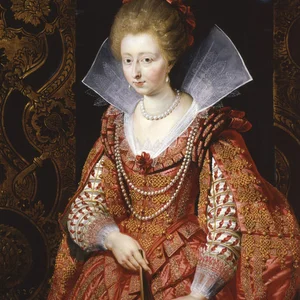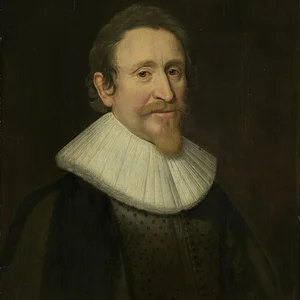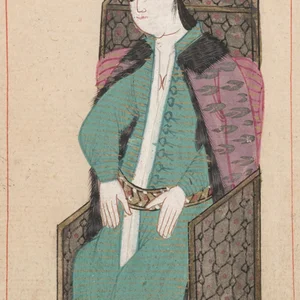

Valide sultan and regent of the Ottoman Empire in the 17th century, Kösem Sultan wielded considerable political influence for over thirty years. She governed as regent for her sons Murad IV and Ibrahim I, and later for her grandson Mehmed IV.
Kösem Sultan(1589 — 1651)
Kösem Sultan
Empire ottoman
8 min read
Frequently asked questions
Key Facts
- Around 1590: probable birth in Greece; entered the imperial harem under the name Mahpeyker
- 1623: becomes regent upon the death of Sultan Mustafa I, governing on behalf of her son Murad IV
- 1640–1648: regent for her son Ibrahim I
- 1648: resumes the regency for her grandson Mehmed IV, aged six
- 1651: assassinated during a palace coup orchestrated by Sultana Turhan, her daughter-in-law and rival
Works & Achievements
Architectural complex commissioned by Kösem Sultan comprising a mosque adorned with Iznik tiles, a madrasa, and a hammam. This project reflects her role as a religious patron and benefactress to the people of Istanbul.
Effective governance of the Ottoman Empire during Murad IV's minority, including the management of appointments to high offices and the maintenance of stability against rival Janissary factions.
Following the death of Murad IV, Kösem Sultan guided the accession to the throne of her son Ibrahim I and continued to exert a decisive influence on state affairs despite the growing difficulties of his reign.
Following the deposition of Ibrahim I, Kösem Sultan served for the third time as regent of the Empire for her seven-year-old grandson Mehmed IV, maintaining alliances with the Janissaries until her assassination.
Kösem Sultan established numerous charitable foundations that funded mosques, schools, public fountains, and food distributions throughout the Empire, securing lasting popularity and reinforcing her political legitimacy.
Anecdotes
Born around 1589 into a Greek family, probably on the island of Tinos in the Aegean Sea, the young Anastasia was captured and sold into slavery before entering the Ottoman imperial harem. Her beauty and intelligence immediately struck Sultan Ahmed I, who made her his favorite and gave her the nickname Kösem, meaning "leader of the flock" in Turkish. She bore him several children, including Murad and Ibrahim, who would one day reign over the Empire.
After the death of Ahmed I in 1617, Kösem skillfully navigated the Ottoman successions and supported the accession to the throne of her sons: Murad IV in 1623, then Ibrahim I in 1640. During each of these reigns, she served as regent and managed the affairs of the Empire, becoming one of the most powerful women in Ottoman history — at a time when women were expected to play no public role whatsoever.
Kösem Sultan was renowned for her generosity toward the poor. She funded the construction of mosques, fountains, and *imarets* (public kitchens) throughout the Empire. According to several Ottoman chronicles, she personally paid for the release of prisoners unable to repay their debts and distributed considerable alms to the poor of Istanbul every year.
Her downfall was as dramatic as her rise to power. After the deposition of her son Ibrahim I in 1648, she became regent for her seven-year-old grandson Mehmed IV. Her rival, the young sultan's mother Turhan Hatice Sultan, gradually gained the upper hand. On the night of September 2, 1651, agents of Turhan Hatice stormed her apartments in Topkapi Palace and strangled her, bringing thirty years of political dominance to an end.
Kösem Sultan maintained a secret correspondence with Venetian ambassadors in Istanbul and negotiated prisoner exchanges with foreign powers. Reports from the Venetian *bailos* describe her as a woman of remarkable intelligence who had mastered the inner workings of Ottoman power and did not hesitate to deal as an equal with European diplomats — a practice highly unusual for a harem woman.
Primary Sources
The Sultan's Mother governs the kingdom's affairs with a skill and authority that few princes have managed to exercise; she commands the Janissaries, guides appointments, and conducts negotiations without the sultan taking any real part.
Kösem Sultan had mosques, imarets, and fountains built in many districts of Istanbul; each year, she distributed considerable sums to the poor and ransomed indebted prisoners who could not free themselves by their own means.
In that year, the Valide Sultan exercised the regency in the name of the young sultan Mehmed IV; she summoned the Divan, received ambassadors, and signed imperial firmans, supported by the Janissary commanders whom she had won over through her generosity.
We order that the Janissaries receive their pay without delay and that provincial revenues be remitted to the imperial treasury without embezzlement or delay; any violation of this order will be punished in accordance with the law.
Key Places
The principal residence of the Ottoman sultans and the true center of imperial power. Kösem Sultan spent most of her adult life in the harem apartments here, and it was here that she was assassinated in 1651.
An architectural complex built on the orders of Kösem Sultan around 1640 on the Asian shore of Istanbul, comprising a mosque renowned for its faience tiles, a madrasa, and a hammam. It stands as a testament to her role as a religious patron.
Kösem Sultan was buried in the mausoleum of the Blue Mosque, alongside her husband Sultan Ahmed I. Her tomb remains visible today and is an important site of remembrance in Ottoman history.
A Greek island in the Aegean Sea identified by several historical sources as the birthplace of Kösem Sultan, before she was captured and brought to Istanbul. This place symbolizes her Christian origins before her entry into the Ottoman world.
The commercial and artisan heart of Istanbul, which Kösem Sultan helped finance and maintain through her *vakıfs*. She purchased materials for her charitable foundations here and had agents managing her economic interests within its walls.
Typical Objects
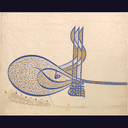
The sultan's complex calligraphic signature, affixed to firmans and official decrees. As regent, Kösem Sultan oversaw the drafting of these documents and ensured her decisions were sanctioned by the imperial seal.
📷 Domaine public · Wikimedia Commons ↗
A formal garment of silk and velvet embroidered with gold and silver threads, often adorned with floral motifs. During official receptions at the Topkapi palace, Kösem Sultan received dignitaries and envoys dressed in these caftans, which visually asserted her authority.
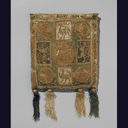
Chronicles report that Kösem Sultan always kept purses filled with gold coins on hand to distribute alms to the poor. This conspicuous generosity earned her lasting popularity among the people of Istanbul.
📷 CC0 · Wikimedia Commons ↗
The imperial orders and diplomatic correspondence that Kösem Sultan dictated or oversaw. Several of these documents survive in the Ottoman archives and attest to her role as the Empire's effective ruler.

An object of daily devotion in the Ottoman world, typically made of amber or precious stones for high-ranking individuals. It symbolized piety and social standing, and accompanied Kösem Sultan during her moments of quiet reflection.

Tiles and ceramic ware produced in Iznik, decorated with blue, white, and red floral patterns. The Valide Sultan's apartments at Topkapi were richly adorned with them, making these objects an emblem of the Ottoman culture of her era.
School Curriculum
Vocabulary & Tags
Key Vocabulary
Tags
Daily Life
Morning
Kösem Sultan rose early in her apartments in the Topkapi harem, surrounded by her ladies-in-waiting. After the morning prayer (fajr), she received reports from her agents on the political situation, conveyed through the Black eunuchs who served as liaisons between the harem and the rest of the palace. These early hours were devoted to gathering intelligence and making decisions.
Afternoon
Afternoons were given over to political affairs. Although women could not attend the Divan directly, Kösem Sultan delivered her instructions to the Grand Vizier through trusted eunuchs. She also granted audiences to the wives of dignitaries and oversaw the administration of her many charitable foundations across the Empire.
Evening
Evenings in the harem unfolded to a backdrop of music, storytelling, and conversation. Kösem Sultan supervised the education of the imperial family's princes and princesses and continued to receive news from outside through her network of informants. The evening prayer (isha) and the recitation of the Quran brought the day to a close.
Food
The Valide Sultan's table was magnificent: roasted lamb and poultry seasoned with spices, rice pilaf, stuffed vegetables (dolmas), pastries made with honey and pistachios (baklava, lokum), fresh and dried fruits, and drinks flavored with rose or tamarind. Meals were served on Chinese porcelain or precious metalware, a reflection of her imperial rank.
Clothing
Kösem Sultan wore richly embroidered caftans of silk and velvet threaded with gold and silver. Her head was covered with a turban adorned with diamond and ruby brooches. Her hair was braided and decorated with jewels, and she wore golden leather babouches. Every detail of her dress asserted her rank as the foremost woman in the Empire.
Housing
The Valide Sultan's apartments at Topkapi ranked among the most magnificent in the palace: vast halls lined with Iznik tiles in blue-and-white floral patterns, carved and painted wooden ceilings, softly murmuring indoor fountains, and divans piled with embroidered cushions. Private baths (hammam) and interior gardens completed a space that was as much a seat of power as a place of daily life.
Historical Timeline
Period Vocabulary
Liens externes & ressources
Références
Œuvres
Mosquée Çinili et son külliye à Üsküdar
1640
Régence pour Murad IV
1623-1632
Régence pour Ibrahim Ier
1640-1648
Régence pour Mehmed IV
1648-1651
Réseau de fondations pieuses (vakıfs)
1620-1651