 flip
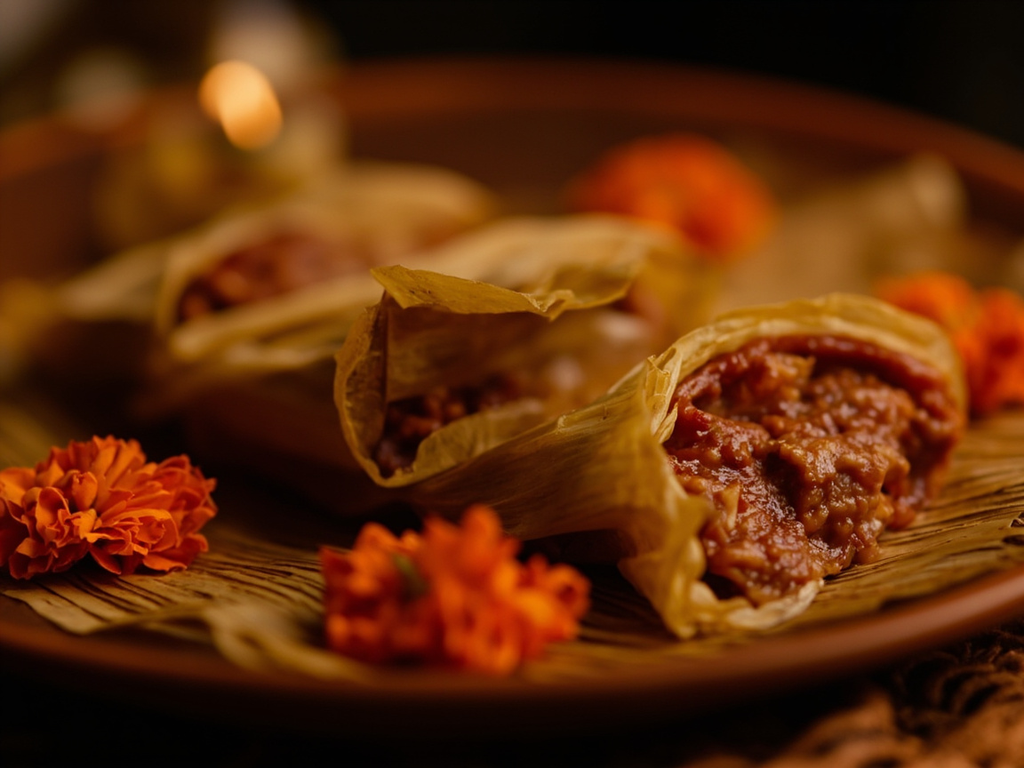
flipTamales of the ofrenda, wrapped in corn husks
Tamales of the ofrenda, wrapped in corn husks
Why this dish? It is said that offerings of flowers and food are left for La Llorona along rivers and canals. The tamal, steamed in its corn husk and offered to the dead since pre-Hispanic times, is the quintessential soul food: it is placed at the water's edge, where she wanders weeping for her children.
Small packets of corn masa filled with shredded pork in mild chili salsa, tied in a dried corn husk and steamed. A tender, steaming mouthful, both rustic and sacred.
Approach, but fear nothing from me tonight. See these little bundles I wrap one by one in the corn husk, as once I swaddled my children. I beat the masa until a crumb floats on water — that is how you know it is ready, my mother taught me before the tears. Place them near the river for the passing souls, and leave one for me: the steam rising from the leaves is all I can still taste. Ay, my sons… eat, you who still live.
- •Ground nixtamalized corn (masa) — a good amount, freshly ground on the metate (base dough)
- •Pork lard — by hand, until the dough is light (softness and binder)
- •Shredded stewed pork — as available (filling)
- •Dried mild chilies (ancho) — a few, soaked and ground (filling salsa)
- •Dried corn husks — a stack, rehydrated (wrapper)
- •Salt — a pinch (seasoning)
Tamales of the ofrenda, wrapped in corn husks
Small packets of corn masa filled with shredded pork in mild chili salsa, tied in a dried corn husk and steamed. A tender, steaming mouthful, both rustic and sacred.
Why this dish? It is said that offerings of flowers and food are left for La Llorona along rivers and canals. The tamal, steamed in its corn husk and offered to the dead since pre-Hispanic times, is the quintessential soul food: it is placed at the water's edge, where she wanders weeping for her children.
Approach, but fear nothing from me tonight. See these little bundles I wrap one by one in the corn husk, as once I swaddled my children. I beat the masa until a crumb floats on water — that is how you know it is ready, my mother taught me before the tears. Place them near the river for the passing souls, and leave one for me: the steam rising from the leaves is all I can still taste. Ay, my sons… eat, you who still live.
Ingredients (period version)
- Ground nixtamalized corn (masa) — a good amount, freshly ground on the metate (base dough)
- Pork lard — by hand, until the dough is light (softness and binder)
- Shredded stewed pork — as available (filling)
- Dried mild chilies (ancho) — a few, soaked and ground (filling salsa)
- Dried corn husks — a stack, rehydrated (wrapper)
- Salt — a pinch (seasoning)
Ingredients
- Masa harina (nixtamalized corn flour) — 500 g (base dough)
- Lard (or butter) — 180 g (softness)
- Warm chicken broth — 350 to 400 ml (hydration)
- Shredded pork shoulder — 300 g (filling)
- Dried ancho chilies — 3, seeded (mild salsa)
- Garlic — 2 cloves (aromatic)
- Dried corn husks — 20 to 25 (wrapper)
- Salt — 1 tsp (seasoning)
Method
- Soak the corn husks in hot water for 30 minutes to soften.
- Rehydrate the ancho chilies in hot water, then blend them with garlic and a little soaking water into a smooth salsa; mix with the shredded pork.
- Beat the lard until it whitens, incorporate the masa harina, salt, and warm broth to obtain a soft spreadable dough (test: a walnut-sized piece of dough floats in water).
- Spread a layer of masa on each drained husk, place a spoonful of pork in the center, fold the sides then the bottom.
- Stand the tamales upright in a steamer pot and cook for 50 to 60 minutes, husk side up.
- Let rest 10 minutes: the masa firms up as it cools slightly.
How it was made : Long before the conquest, the Nahuas offered tamales to gods and the dead; Sahagún describes dozens of varieties in his Florentine Codex. In colonial times, pork and lard brought by the Spanish were added, but the gesture — masa, husk, steam — remains indigenous. They were placed on altars and at the water's edge for the deceased.
The contemporary twist : Arrange three still-tied tamales on a bed of corn husks and cempasúchil (marigold) flowers: the orange color of the dead against the white of La Llorona's dress.
Sources : Bernardino de Sahagún, Codex de Florence (Historia general de las cosas de Nueva España), XVIe siècle · Sophie D. Coe, America's First Cuisines (1994)
La Llorona · Charactorium