 flip
flipArní tou foúrnou — Oven-Baked Lamb for Feast Days
Arní tou foúrnou — Oven-Baked Lamb for Feast Days
Why this dish? The character's background mentions roast lamb on feast days. For an Orthodox Greek family like Bouboulina's, lamb is THE Easter dish and for major celebrations — a symbol of resurrection and community, shared after the long Lenten fast. On an island engaged in the struggle for independence, these meals also sealed alliances.
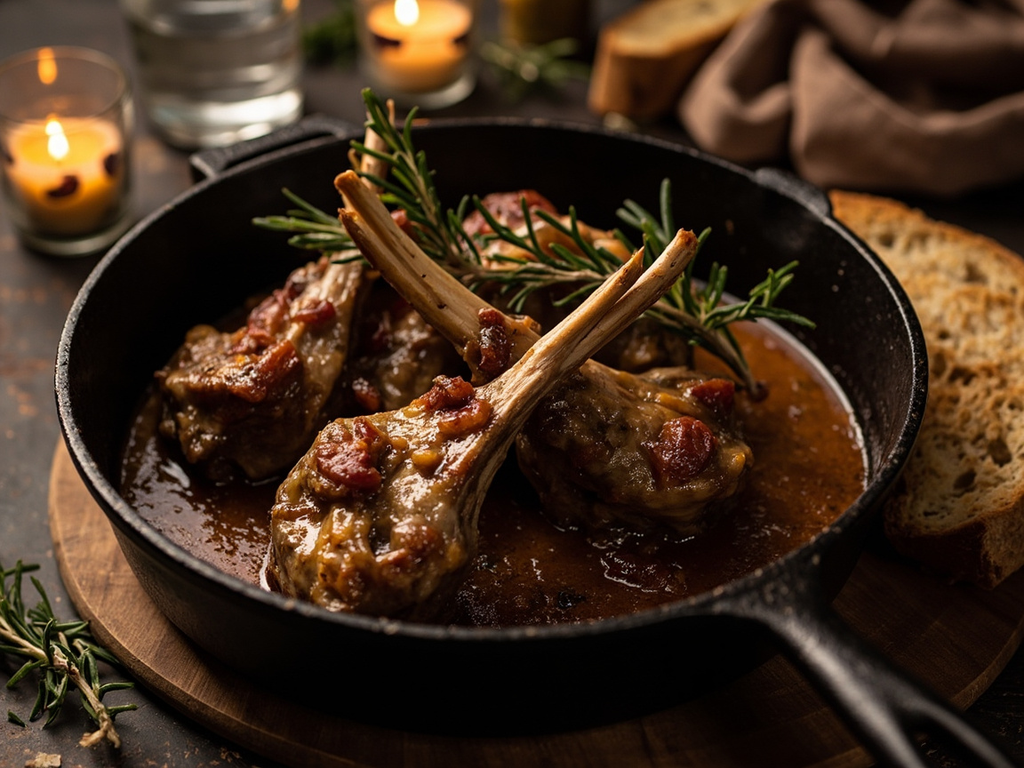
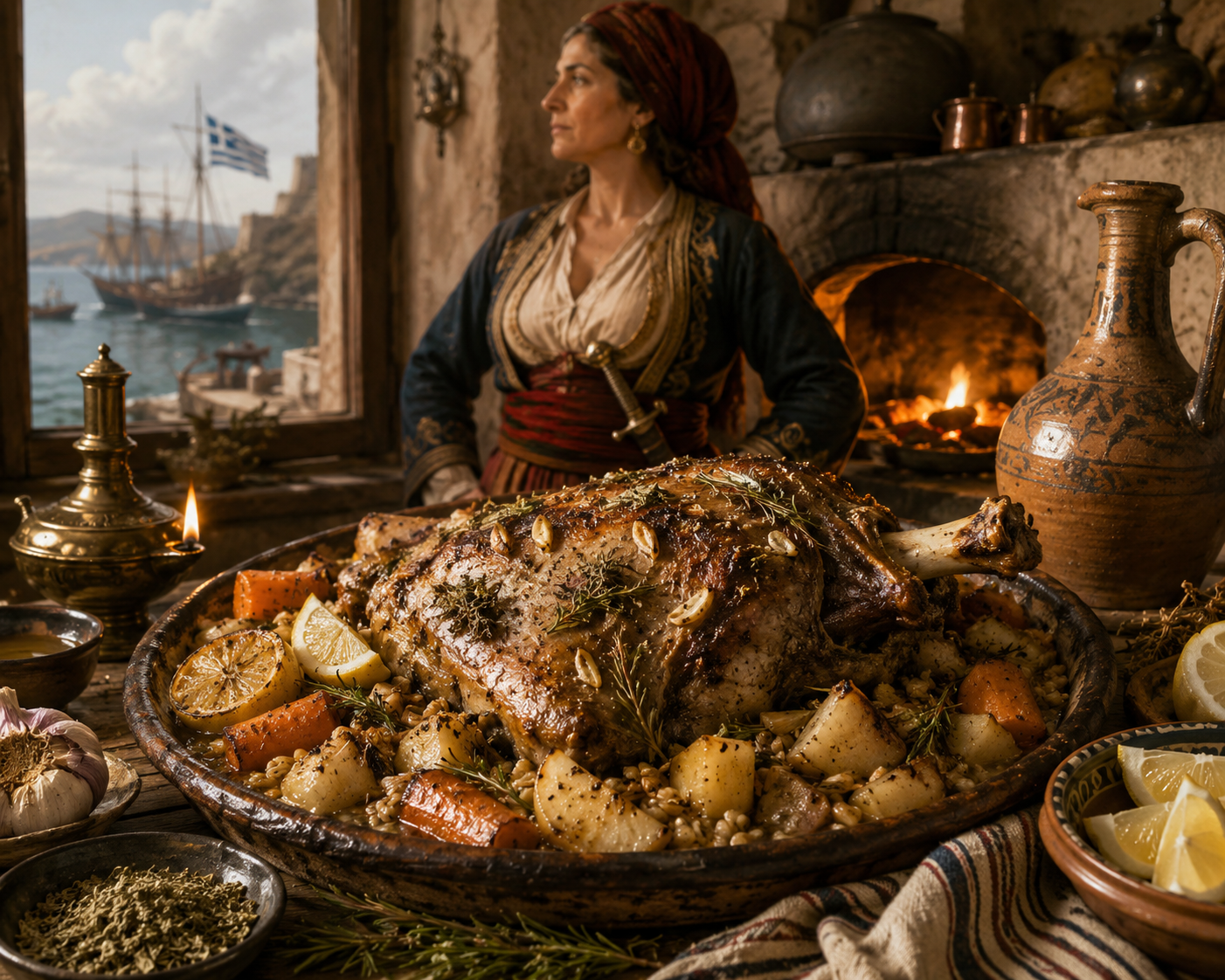
A leg or shoulder of lamb studded with garlic, perfumed with oregano, rosemary, and lemon, slow-roasted in the bread oven until the meat falls off the bone. Around it, potatoes… or, to stay period, root vegetables and cracked wheat that soak up the juices.
When the Easter bells rang after the weeks of fasting, my house filled up: sailors, captains, relatives, conspirators of the Society of Friends. We stabbed the lamb with garlic and oregano from the hill, doused it with lemon and my oil, and it baked in the oven until the flesh yielded to a spoon. I never believed a woman should stay in the kitchen — but at my table, we ate as we fought: together, and holding nothing back.
- •Shoulder or leg of lamb — a fine piece (centerpiece roast)
- •Garlic — several cloves (studded into the meat)
- •Oregano and rosemary — in abundance (scent of the hills)
- •Lemon — 2 or 3 (acidity and shine)
- •Olive oil — generously (basting)
- •Cracked wheat or root vegetables — according to the household (garnish that soaks up juices)
Arní tou foúrnou — Oven-Baked Lamb for Feast Days
A leg or shoulder of lamb studded with garlic, perfumed with oregano, rosemary, and lemon, slow-roasted in the bread oven until the meat falls off the bone. Around it, potatoes… or, to stay period, root vegetables and cracked wheat that soak up the juices.
Why this dish? The character's background mentions roast lamb on feast days. For an Orthodox Greek family like Bouboulina's, lamb is THE Easter dish and for major celebrations — a symbol of resurrection and community, shared after the long Lenten fast. On an island engaged in the struggle for independence, these meals also sealed alliances.
When the Easter bells rang after the weeks of fasting, my house filled up: sailors, captains, relatives, conspirators of the Society of Friends. We stabbed the lamb with garlic and oregano from the hill, doused it with lemon and my oil, and it baked in the oven until the flesh yielded to a spoon. I never believed a woman should stay in the kitchen — but at my table, we ate as we fought: together, and holding nothing back.
Ingredients (period version)
- Shoulder or leg of lamb — a fine piece (centerpiece roast)
- Garlic — several cloves (studded into the meat)
- Oregano and rosemary — in abundance (scent of the hills)
- Lemon — 2 or 3 (acidity and shine)
- Olive oil — generously (basting)
- Cracked wheat or root vegetables — according to the household (garnish that soaks up juices)
Ingredients
- Bone-in lamb shoulder — 1.8 kg (roast)
- Garlic — 6 cloves (studding)
- Dried oregano — 2 tbsp (aroma)
- Fresh rosemary — 3 sprigs (aroma)
- Lemons — 3 (juice + wedges) (acidity)
- Olive oil — 5 tbsp (basting)
- Potatoes (or turnips/carrots for period version) — 1 kg (garnish)
- Salt and pepper — generously (seasoning)
Method
- Slash the lamb and insert slivers of garlic. Rub with salt, pepper, oregano, lemon juice, and oil; marinate 1 hour (or overnight).
- Arrange the cut vegetables around the meat in a large dish, salt, drizzle with oil and lemon.
- Cover with paper or a lid and bake at 160 °C for 2.5 hours.
- Uncover, increase to 200 °C and continue for 30–40 minutes to brown the meat and color the vegetables, basting with the juices.
- Let rest 15 minutes, sprinkle with fresh rosemary, and serve with lemon wedges.
How it was made : In villages and islands, the lamb was taken to the communal wood-fired oven on Easter morning, after roasting the whole animal on a spit for large gatherings. The slow cooking and use of oregano, garlic, and lemon characterize Greek festive lamb for centuries.
The contemporary twist : Shredded in an open pita, red onion, mint yogurt, and lemon zest — the Easter lamb reinvented as festive street food.
Sources : Aglaia Kremezi, The Foods of Greece · Diane Kochilas, Ikaria: Lessons on Food, Life, and Longevity
Laskarina Bouboulina · Charactorium