 flip
flipKafés — Ottoman-Style Coffee
Kafés — Ottoman-Style Coffee
Why this dish? The background mentions Turkish coffee served in small cups, and Bouboulina lived between Spetses and the Ottoman world (she even stayed in Constantinople). Coffee prepared in the bríki, slowly over embers, was the ritual of hospitality and negotiation throughout the Empire — including for this shipowner who dealt with merchants and captains.
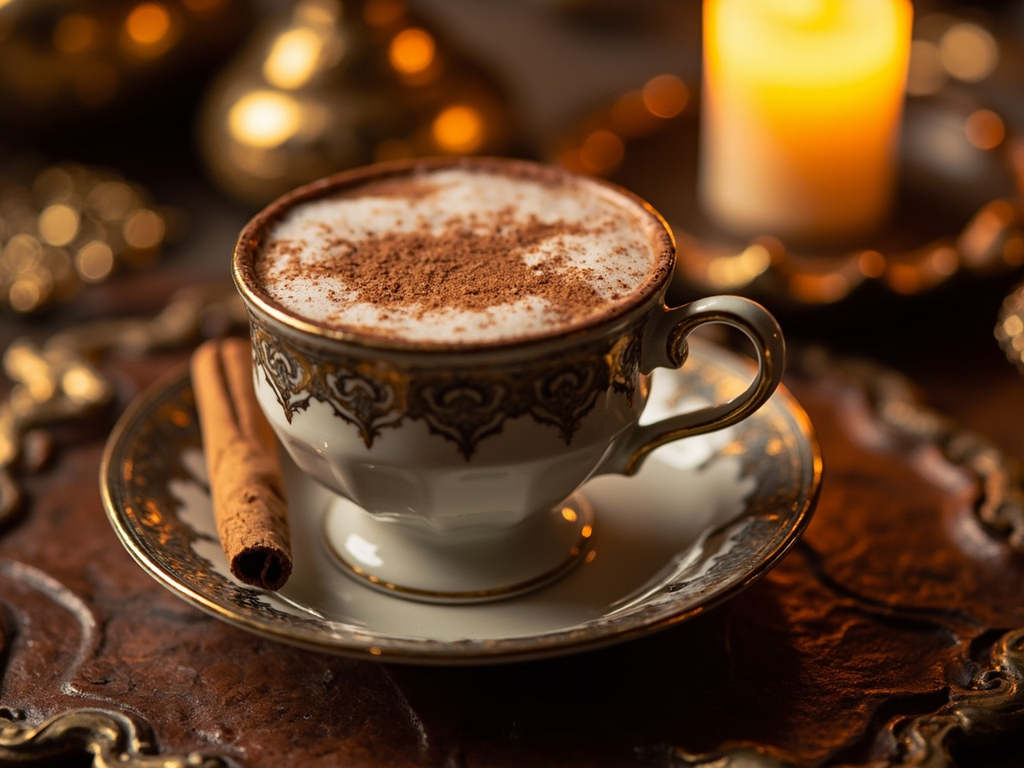
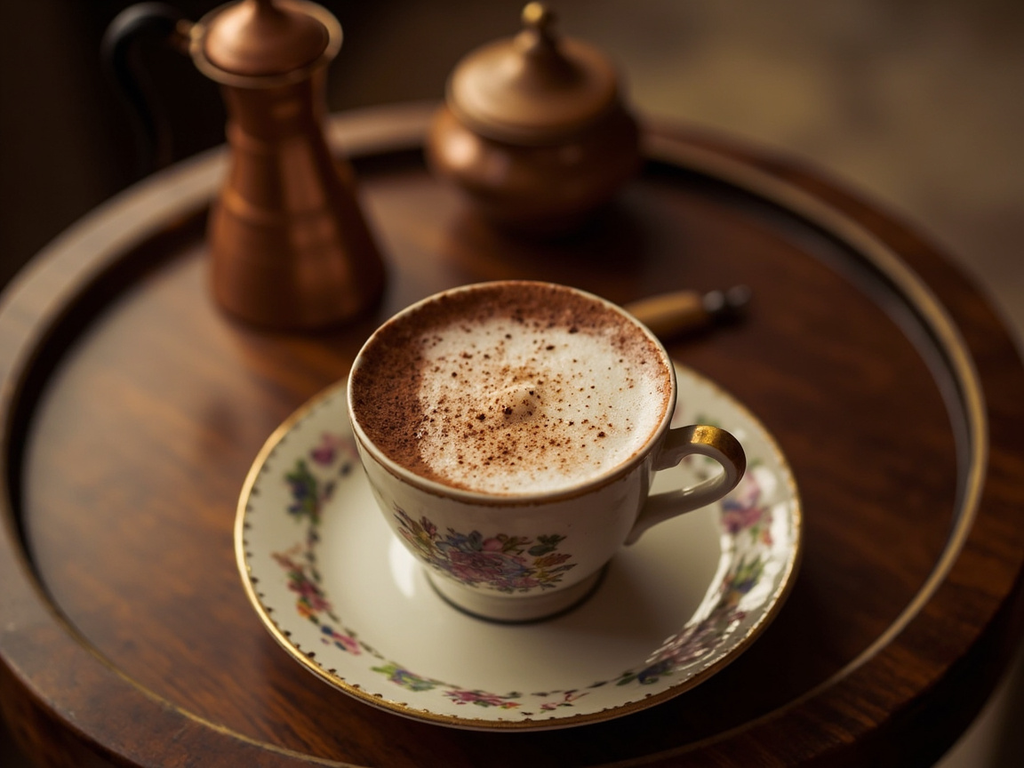
Finely ground coffee, boiled with water and sugar in a small copper pot, the bríki, until it foams — the kaïmáki. Served unfiltered in tiny cups, drunk in small sips while the grounds settle at the bottom.
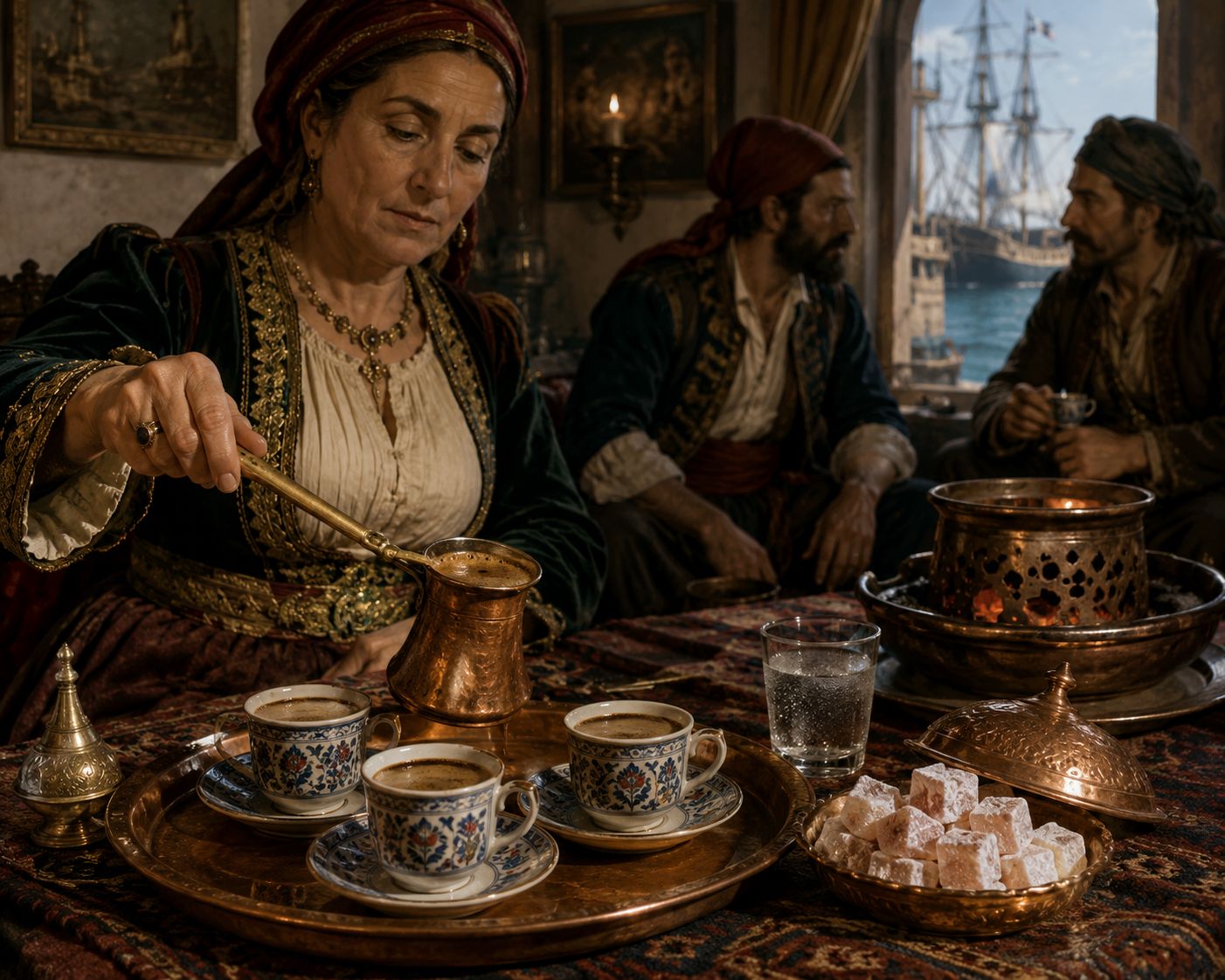
No business is done with a dry throat. When a captain entered my home, we set the bríki on the embers and watched for the foam to rise — above all, do not let it boil and burst, that would be rude! I served it sketo, without sugar, for I like things straight, but to my guests according to their taste. We discuss armament and independence over these small cups, and they say one reads the future in the overturned grounds.
- •Finely ground coffee (powder) — one spoonful per cup (base)
- •Water — one small cup per guest (infusion)
- •Sugar — according to the drinker's taste (sweetness (optional))
Kafés — Ottoman-Style Coffee
Finely ground coffee, boiled with water and sugar in a small copper pot, the bríki, until it foams — the kaïmáki. Served unfiltered in tiny cups, drunk in small sips while the grounds settle at the bottom.
Why this dish? The background mentions Turkish coffee served in small cups, and Bouboulina lived between Spetses and the Ottoman world (she even stayed in Constantinople). Coffee prepared in the bríki, slowly over embers, was the ritual of hospitality and negotiation throughout the Empire — including for this shipowner who dealt with merchants and captains.
No business is done with a dry throat. When a captain entered my home, we set the bríki on the embers and watched for the foam to rise — above all, do not let it boil and burst, that would be rude! I served it sketo, without sugar, for I like things straight, but to my guests according to their taste. We discuss armament and independence over these small cups, and they say one reads the future in the overturned grounds.
Ingredients (period version)
- Finely ground coffee (powder) — one spoonful per cup (base)
- Water — one small cup per guest (infusion)
- Sugar — according to the drinker's taste (sweetness (optional))
Ingredients
- Very finely ground coffee (Turkish grind) — 1 heaped tsp per cup (base)
- Cold water — 1 small cup (60 ml) per guest (infusion)
- Sugar — 0 to 2 tsp per cup, to taste (sweetness)
Method
- Pour cold water into the bríki (or a small saucepan), add the coffee and desired sugar.
- Stir once to mix, then do not touch again.
- Heat very gently: let the foam (kaïmáki) rise slowly without ever boiling.
- As soon as the foam reaches the rim, remove from heat; distribute a little foam into each cup, then pour the coffee.
- Let rest for a minute for the grounds to settle, and drink in small sips without stirring.
How it was made : Coffee arrived in the Ottoman world in the 16th century and became the centerpiece of hospitality. It was ordered by its sweetness: sketo (unsweetened), métrio (medium), glykó (sweet). The grounds left at the bottom were used for cafédomanteía, fortune-telling by reading the cup.
The contemporary twist : Served with a loukoúmi and a glass of cold water on a small copper tray — and, for a wink, the cup is turned over to 'read' the guests' future.
Sources : Ralph Hattox, Coffee and Coffeehouses: The Origins of a Social Beverage in the Medieval Near East · Aglaia Kremezi, The Foods of Greece
Laskarina Bouboulina · Charactorium