 flip
flipTorta Verde with Herbs and Fresh Cheese
Torta Verde with Herbs and Fresh Cheese
Why this dish? In Milan, in the service of Ludovico Sforza, Leonardo frequented court banquets for which he sometimes designed festive machinery. The torta verde — a herb and cheese pie enhanced with raisins and spices — was a prestige dish that remained faithful to his meatless diet.
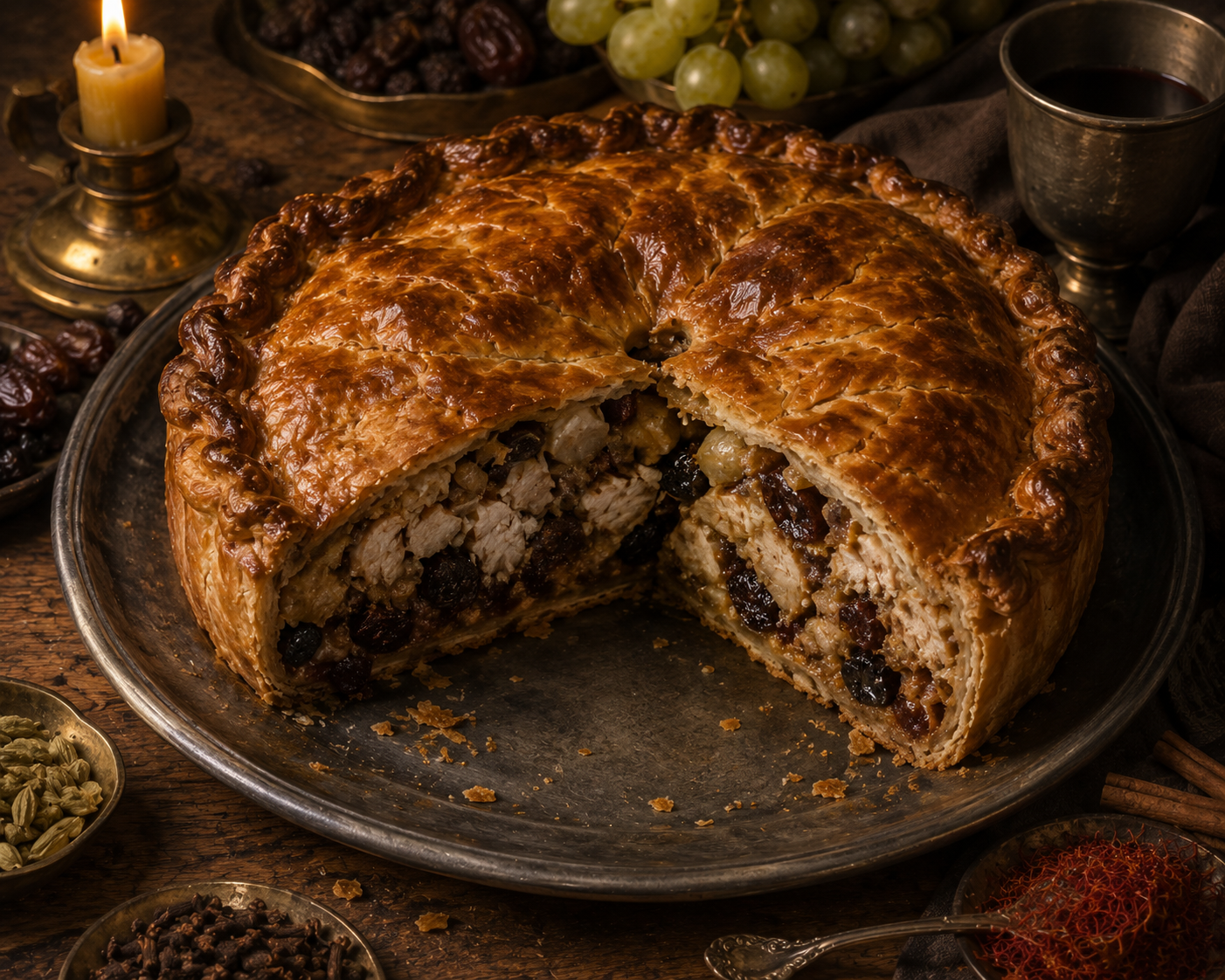
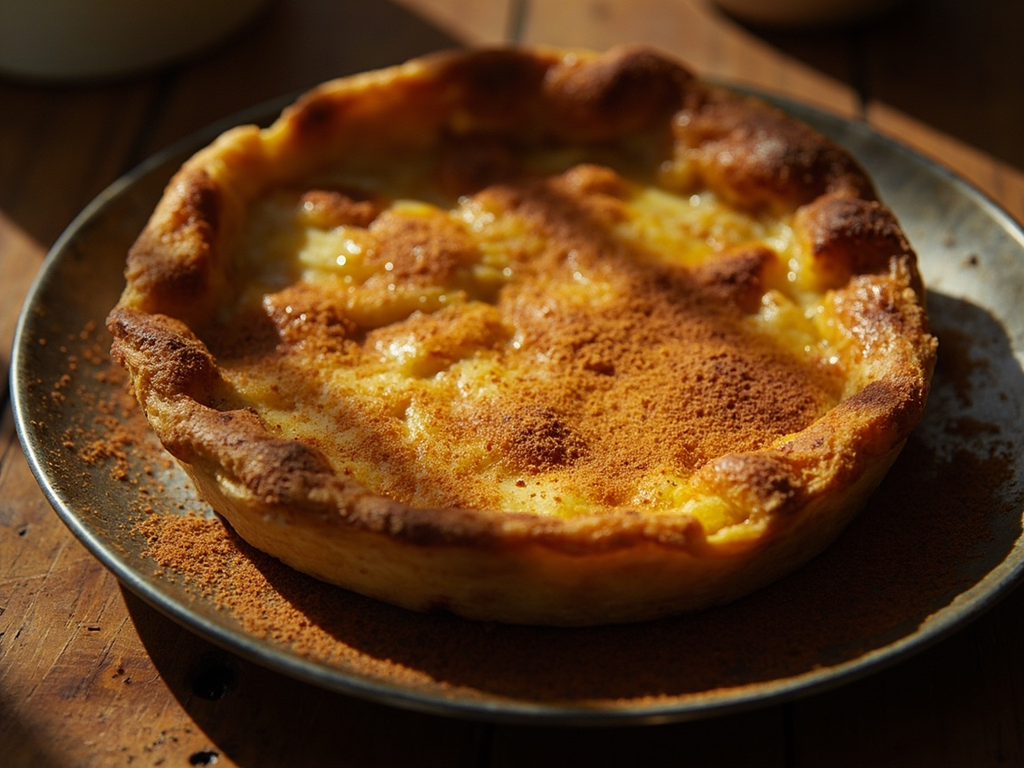
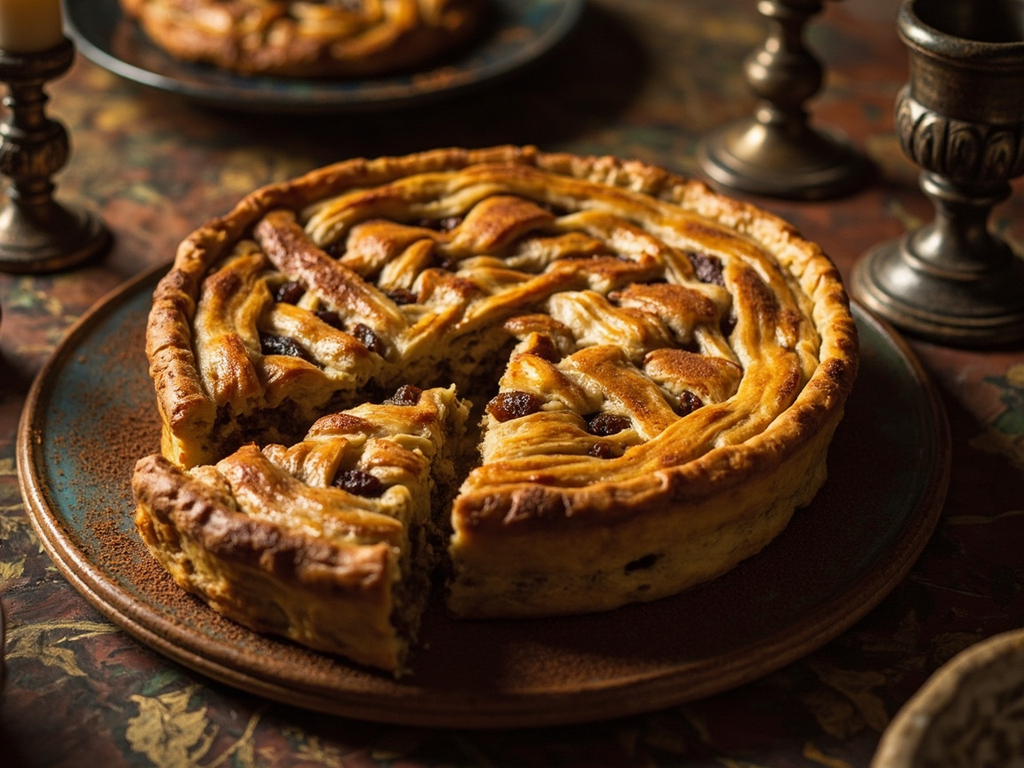
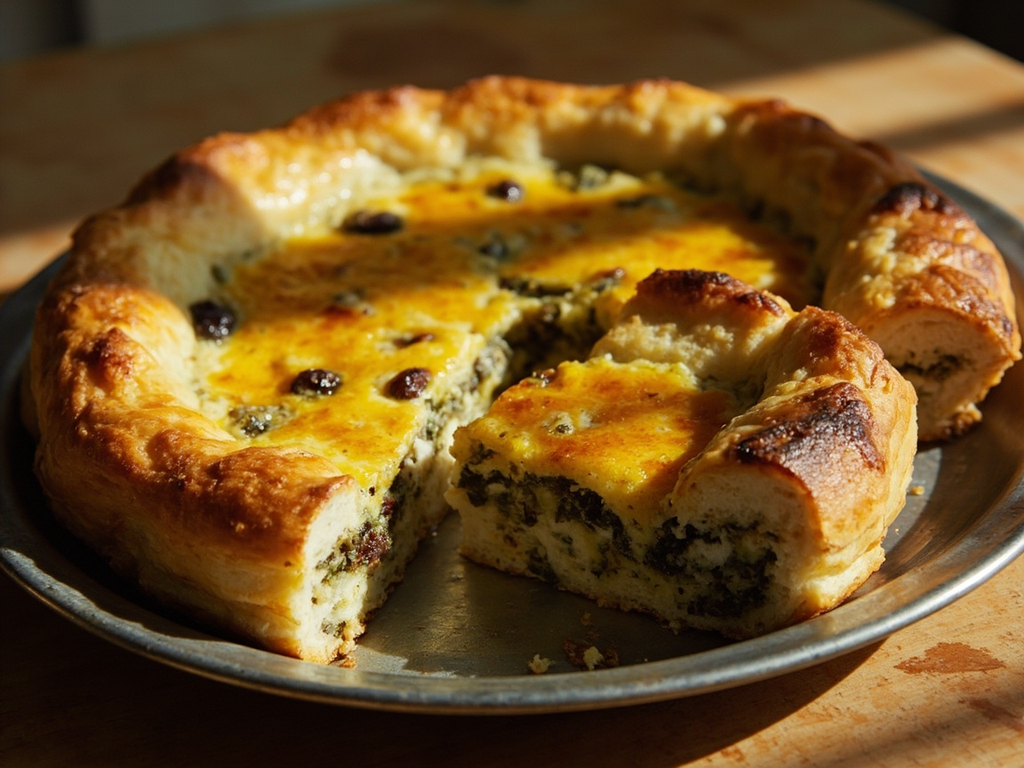
A pie filled with chard and herbs bound with fresh cheese and eggs, studded with raisins, and dusted with pepper and cinnamon. The sweet-savory marriage typical of refined Renaissance tables.
When the Moor kept me at his table, splendor was expected, and I had no wish to see a roast bleed there. So I had this green pie brought in: herbs chopped fine, fresh cheese beaten with eggs, and — here is the master touch — a pinch of Corinth raisins and fine spices, so that sweet and savory answer each other. Gild the crust well, let it shine like a dome, and slice it before your guests: the eye feasts before the mouth.
- •Flour and oil pastry — enough to line and cover a mold (crust)
- •Chard and herbs (borage, parsley, mint) — two large bunches (filling)
- •Fresh cheese (type ricotta) — a good bowlful (creamy binder)
- •Eggs — a few (binder)
- •Corinth raisins — a handful (sweet note)
- •Fine spices (pepper, cinnamon, ginger) — a pinch (flavor)
- •Grated hard cheese — to taste (umami)
Torta Verde with Herbs and Fresh Cheese
A pie filled with chard and herbs bound with fresh cheese and eggs, studded with raisins, and dusted with pepper and cinnamon. The sweet-savory marriage typical of refined Renaissance tables.
Why this dish? In Milan, in the service of Ludovico Sforza, Leonardo frequented court banquets for which he sometimes designed festive machinery. The torta verde — a herb and cheese pie enhanced with raisins and spices — was a prestige dish that remained faithful to his meatless diet.
When the Moor kept me at his table, splendor was expected, and I had no wish to see a roast bleed there. So I had this green pie brought in: herbs chopped fine, fresh cheese beaten with eggs, and — here is the master touch — a pinch of Corinth raisins and fine spices, so that sweet and savory answer each other. Gild the crust well, let it shine like a dome, and slice it before your guests: the eye feasts before the mouth.
Ingredients (period version)
- Flour and oil pastry — enough to line and cover a mold (crust)
- Chard and herbs (borage, parsley, mint) — two large bunches (filling)
- Fresh cheese (type ricotta) — a good bowlful (creamy binder)
- Eggs — a few (binder)
- Corinth raisins — a handful (sweet note)
- Fine spices (pepper, cinnamon, ginger) — a pinch (flavor)
- Grated hard cheese — to taste (umami)
Ingredients
- Shortcrust pastry (with olive oil) — 2 discs (base + top) (crust)
- Chard (leaves) — 500 g (filling)
- Parsley + mint — 1 bunch (herbs)
- Ricotta — 300 g (binder)
- Eggs — 3 (binder)
- Grated Parmesan or pecorino — 60 g (umami)
- Raisins — 50 g (rehydrated) (sweet note)
- Ground pepper + cinnamon + ginger — 1/2 tsp total (spices)
- Salt — to taste (seasoning)
Method
- Blanch chard leaves for 2 minutes, squeeze dry, and chop with herbs.
- In a bowl, mix ricotta, eggs, Parmesan, herbs, raisins, spices, and salt.
- Line a mold with one pastry disc, pour in filling, smooth.
- Cover with second disc, seal edges, cut a steam vent, brush with egg yolk.
- Bake at 180°C for 40-45 minutes until golden brown. Let cool slightly before slicing.
How it was made : Pies (torte) were the great art of court kitchens: the crust served both as cooking vessel and spectacular presentation. The mixture of herbs, cheese, raisins, and sweet spices illustrates the Renaissance taste for sweet-savory, inherited from medieval cuisine and amplified by sugar and Eastern spices that Venetian trade made accessible to the wealthy.
The contemporary twist : Plate a neat slice on slate, crust scored with a geometric knife pattern — a nod to the polyhedron sketches Leonardo drew for Luca Pacioli's *De divina proportione*.
Sources : Maestro Martino, Libro de arte coquinaria, 15th century · Bartolomeo Scappi, Opera dell'arte del cucinare, 1570
Leonardo da Vinci · Charactorium