 flip
flipBuckwheat *kasha* with butter and mushrooms
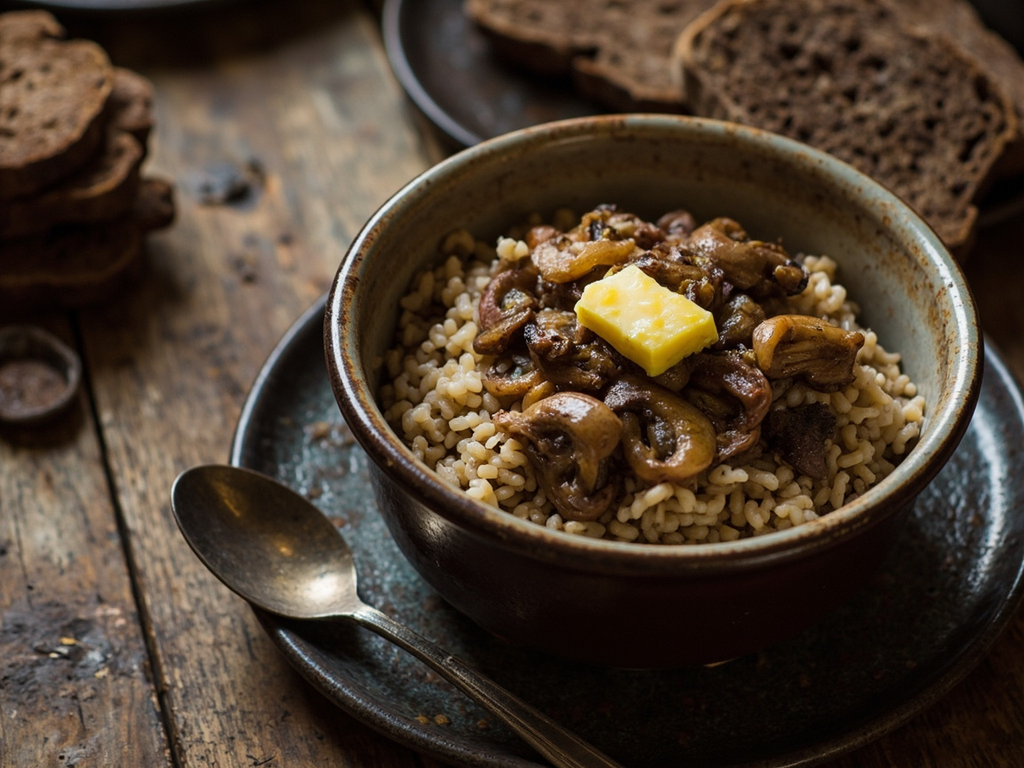
Buckwheat *kasha* with butter and mushrooms
Why this dish? Elizabeth, born daughter of Peter the Great but raised in a still very Russian court, kept a taste for the country's dishes. *Gretchnevaïa kasha* (buckwheat *kasha*) is the basic dish of all 18th-century Russia, from the peasant hut to the Winter Palace, eaten day after day with butter and mushrooms from the northern forests.
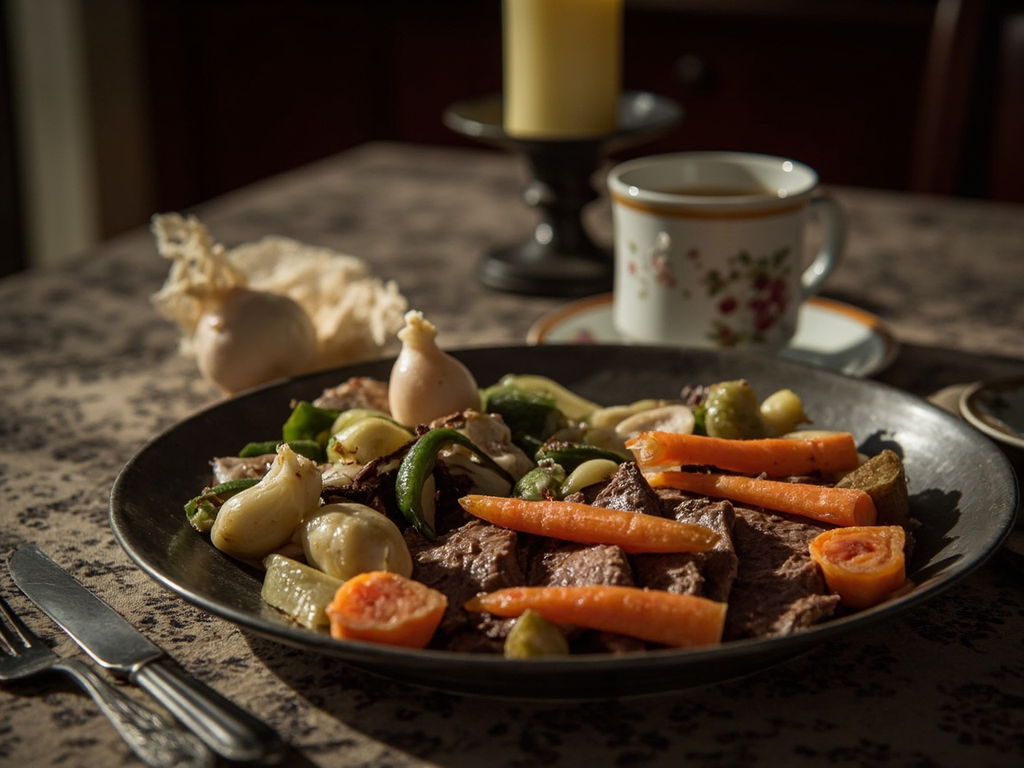
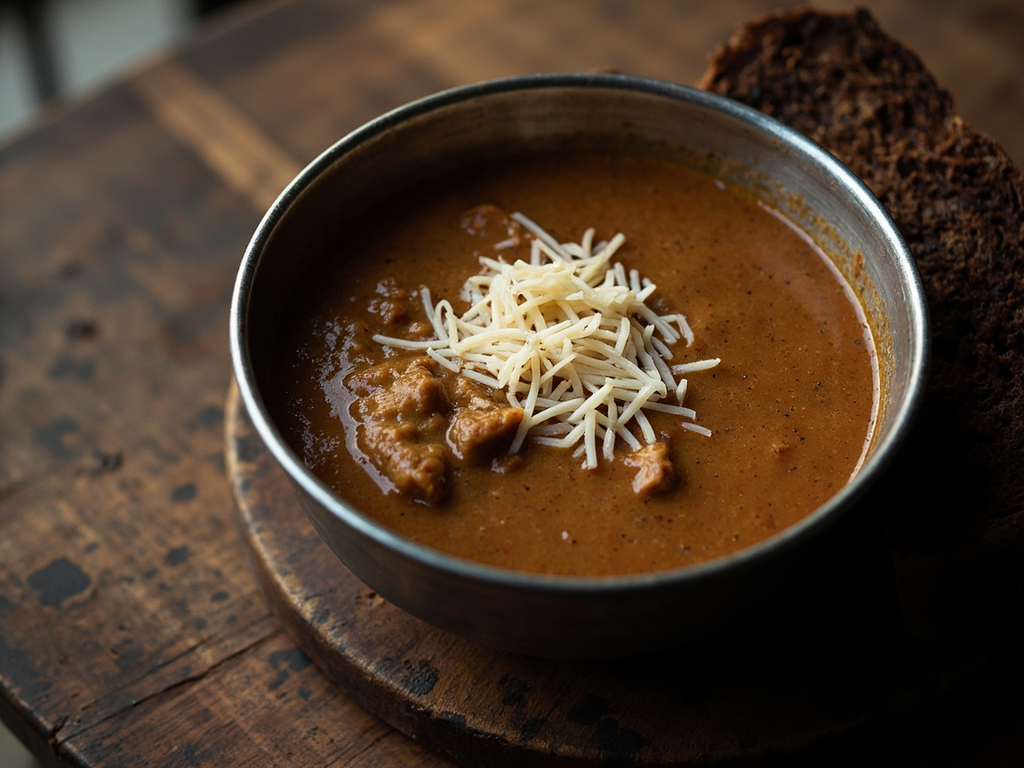
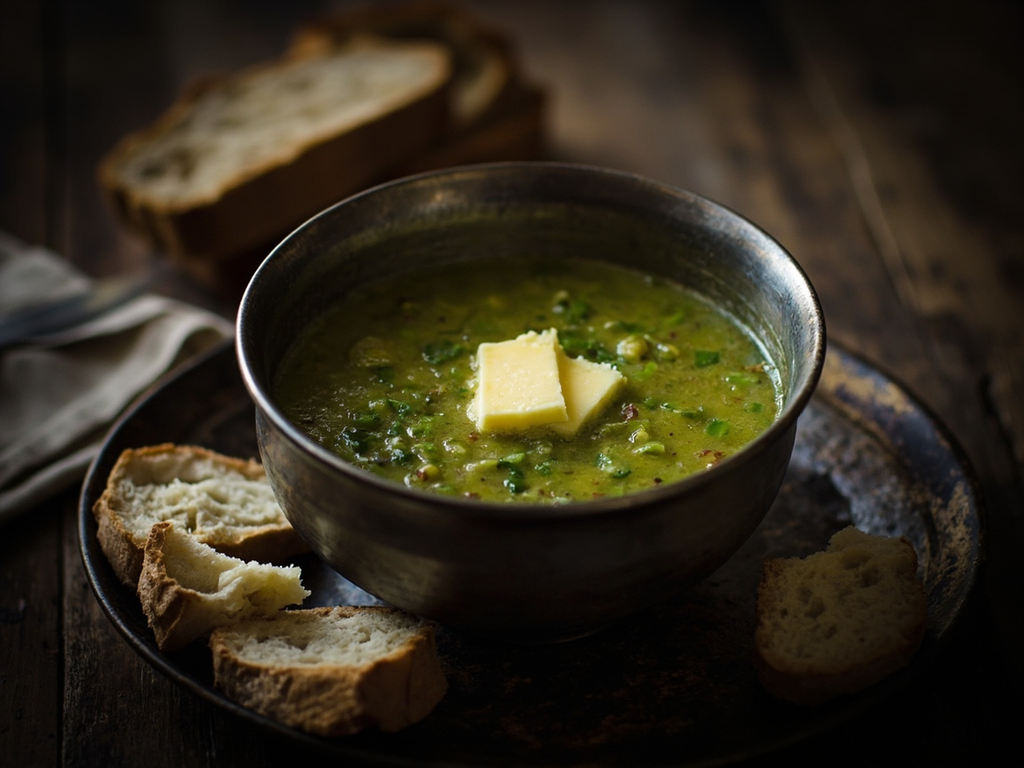
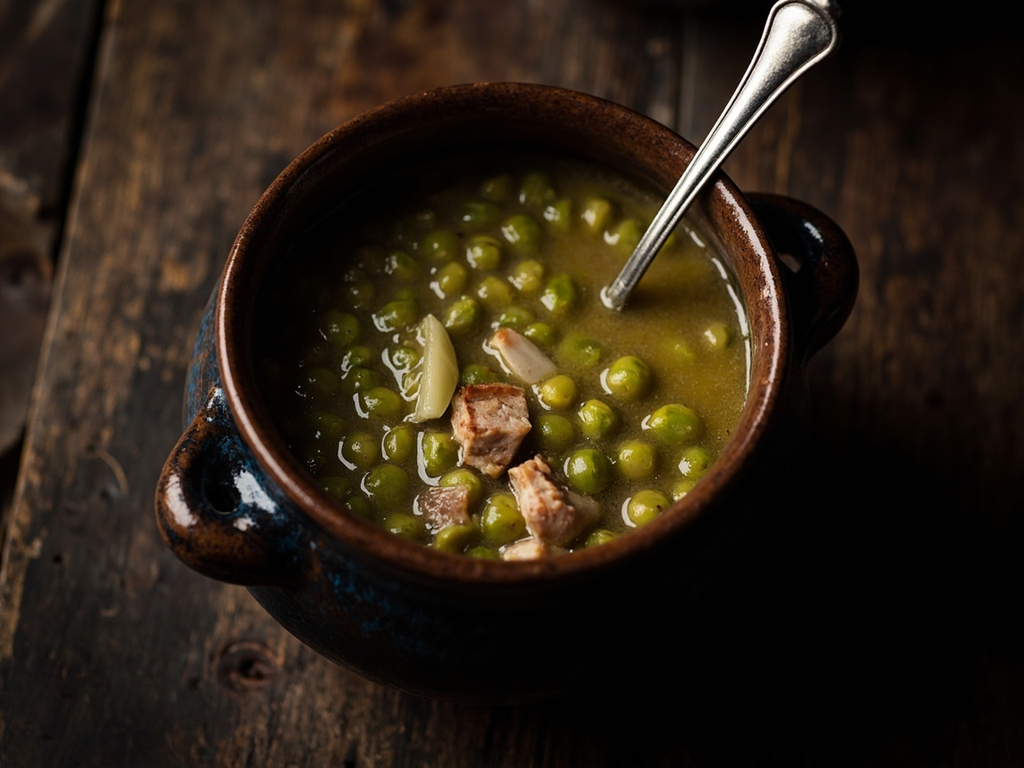
A porridge of toasted buckwheat, swollen in water, topped with melted butter and sprinkled with sautéed wild mushrooms. Comforting, nutty, it is the daily bread in grain form.
You may think that at my table we only ate gilded pheasants and French jams? Undeceive yourself: from my childhood I keep a love for simple *gretcha*, the one my father Emperor Peter and all our *moujiks* savored. We let it swell over a low fire, we drown it in melted butter, we mix in mushrooms gathered from our forests — and I swear that no Versailles sauce better consoles a Russian heart on winter evenings.
- •Toasted buckwheat (*gretcha*) — two handfuls per guest (base grain)
- •Fresh butter — a good knob per bowl (fat, binder)
- •Wild mushrooms (porcini, chanterelles) — a handful (umami garnish)
- •Onion — one small (aromatic)
- •Salt — to taste (seasoning)
Buckwheat *kasha* with butter and mushrooms
A porridge of toasted buckwheat, swollen in water, topped with melted butter and sprinkled with sautéed wild mushrooms. Comforting, nutty, it is the daily bread in grain form.
Why this dish? Elizabeth, born daughter of Peter the Great but raised in a still very Russian court, kept a taste for the country's dishes. *Gretchnevaïa kasha* (buckwheat *kasha*) is the basic dish of all 18th-century Russia, from the peasant hut to the Winter Palace, eaten day after day with butter and mushrooms from the northern forests.
You may think that at my table we only ate gilded pheasants and French jams? Undeceive yourself: from my childhood I keep a love for simple *gretcha*, the one my father Emperor Peter and all our *moujiks* savored. We let it swell over a low fire, we drown it in melted butter, we mix in mushrooms gathered from our forests — and I swear that no Versailles sauce better consoles a Russian heart on winter evenings.
Ingredients (period version)
- Toasted buckwheat (*gretcha*) — two handfuls per guest (base grain)
- Fresh butter — a good knob per bowl (fat, binder)
- Wild mushrooms (porcini, chanterelles) — a handful (umami garnish)
- Onion — one small (aromatic)
- Salt — to taste (seasoning)
Ingredients
- Toasted buckwheat *kasha* — 200 g (base grain)
- Water or broth — 400 ml (cooking liquid)
- Butter — 50 g (fat, binder)
- Fresh mushrooms (porcini or button) — 200 g (garnish)
- Onion — 1 small, sliced (aromatic)
- Salt — 1 tsp (seasoning)
Method
- Rinse the toasted buckwheat. Pour it into a saucepan with salted water, bring to a boil.
- Cover and cook over very low heat for 15–18 minutes, until water is fully absorbed; do not stir.
- Meanwhile, sauté the sliced onion in some of the butter, add mushrooms and cook until their water evaporates.
- Remove from heat, let *kasha* rest covered for 5 minutes. Fluff with a fork.
- Fold in remaining melted butter and mushrooms. Serve hot.
How it was made : *Kasha* was cooked in the Russian clay oven (*petchka*), in a closed pot slid near the embers: the gentle, enveloping heat swelled the grain without burning it. Generous melted butter distinguished the rich table from the leaner one of peasants.
The contemporary twist : Serve as a 'Russian risotto' in a shallow bowl, with shavings of browned butter and crumbled dried porcini dusted on top like truffle.
Elizabeth I of Russia · Charactorium