 flip
flipKnäckebröd with Caraway (Swedish Hard Rye Bread)
Knäckebröd with Caraway (Swedish Hard Rye Bread)
Why this dish? A refugee in Sweden from 1938 after fleeing the Nazi regime, Meitner adopted the frugal Scandinavian cuisine described in her background. Knäckebröd, a hard rye flatbread that keeps for months, is the quintessential Swedish everyday bread: sober, durable, unpretentious — like the modest life she led in Stockholm, absorbed by her research.
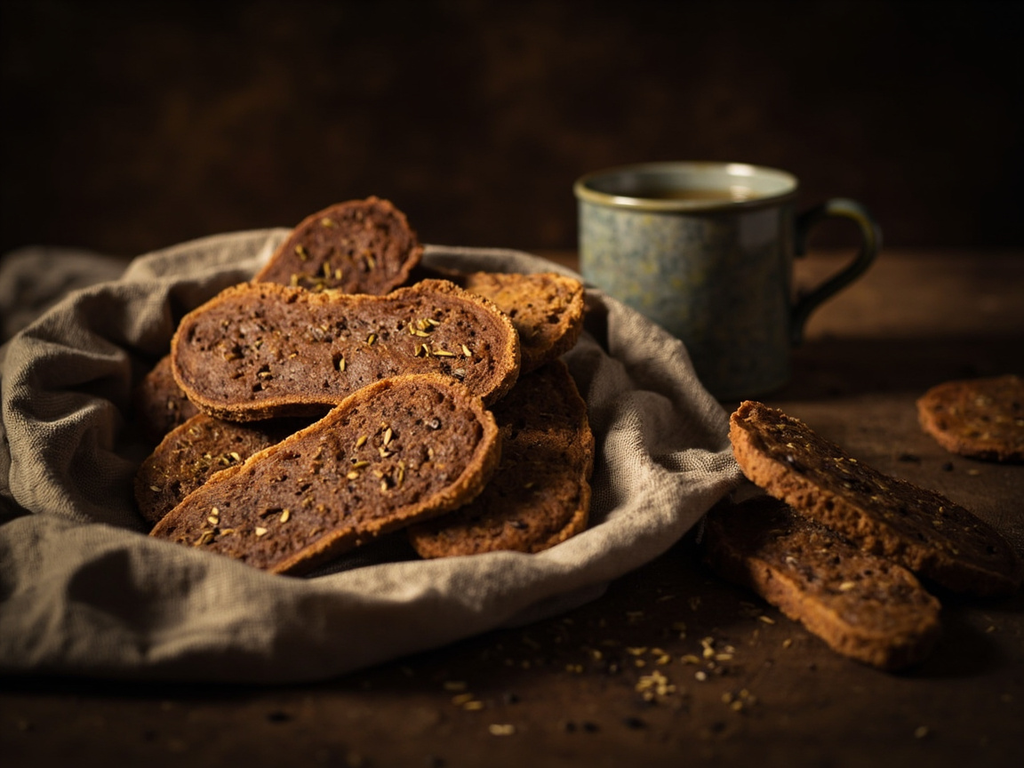
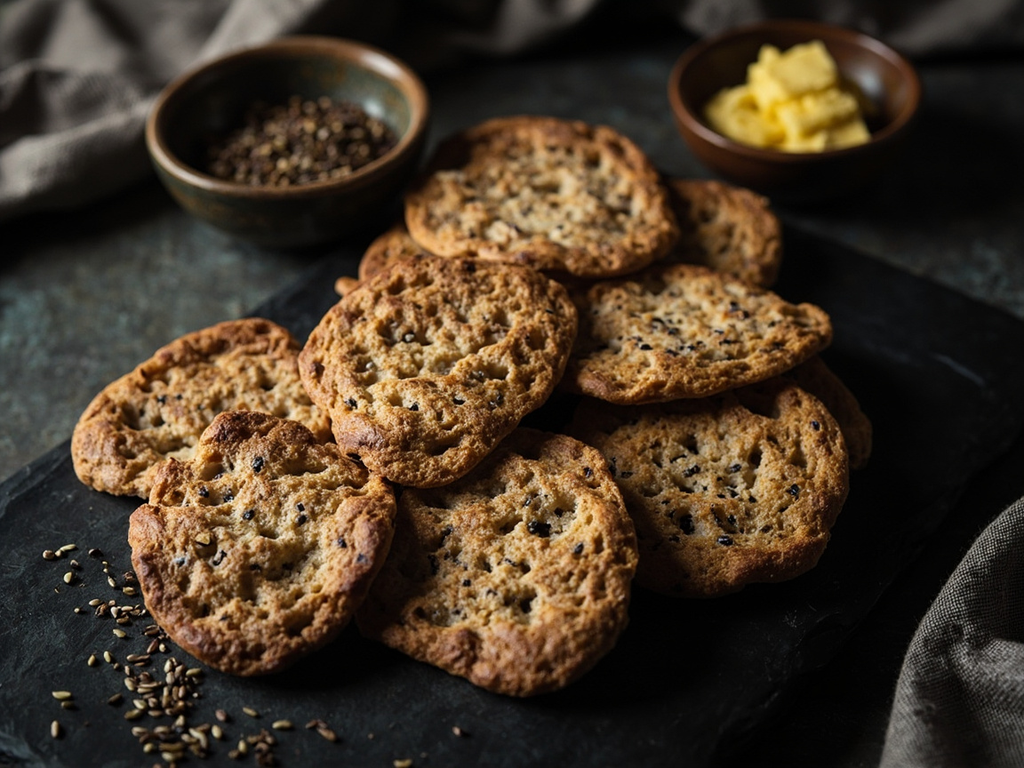
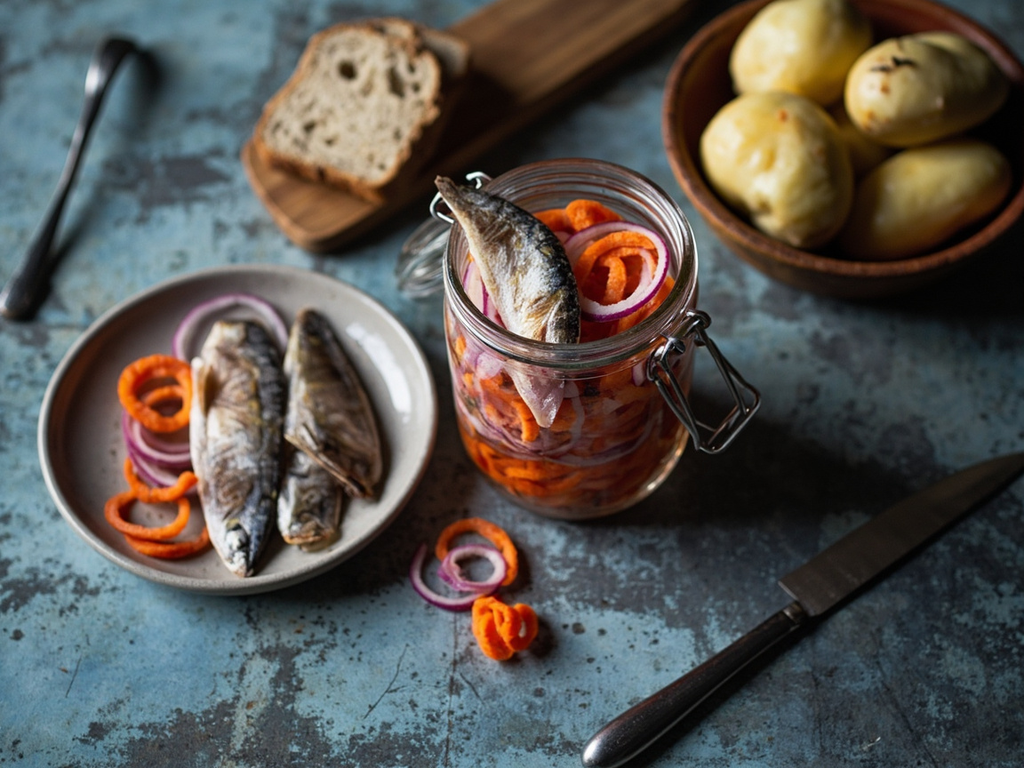
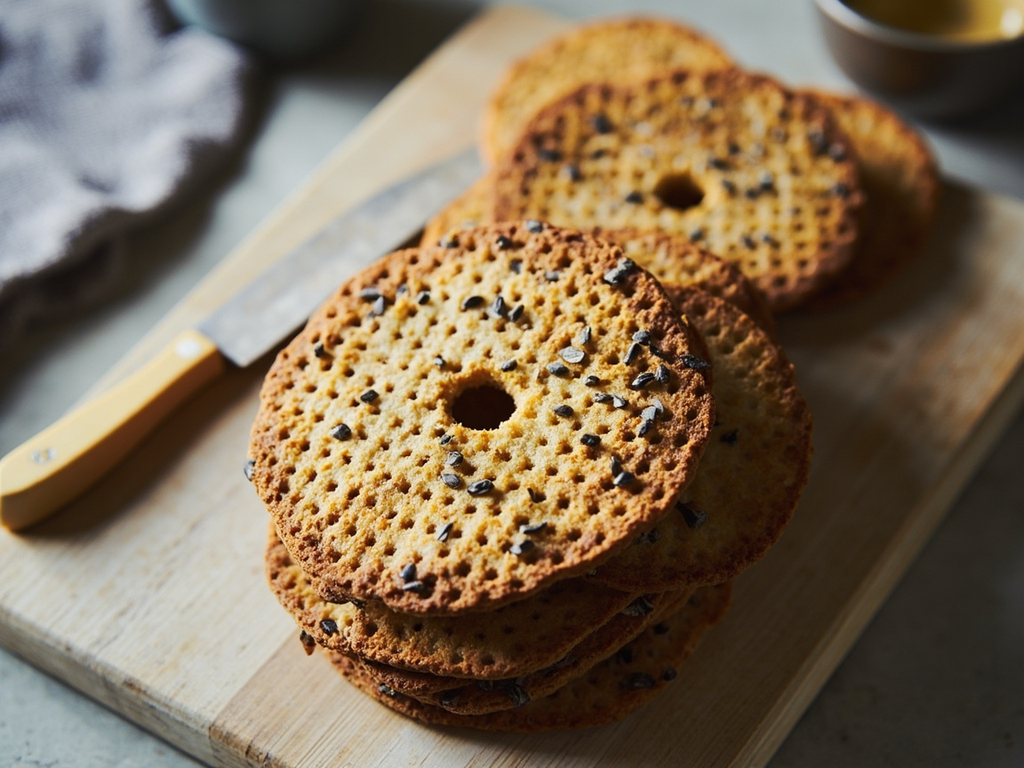
A flat, thin, hole-ridden rye crispbread, baked until dry and brittle, perfumed with caraway. It keeps indefinitely and is eaten with a little butter, cheese, or herring.
In Sweden, I learned the sobriety of the Northern table. This hard rye bread was made in large batches because it keeps all winter without fear — in the old days they threaded it through its central hole onto a pole near the ceiling, safe from moisture. I must confess that I devoted little time to eating; a slice of this knäckebröd with a bit of cheese often sufficed me, between two calculations. The caraway, which I already knew from Vienna, kept me sweet company in exile.
- •Rye flour — the base (bread grain)
- •Water — as needed (hydration)
- •Yeast or sourdough — a little (slight rise)
- •Caraway seeds (Kümmel) — a good pinch (signature flavor)
- •Salt — to taste (seasoning and preservation)
Knäckebröd with Caraway (Swedish Hard Rye Bread)
A flat, thin, hole-ridden rye crispbread, baked until dry and brittle, perfumed with caraway. It keeps indefinitely and is eaten with a little butter, cheese, or herring.
Why this dish? A refugee in Sweden from 1938 after fleeing the Nazi regime, Meitner adopted the frugal Scandinavian cuisine described in her background. Knäckebröd, a hard rye flatbread that keeps for months, is the quintessential Swedish everyday bread: sober, durable, unpretentious — like the modest life she led in Stockholm, absorbed by her research.
In Sweden, I learned the sobriety of the Northern table. This hard rye bread was made in large batches because it keeps all winter without fear — in the old days they threaded it through its central hole onto a pole near the ceiling, safe from moisture. I must confess that I devoted little time to eating; a slice of this knäckebröd with a bit of cheese often sufficed me, between two calculations. The caraway, which I already knew from Vienna, kept me sweet company in exile.
Ingredients (period version)
- Rye flour — the base (bread grain)
- Water — as needed (hydration)
- Yeast or sourdough — a little (slight rise)
- Caraway seeds (Kümmel) — a good pinch (signature flavor)
- Salt — to taste (seasoning and preservation)
Ingredients
- Rye flour — 300 g (main grain)
- Wheat flour — 100 g (dough structure)
- Warm water — 250 ml (hydration)
- Dry yeast — 1 tsp (light rise)
- Caraway seeds — 2 tsp (signature flavor)
- Salt — 1 tsp (seasoning)
Method
- Mix flours, salt, caraway, and yeast; add warm water and knead into a firm dough. Let rest 30 min.
- Divide into balls, roll each very thinly (2-3 mm) on a floured surface into disks or rectangles.
- Prick the entire surface with a fork (or mark the traditional central hole) to prevent puffing.
- Bake 12-15 min at 220°C until the flatbreads are dry and golden; let cool on a rack to harden and become crisp.
- Store away from moisture in a box: they keep for weeks.
How it was made : In Sweden, knäckebröd was baked twice a year, in large batches, and the flatbreads were hung by their central hole on poles under the kitchen ceiling. Rye, the only grain thriving in the Nordic climate, made hard bread a necessity as much as a tradition. Its very dryness ensured preservation through the long winters.
The contemporary twist : Top it the modern Swedish way: butter, a slice of hard cheese, and thin cucumber slices — the everyday *smörgås*.
Sources : Magnus Nilsson, The Nordic Baking Book, Phaidon · Swedish culinary tradition of rye bread (knäckebröd)
Lise Meitner · Charactorium