 flip
flipGravlaks — Dill and Juniper Cured Salmon
Gravlaks — Dill and Juniper Cured Salmon
Why this dish? Liv Ullmann's traditional Scandinavian diet relies on preserved fish. Gravlaks, cured without cooking, embodies the signature technique of the North — prepared in advance, it waits patiently in the cold, as one waits for a scene, for several days.
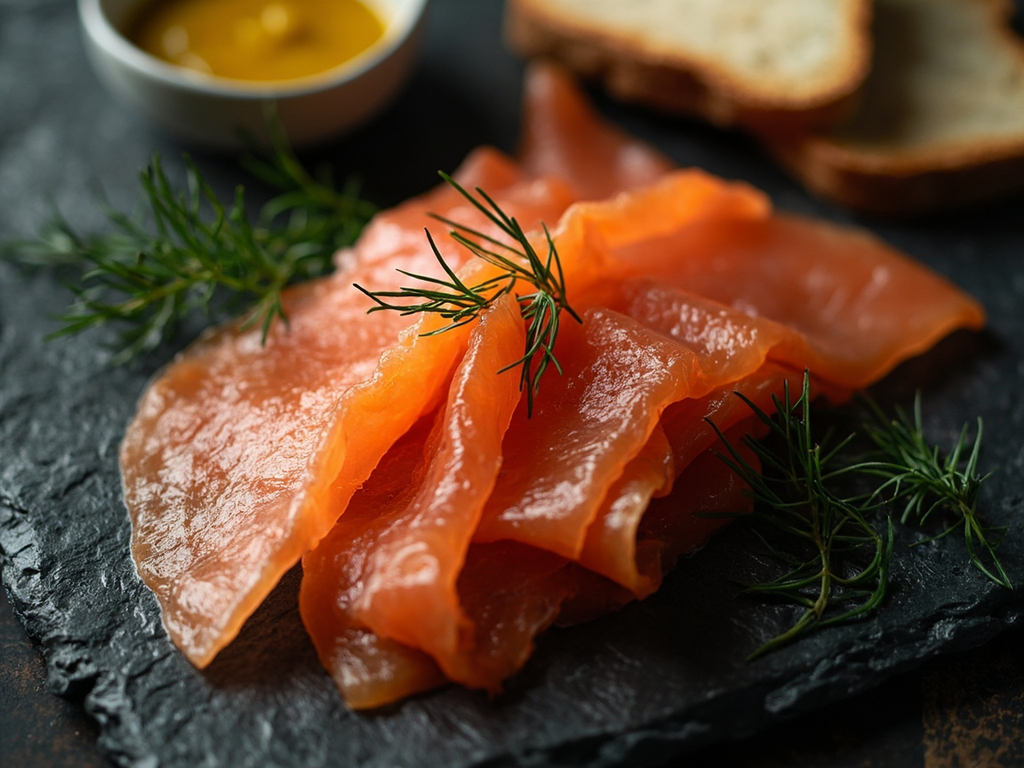
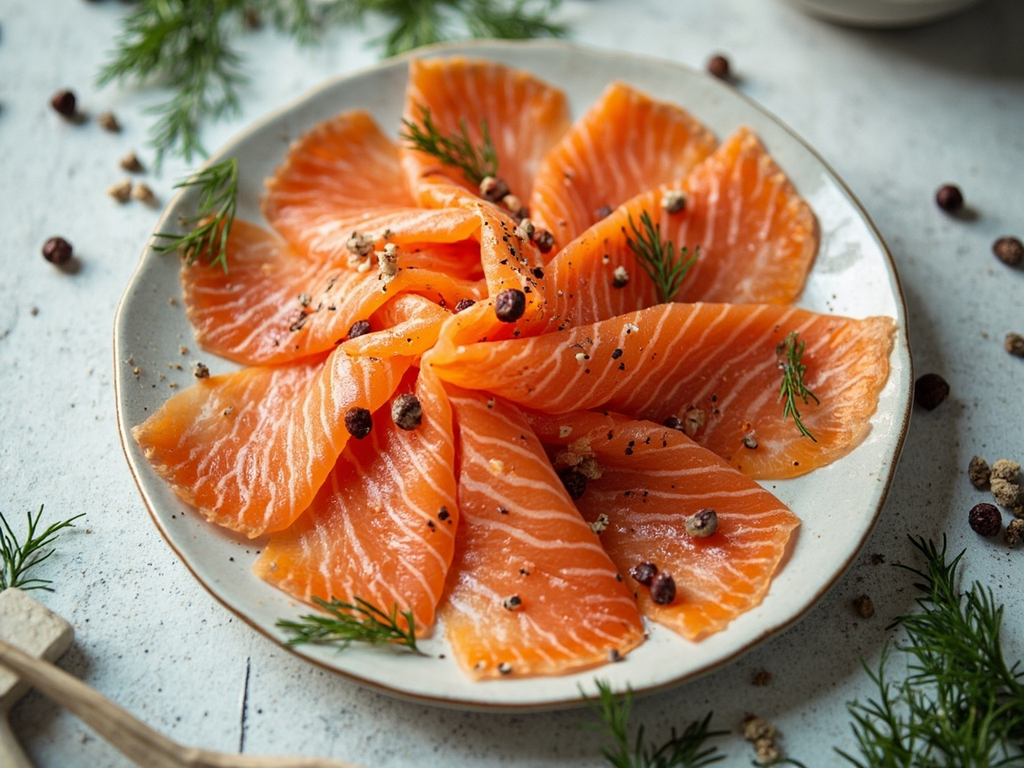
A fillet of raw salmon cured for two to three days in salt, sugar, dill, and juniper. The flesh becomes silky, translucent, fragrant — the most beautiful piece on a cold table.
They say "grave" the fish, and the word is apt: you bury it under salt and dill like something precious entrusted to the cold earth. My father came from the North, where people knew how to wait; this salmon, too, demands three days and must be turned morning and evening, without impatience. When I finally slice it, thin as a leaf, I think of the long Norwegian summer light. It is a dish that teaches patience — and the craft of an actress, you see, is nothing else.
- •Fresh salmon fillet with skin — one nice side (base)
- •Sea salt — generous portions (curing)
- •Sugar — almost as much as salt (curing / balance)
- •Dill — a large bunch (signature)
- •Crushed juniper berries — a handful (Nordic aroma)
Gravlaks — Dill and Juniper Cured Salmon
A fillet of raw salmon cured for two to three days in salt, sugar, dill, and juniper. The flesh becomes silky, translucent, fragrant — the most beautiful piece on a cold table.
Why this dish? Liv Ullmann's traditional Scandinavian diet relies on preserved fish. Gravlaks, cured without cooking, embodies the signature technique of the North — prepared in advance, it waits patiently in the cold, as one waits for a scene, for several days.
They say "grave" the fish, and the word is apt: you bury it under salt and dill like something precious entrusted to the cold earth. My father came from the North, where people knew how to wait; this salmon, too, demands three days and must be turned morning and evening, without impatience. When I finally slice it, thin as a leaf, I think of the long Norwegian summer light. It is a dish that teaches patience — and the craft of an actress, you see, is nothing else.
Ingredients (period version)
- Fresh salmon fillet with skin — one nice side (base)
- Sea salt — generous portions (curing)
- Sugar — almost as much as salt (curing / balance)
- Dill — a large bunch (signature)
- Crushed juniper berries — a handful (Nordic aroma)
Ingredients
- Very fresh salmon fillet with skin — 800 g (base)
- Coarse salt — 60 g (curing)
- Sugar — 50 g (curing / balance)
- Fresh dill — 2 bunches (signature)
- Juniper berries — 1 tsp, crushed (Nordic aroma)
- Coarsely ground white pepper — 1 tsp (spice)
Method
- Mix salt, sugar, crushed juniper, and pepper.
- Line a dish with a layer of dill, place the salmon skin-side down.
- Cover the flesh with the salt-sugar mixture, then the remaining dill.
- Cover with plastic wrap, place a weight on top, and refrigerate for 48 to 72 hours, turning morning and evening.
- Rinse quickly, pat dry, then slice very thinly on the bias, removing the skin.
How it was made : In the Middle Ages, Scandinavian fishermen buried salted fish in the sand above the tide line to lightly ferment it (hence grav-, "buried"). The modern version, mild and non-fermented, became standard in the 20th century: a short cure that "cooks" the flesh with salt.
The contemporary twist : Serve on rye crispbread with hovmästarsås (sweet mustard, dill, a splash of vinegar) — the classic pairing of Swedish tables.
Liv Ullmann · Charactorium