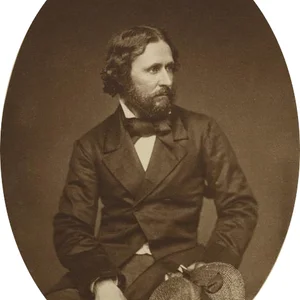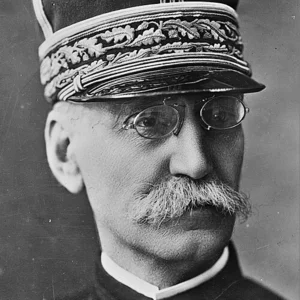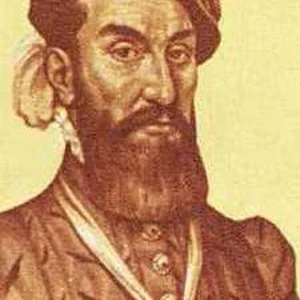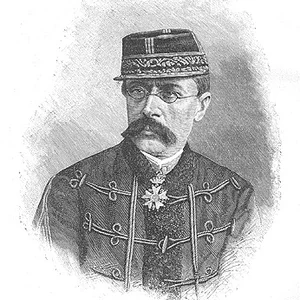

French general and colonial administrator, governor of Senegal from 1854 to 1865. He extended French influence in West Africa, modernized Dakar, and founded lasting institutions. He also commanded the Army of the North during the Franco-Prussian War of 1870.
Louis Faidherbe(1818 — 1889)
Louis Faidherbe
France
8 min read
Frequently asked questions
Key Facts
- 1818: born in Lille
- 1854–1861: first term as governor of Senegal, territorial expansion toward the Senegal River
- 1857: founding of Dakar as a strategic naval base
- 1857: creation of the Senegalese Tirailleurs corps
- 1870–1871: commands the Army of the North during the Franco-Prussian War, holds Lille
- 1889: died in Paris
Works & Achievements
Faidherbe created this military unit composed of African soldiers led by French officers. The Senegalese Tirailleurs became one of the most celebrated forces in the French army, fighting through to the Second World War.
A comprehensive work published in the year of his death, in which Faidherbe traces the history, geography, peoples, and administration of Senegal. It is an essential primary source for understanding French colonization in West Africa.
A remarkable linguistic study bringing together grammatical notes, vocabularies, and phrases from several West African languages, drawn from his direct observations in contact with local populations.
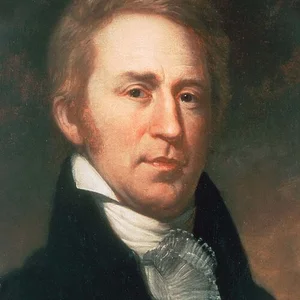
A school intended for the sons of allied African chiefs, aimed at training a bilingual administrative elite. Later renamed the École William Ponty, it educated generations of intellectuals and civil servants from across French West Africa.
Faidherbe conceived a bridge connecting the island of Saint-Louis to the mainland. Completed after his death, the Pont Faidherbe is a listed historic monument and remains an enduring symbol of the French presence in Senegal.
Faidherbe took command of this hastily conscripted army raised to defend northern France. His victory at Bapaume (January 1871) earned him a national reputation as a defender against the Prussian invader.
Anecdotes
Faidherbe was a remarkably gifted self-taught linguist: during his time in Senegal, he learned Wolof and several local languages so he could negotiate directly with African chiefs without an interpreter. This mastery of local languages allowed him to forge diplomatic alliances that an ordinary officer could never have achieved.
In 1857, Faidherbe founded the Tirailleurs sénégalais, a military corps made up of locally recruited African soldiers. This unit, born in the savannas of Senegal, would go on to have an extraordinary destiny: sixty years later, hundreds of thousands of their successors would fight on the battlefields of the First World War.
During the Franco-Prussian War of 1870, Faidherbe was urgently recalled to command the Army of the North. In January 1871, he won the Battle of Bapaume against the Prussians — one of the few French victories of the entire war. Despite this achievement, the peace terms imposed by Bismarck remained humiliating for France.
Faidherbe was also passionate about archaeology and anthropology: he studied the Senegambian megaliths and Berber inscriptions, publishing several scholarly works that earned him a respected place in European learned societies — a scholar-general rare enough for his time.
Before leaving Senegal for good in 1865, Faidherbe founded the École des otages in Saint-Louis, intended to educate the sons of allied African chiefs. This institution, later renamed the École William Ponty, spent decades training the administrative and intellectual elites of all of French West Africa.
Primary Sources
In our administration of Senegal, we sought to rely on the indigenous populations rather than to fight them, to develop their commerce and agriculture, and to ensure them the peace and security they needed to prosper.
The creation of a corps of indigenous riflemen seems to me indispensable for ensuring the defense and expansion of our domain in West Africa. These men, acclimatized and familiar with the terrain, will be far superior to European soldiers in bush warfare.
Knowledge of indigenous languages is, for the colonial administrator, as necessary an instrument as the saber or the rifle. Without it, there can be no true understanding of the peoples one governs.
Fort Médine heroically withstood the attacks of El Hadj Omar. Its garrison, composed largely of Senegalese riflemen, displayed a bravery and discipline that I report with pride to the department.
Key Places
Birthplace of Louis Faidherbe, born in 1818 in this industrial capital of northern France. He remained attached to the city throughout his life and later represented it as a senator.
Administrative capital of colonial Senegal and seat of Faidherbe's government. He had public buildings, a school, and a hospital constructed there, transforming this island on the Senegal River into a genuine urban center.
Faidherbe was among the first to recognize the strategic potential of the Cape Verde Peninsula. He contributed to establishing Dakar as a military port, laying the groundwork for what would become the capital of independent Senegal.
An outpost built on the Senegal River to block El Hadj Omar Tall's westward expansion. In 1857, the garrison heroically held out under siege until Faidherbe himself arrived at the head of a relief column.
Site of Faidherbe's victory over the Prussians on January 3, 1871, during the Franco-Prussian War. This battle was one of the few successful French offensives of the conflict.
Faidherbe spent his final years here and died on September 28, 1889. His state funeral bore witness to the Republic's gratitude for his military and colonial service.
Typical Objects

Regulation military headgear for French general officers in the 19th century, adorned with golden oak leaves. Faidherbe wore it during his troop inspections in Senegal and throughout the Northern Campaign of 1870–1871.

Faidherbe personally supervised the first accurate cartographic surveys of Senegal and the river valley. These maps were essential for planning military expeditions and infrastructure construction.

Faidherbe methodically recorded the vocabulary and grammatical structures of the local languages he was learning. These field notes formed the basis of his linguistic publications, reflecting a scholarly approach rare among colonial officers.

The distinctive headgear of the corps founded by Faidherbe in 1857, this red woolen cap became the emblem of these African soldiers who served France for more than a century.

The standard French infantry weapon of the 1850s–1860s, with which the Senegalese Tirailleurs were equipped during their expeditions across the savanna and along the Senegal River.

Colonial governors corresponded regularly with Paris by sea. Faidherbe's reports, carefully written and detailed, described the state of the territories, the resistance encountered, and ongoing construction projects.
School Curriculum
Vocabulary & Tags
Key Vocabulary
Daily Life
Morning
Faidherbe rose before sunrise to take advantage of the cool air before the oppressive heat of the tropical day. He devoted the first hours to official correspondence, drafting his detailed reports to the Minister of the Navy in Paris, and to inspecting the troops garrisoned at Saint-Louis.
Afternoon
The afternoon was reserved for field expeditions, meetings with allied African chiefs, or overseeing construction projects (roads, forts, hospital). During military campaigns, he rode at the head of the column, consulting his topographical maps to adjust the route according to the terrain.
Evening
In the evening, after dinner, Faidherbe devoted several hours to his intellectual pursuits: learning Wolof, noting down Fula vocabulary, or writing up his anthropological observations. He sometimes received delegations of African notables or officers to plan the following day's missions.
Food
In Africa, Faidherbe adapted to the local diet: rice, millet, dried fish, and tropical fruits, supplemented by French military rations (hardtack, canned goods) shipped from Bordeaux. He drank little alcohol, preferring filtered water and mint tea during his contact with Sahelian populations.
Clothing
On duty, Faidherbe wore a general's uniform: a dark blue tunic with gold epaulettes, madder-red trousers, and a kepi adorned with oak leaves. In hot weather, he sometimes wore a white canvas jacket for travel through the bush, while keeping his rank insignia to assert his authority.
Housing
In Saint-Louis, Faidherbe resided at the Governor's Palace, a colonial arcaded building overlooking the Senegal River. Modest in his personal tastes, he had set up a library there stocked with his dictionaries and scientific works. On campaign, he slept in a military tent, sharing the same conditions as his soldiers.
Historical Timeline
Period Vocabulary
Liens externes & ressources
Références
Œuvres
Fondation du corps des Tirailleurs sénégalais
1857
Le Sénégal. La France dans l'Afrique occidentale
1889
Langues sénégalaises : wolof, arabe-hassania, soninké, sérère
1887
Fondation de l'École des otages de Saint-Louis
1857
Projet du pont de Saint-Louis (Pont Faidherbe)
1865 (projet), 1897 (inauguration)
Commandement de l'Armée du Nord (guerre franco-prussienne)
1870-1871