 flip
flipBlancmange of Capon
Blancmange of Capon
Why this dish? At the grand banquets that Louis IX gave for his barons and foreign ambassadors, lavishness was required for his guests—even though he himself ate frugally. Blancmange, a dish of immaculate white symbolizing purity and luxury (almonds and sugar were precious commodities), embodied the refinement of the Capetian monarchy, whose prestige the king had strengthened.
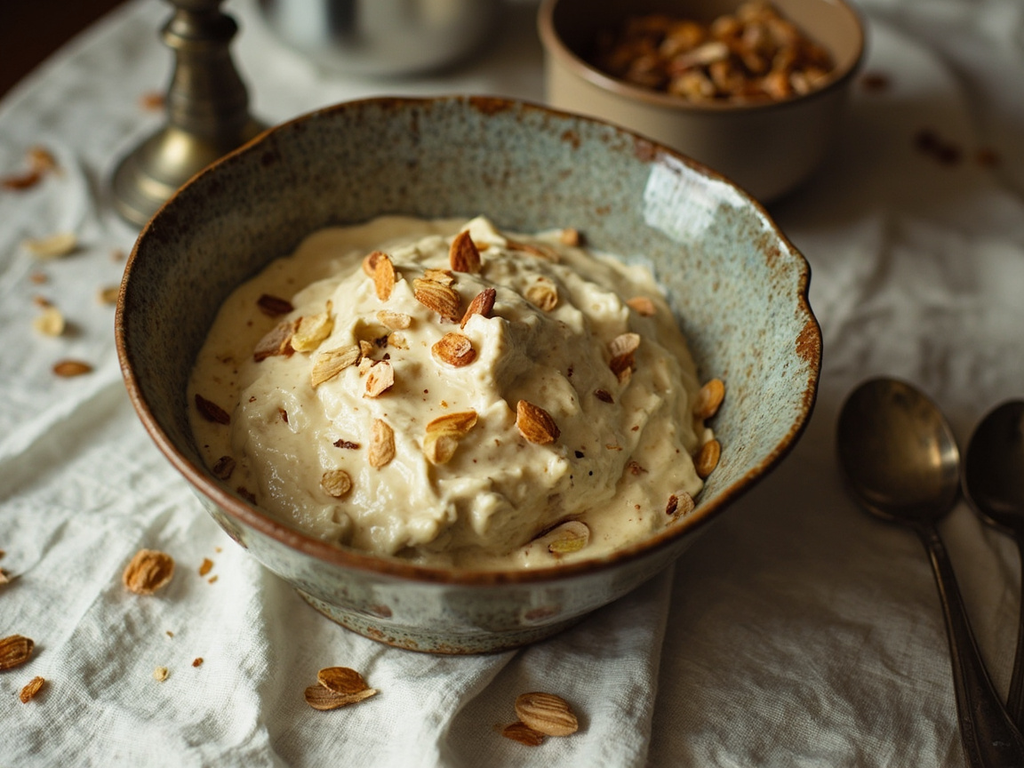
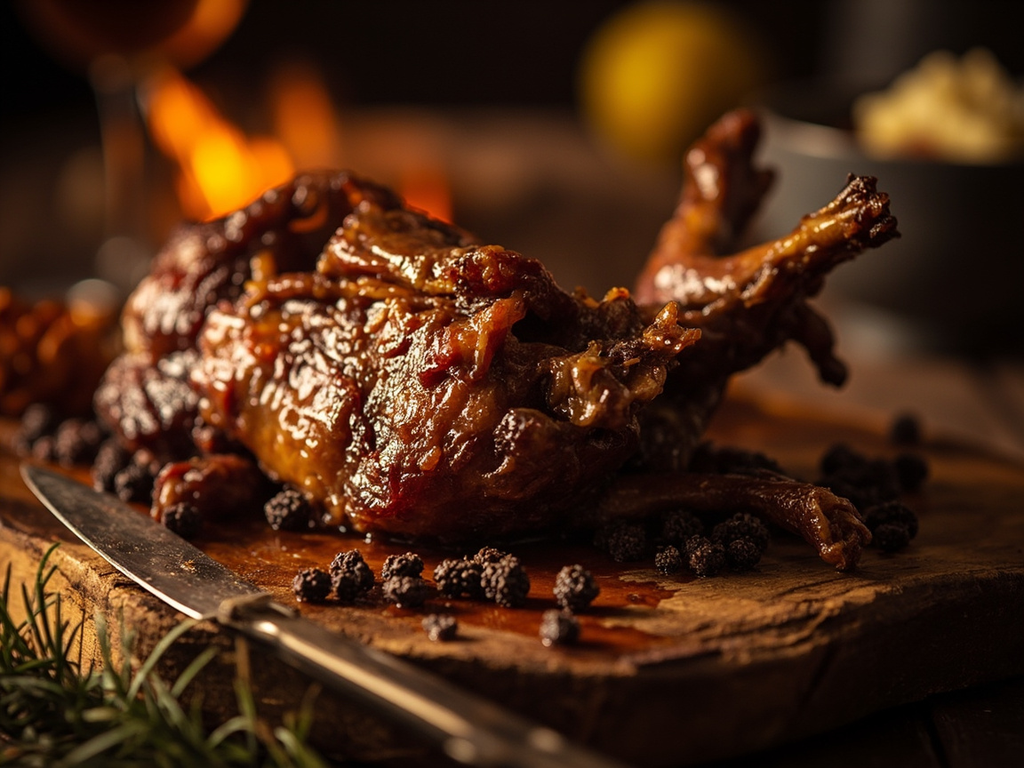
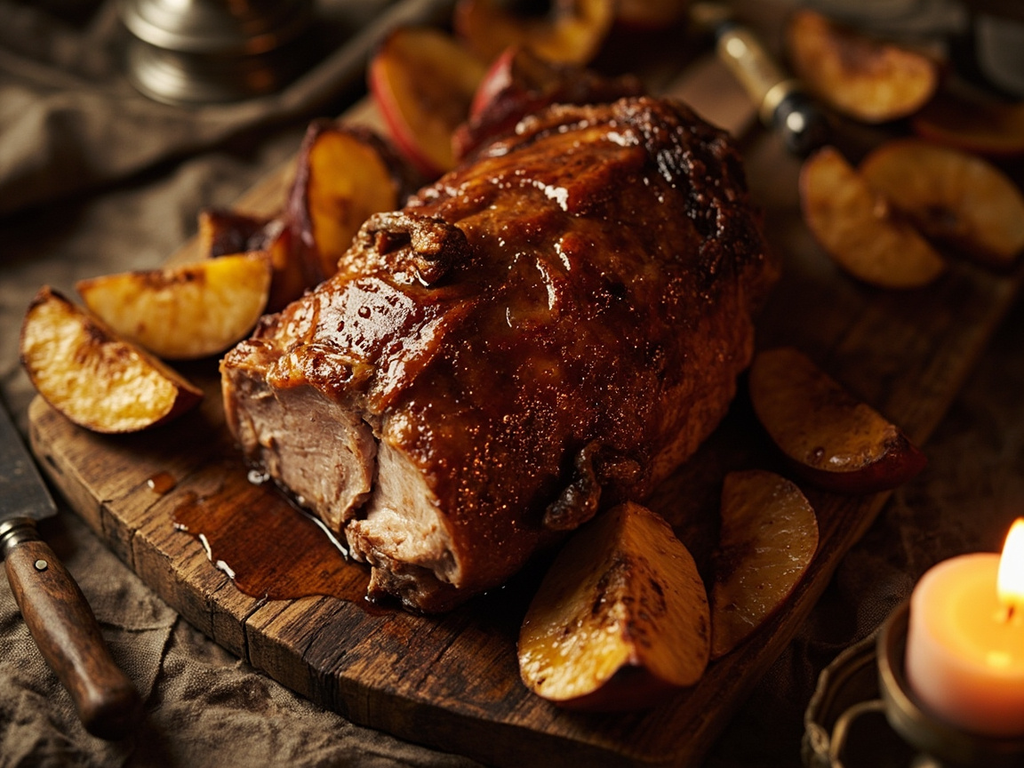
A melting dish of brilliant white: shredded capon breast, bound with almond milk and rice flour, sweetened and perfumed with rose water, crowned with almonds. The ultimate prestige dish of the Middle Ages.
Hearken, and be not mistaken: though I myself eat only plain meats and drink my wine well tempered with water, out of humility toward Our Lord, my table must honor my guests worthily. Know then that this blancmange, my cooks prepare so pure a white it seems like snow: fine capon flesh, milk drawn from pounded almonds, rare sugar from overseas. It is served early in the meal, at the meat service, and I like to see in it the reflection of the candor that every Christian must keep in his soul.
- •Capon flesh (breast) — a good piece (base, shredded)
- •Blanched almonds — full bowl (almond milk)
- •Rice flour — as needed (binder, white color)
- •Sugar — according to the rank of the table (sweetness, luxury)
- •Rose water — a few drops (perfume)
Blancmange of Capon
A melting dish of brilliant white: shredded capon breast, bound with almond milk and rice flour, sweetened and perfumed with rose water, crowned with almonds. The ultimate prestige dish of the Middle Ages.
Why this dish? At the grand banquets that Louis IX gave for his barons and foreign ambassadors, lavishness was required for his guests—even though he himself ate frugally. Blancmange, a dish of immaculate white symbolizing purity and luxury (almonds and sugar were precious commodities), embodied the refinement of the Capetian monarchy, whose prestige the king had strengthened.
Hearken, and be not mistaken: though I myself eat only plain meats and drink my wine well tempered with water, out of humility toward Our Lord, my table must honor my guests worthily. Know then that this blancmange, my cooks prepare so pure a white it seems like snow: fine capon flesh, milk drawn from pounded almonds, rare sugar from overseas. It is served early in the meal, at the meat service, and I like to see in it the reflection of the candor that every Christian must keep in his soul.
Ingredients (period version)
- Capon flesh (breast) — a good piece (base, shredded)
- Blanched almonds — full bowl (almond milk)
- Rice flour — as needed (binder, white color)
- Sugar — according to the rank of the table (sweetness, luxury)
- Rose water — a few drops (perfume)
Ingredients
- Chicken or capon breast — 300 g (base, shredded)
- Almond flour — 150 g + 500 ml water (almond milk)
- Rice flour — 60 g (binder)
- Sugar — 60 g (sweetness)
- Rose water — 1 tsp (perfume)
- Toasted slivered almonds — 1 handful (decoration)
Method
- Poach the poultry breast in lightly salted water, drain, and shred very finely (almost into threads).
- Prepare almond milk: mix almond flour with hot water, let infuse 15 minutes, then strain, pressing firmly.
- Dissolve the rice flour in cold almond milk, add sugar, then heat gently, stirring, until thick and creamy.
- Stir in the shredded poultry, perfume with rose water, and cook a few more minutes over very low heat.
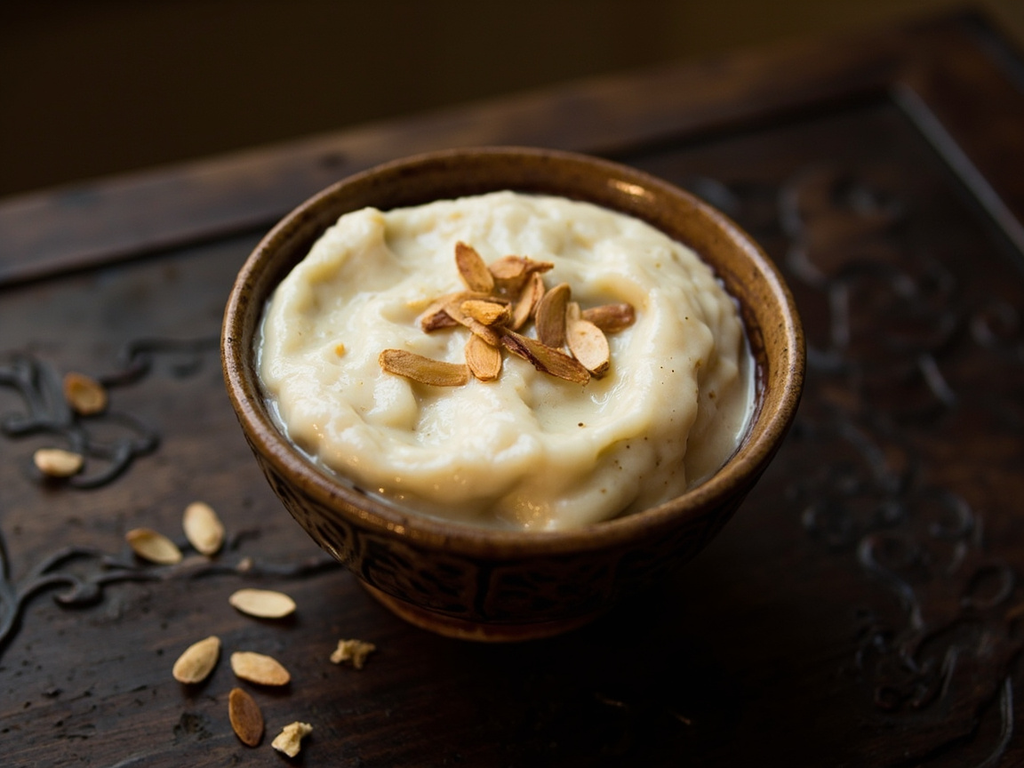
- Mound in a bowl, sprinkle with toasted slivered almonds.
How it was made : Blancmange was one of the most widespread dishes in medieval courts (found from the *Liber de coquina* to the *Viandier*). On lean days, capon was replaced with pike flesh to keep the dish permissible during Lent—proof of its ritual flexibility.
The contemporary twist : Served cold in a verrine like a panna cotta, topped with a caramelized almond: the "blancmange" has indeed given its name to the dairy dessert we still know.
Sources : Liber de coquina (Naples, late 13th century) · Le Viandier, attributed to Taillevent
Louis IX (Saint Louis) · Charactorium