 flip
flipSikbaj, Sweet-and-Sour Lamb Stew
Sikbaj, Sweet-and-Sour Lamb Stew
Why this dish? Sikbaj was the king of dishes at Baghdad banquets, reputedly invented by the Sassanid kings and adored by the Abbasid caliphs under whom Al-Kindi lived. A scholar invited to the table of a patron or of Caliph al-Ma'mun, protector of the House of Wisdom where he worked, would have tasted this emblematic stew.
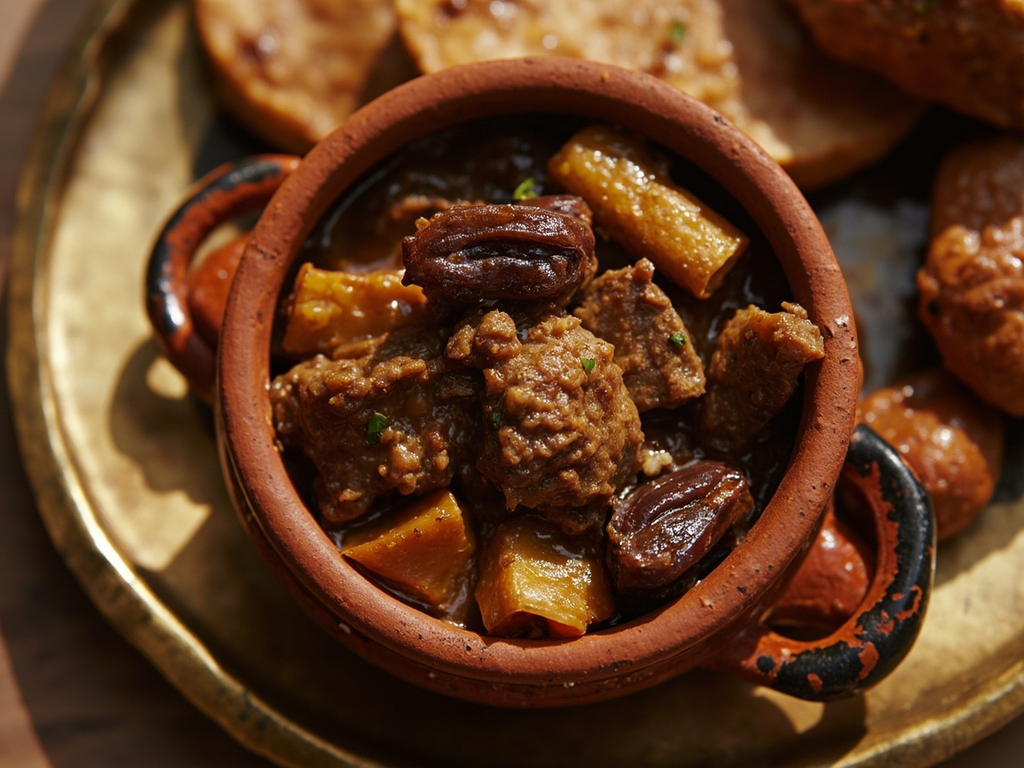
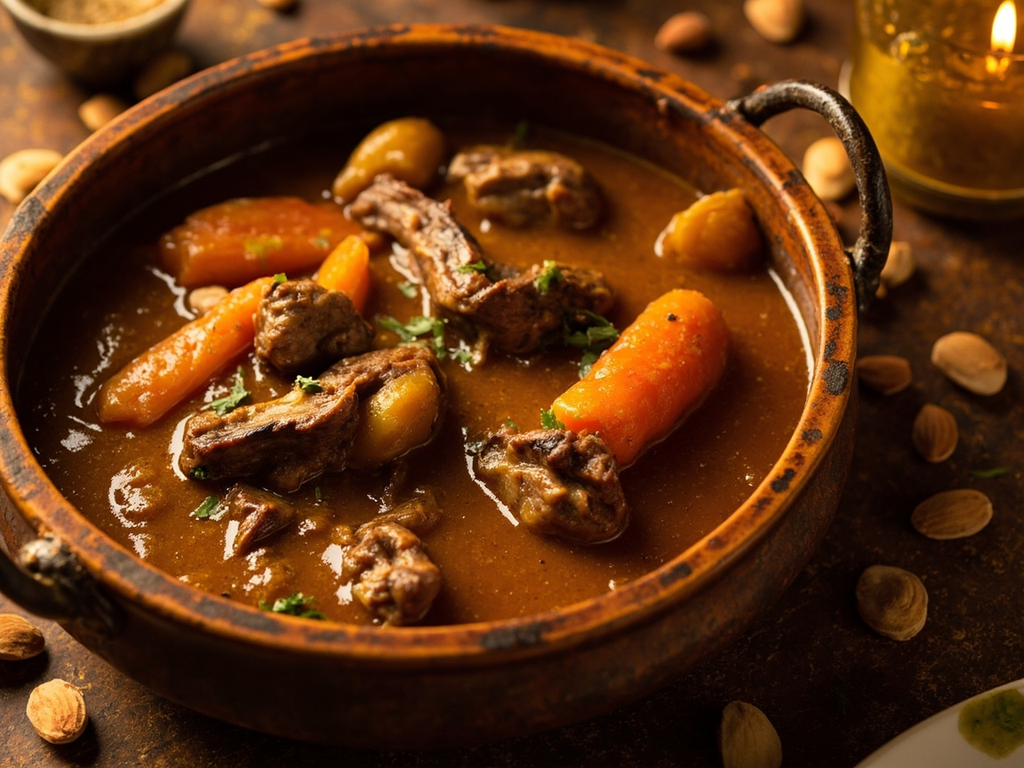
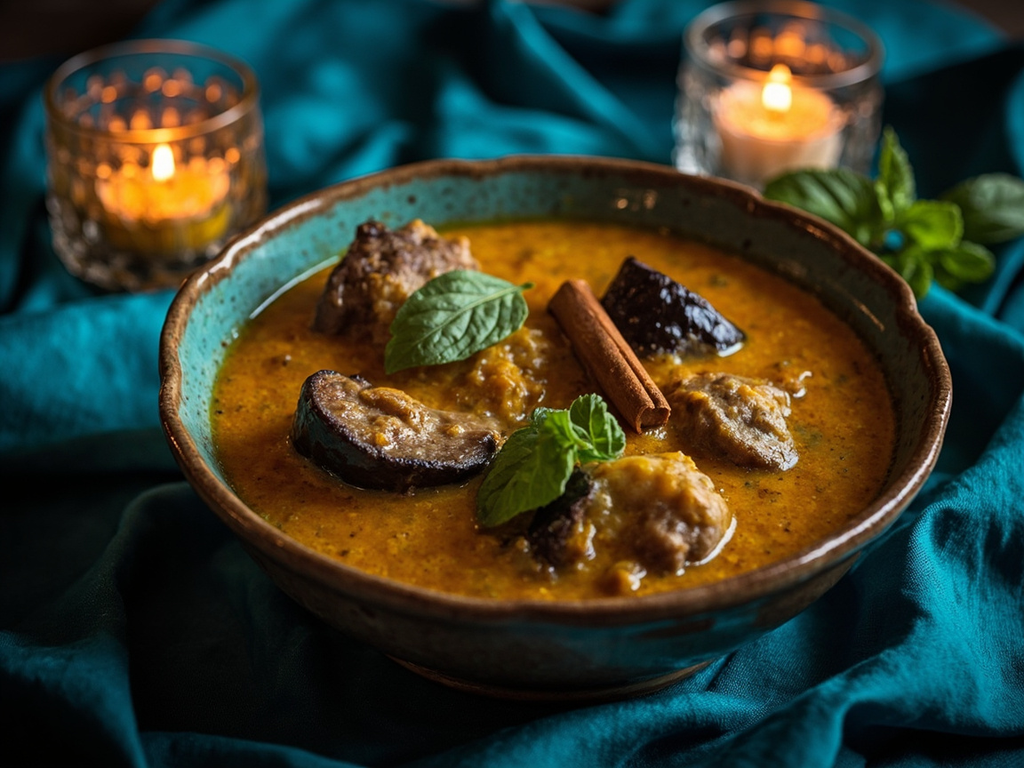
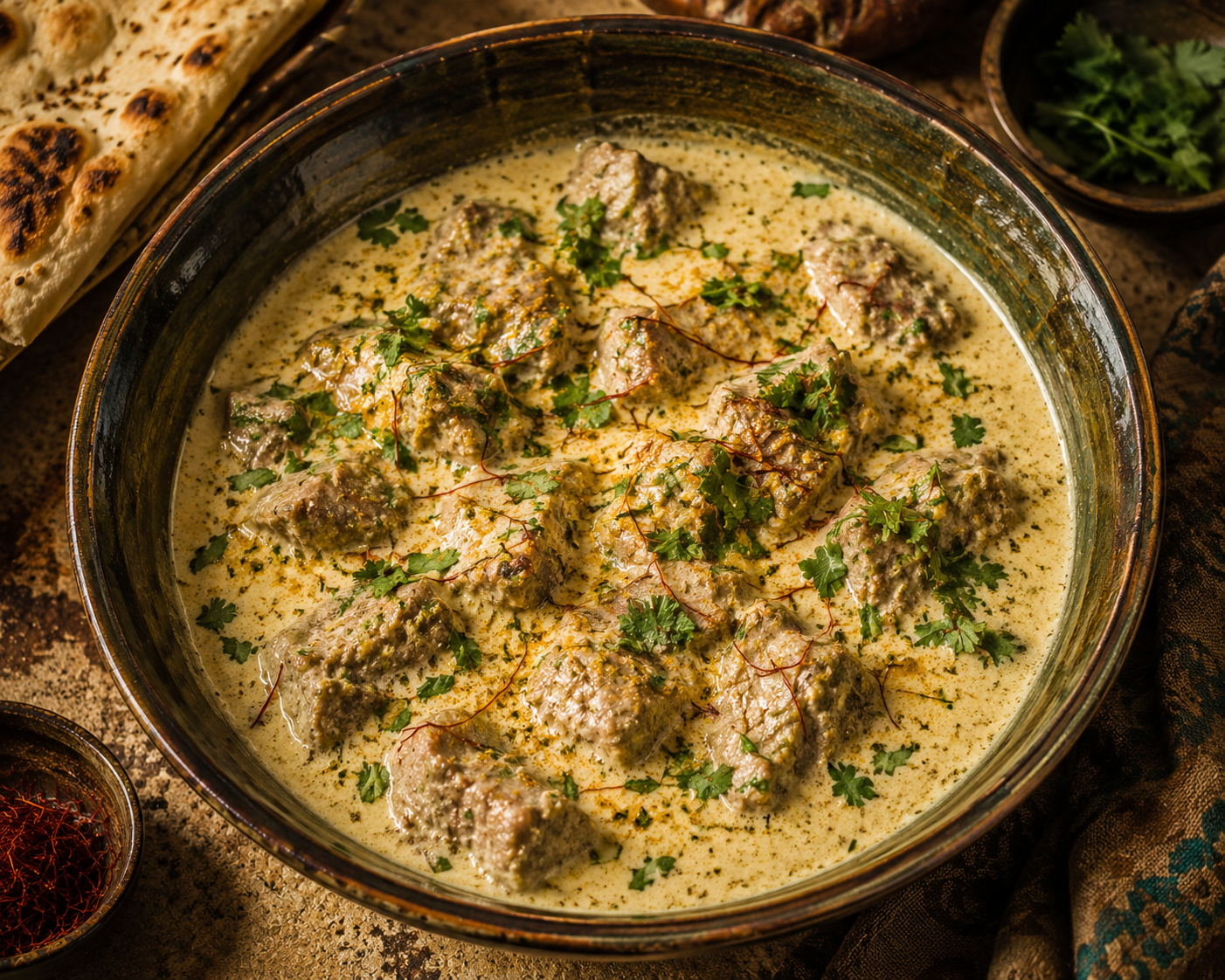
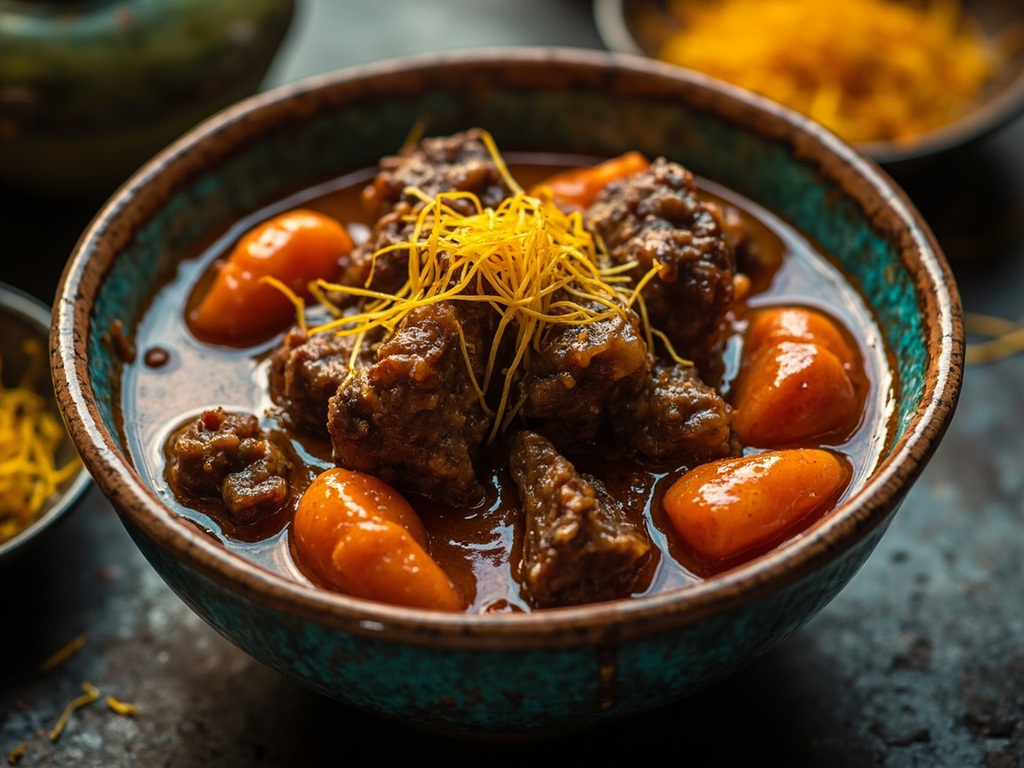
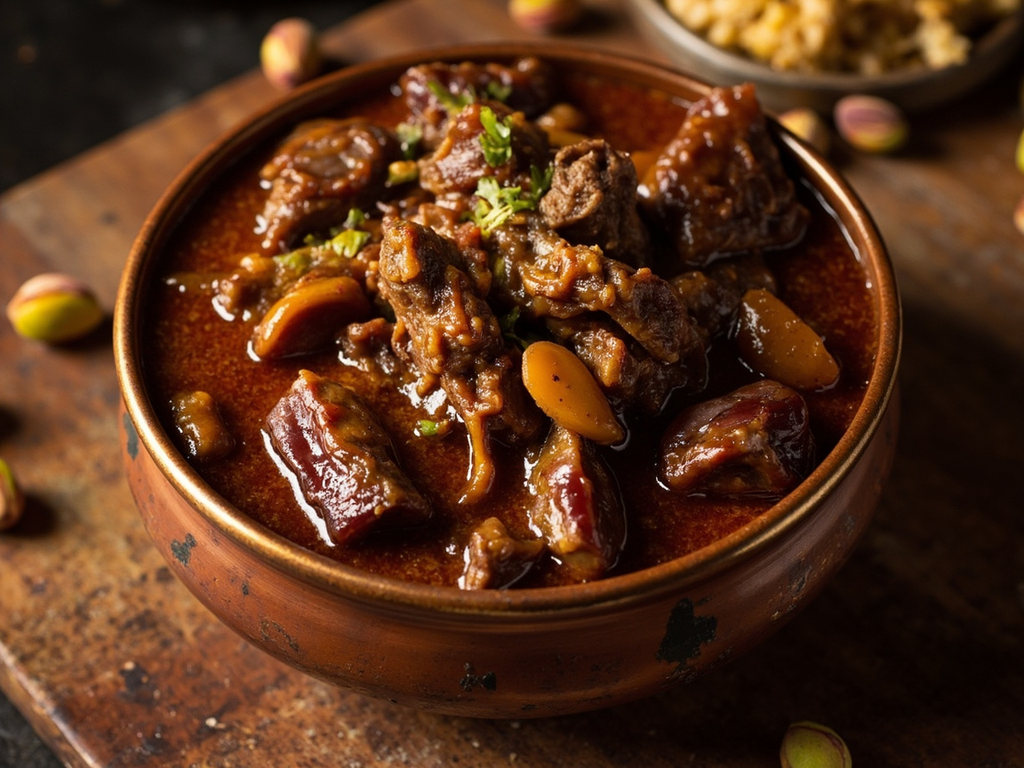
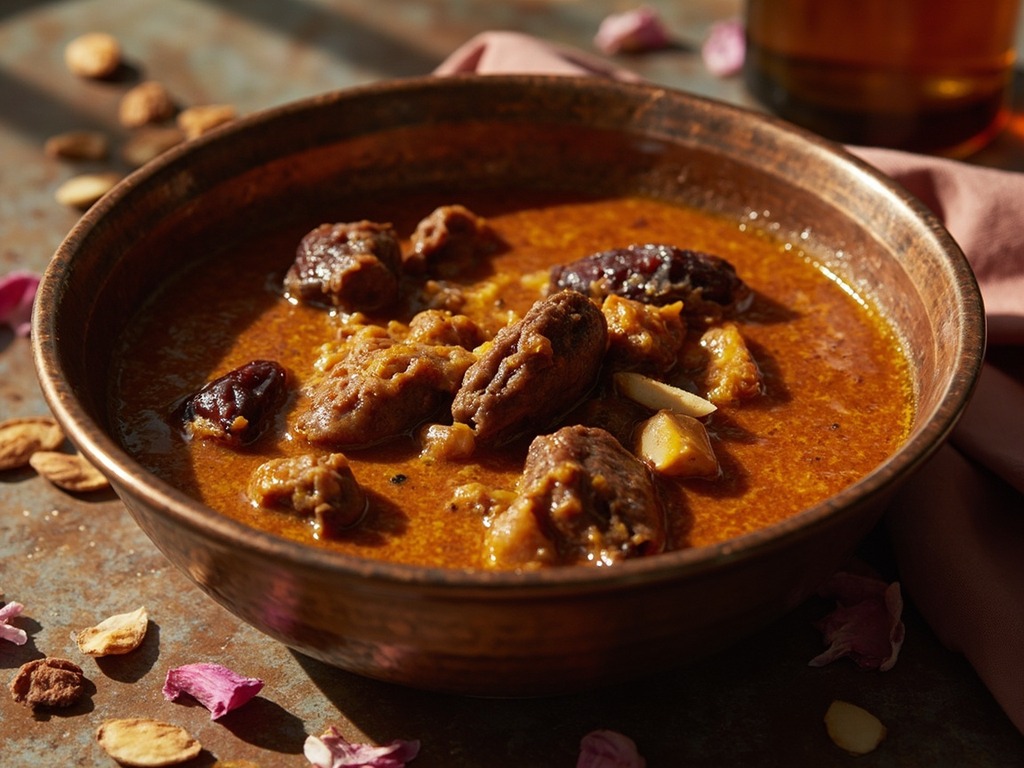
A melting lamb stew simmered with vinegar sweetened by honey and dates, perfumed with coriander and saffron. The sharp contrast between sour and sweet, typical of high Abbasid cuisine, made it a prestige dish.
Come closer, and observe how everything is a matter of right measure. This stew that the kings of Persia bequeathed to our caliphs, I consider it an exercise in proportion: the sharpness of vinegar and the sweetness of honey balance each other like two numbers in harmony. At my table in Baghdad, we let the lamb tenderize slowly in the pot, throw in a handful of dates, a hint of saffron that gilds the broth, and wait for the flavors to compose themselves. Eat it warm, with good bread, and think that cooking, like philosophy, is ordering what would otherwise remain confused.
- •Lamb (shoulder, leg) — a good piece (base of the stew)
- •Wine or date vinegar — to taste (acidity)
- •Honey — as desired (sweetness that corrects the sour)
- •Dates — a handful (sweetness and binding)
- •Onions — a few (aromatic base)
- •Saffron — a few threads (color and perfume)
- •Coriander, cinnamon, dried ginger — to taste (spices)
Sikbaj, Sweet-and-Sour Lamb Stew
A melting lamb stew simmered with vinegar sweetened by honey and dates, perfumed with coriander and saffron. The sharp contrast between sour and sweet, typical of high Abbasid cuisine, made it a prestige dish.
Why this dish? Sikbaj was the king of dishes at Baghdad banquets, reputedly invented by the Sassanid kings and adored by the Abbasid caliphs under whom Al-Kindi lived. A scholar invited to the table of a patron or of Caliph al-Ma'mun, protector of the House of Wisdom where he worked, would have tasted this emblematic stew.
Come closer, and observe how everything is a matter of right measure. This stew that the kings of Persia bequeathed to our caliphs, I consider it an exercise in proportion: the sharpness of vinegar and the sweetness of honey balance each other like two numbers in harmony. At my table in Baghdad, we let the lamb tenderize slowly in the pot, throw in a handful of dates, a hint of saffron that gilds the broth, and wait for the flavors to compose themselves. Eat it warm, with good bread, and think that cooking, like philosophy, is ordering what would otherwise remain confused.
Ingredients (period version)
- Lamb (shoulder, leg) — a good piece (base of the stew)
- Wine or date vinegar — to taste (acidity)
- Honey — as desired (sweetness that corrects the sour)
- Dates — a handful (sweetness and binding)
- Onions — a few (aromatic base)
- Saffron — a few threads (color and perfume)
- Coriander, cinnamon, dried ginger — to taste (spices)
Ingredients
- Lamb shoulder or leg, cut into large cubes — 800 g (base of the stew)
- Wine vinegar — 5 tbsp (acidity)
- Honey — 2 tbsp (sweetness)
- Pitted dates — 8 (sweetness and binding)
- Onions, sliced — 2 (aromatic base)
- Saffron threads, infused in a little hot water — 1 pinch (color and perfume)
- Ground coriander — 1 tsp (spice)
- Cinnamon — 1/2 tsp (spice)
- Ground ginger — 1/2 tsp (spice)
- Salt — to taste (seasoning)
Method
- Brown the sliced onions in a little fat until golden.
- Add the meat and sear on all sides.
- Pour in water to cover, add salt, coriander, cinnamon and ginger, and simmer covered for about 1 hour.
- Stir in the vinegar, honey, dates and infused saffron.
- Continue cooking on low heat for 30-40 minutes, until the meat is tender and the sauce syrupy.
- Adjust the sweet-sour balance and serve warm with bread.
How it was made : Sikbaj (from Arabic sikbâj, from Persian sik = vinegar) appears in the oldest Arabic cookbooks, including Ibn Sayyâr al-Warrâq's Kitâb al-Tabîkh (Baghdad, 10th century). It was prepared in large tinned copper pots over embers and was considered fit for kings.
The contemporary twist : Serve it on a bed of saffron rice and sprinkle with toasted slivered almonds and a veil of dried rose petals for a 'House of Wisdom' presentation.
Sources : Ibn Sayyâr al-Warrâq, Kitâb al-Tabîkh (10th c.) ; trans. Nawal Nasrallah, Annals of the Caliphs' Kitchens, Brill, 2007
Al-Kindi · Charactorium