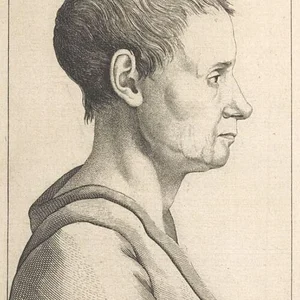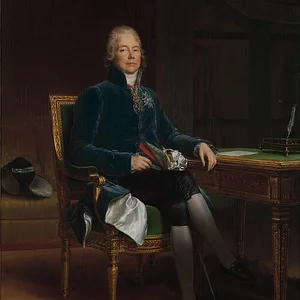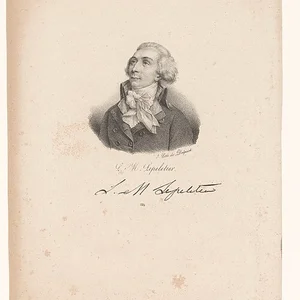

An aristocrat who embraced the Revolution, he was elected to the Estates-General and later served as a deputy in the National Convention, where he voted for the execution of King Louis XVI in January 1793. Assassinated on the eve of the king's execution by a royal guard, he became the first martyr of the French Revolution and was temporarily interred in the Panthéon.
Louis-Michel Lepeletier de Saint-Fargeau
Louis-Michel Lepeletier de Saint-Fargeau
8 min read
Frequently asked questions
Famous Quotes
« I vote for death.»
Key Facts
- 1760: born in Paris into a family of high nobility
- 1789: elected as a deputy for the Third Estate to the Estates-General, despite his aristocratic rank
- January 1793: votes for the death of Louis XVI during the king's trial
- January 20, 1793: assassinated at the Palais-Royal by the royal guard Paris, on the eve of the king's execution
- 1793: interred in the Panthéon as the first martyr of the Revolution; his remains were later claimed by his family
Works & Achievements
An active member of the criminal legislation committee of the Constituent Assembly, Lepeletier took part in drafting the first modern French penal code, which abolished judicial torture and introduced penalties proportionate to the severity of crimes.
During the historic night of August 4, he took the floor to support the abolition of seigneurial rights, publicly agreeing to renounce his own privileges — a powerful symbolic gesture from a great aristocrat.
His vote “for death” during the roll call on the fate of Louis XVI is his most resounding political act. As a former nobleman and magistrate, this choice carried particular weight — and ultimately cost him his life.
His major intellectual work, envisioning free, compulsory, and universal public education for all French children aged 5 to 12 in “houses of equality.” Taken up by Robespierre, this plan foreshadowed the principles of Jules Ferry’s republican school system.
Anecdotes
Born into one of France's oldest noble families, Lepeletier de Saint-Fargeau was one of the first aristocrats to sit in the Estates General of 1789 and vote, on the night of August 4th, for the abolition of his own privileges. This act astonished his peers: he voluntarily renounced considerable income and centuries-old feudal rights, asserting that reason must take precedence over birth.
During the trial of Louis XVI, Lepeletier was among the deputies of the Convention who voted for death without delay or reprieve, on January 17, 1793. His vote was all the more remarkable because, as a former nobleman and friend of the king, he was expected to choose clemency. He declared from the tribune that his conscience demanded this choice, whatever the personal cost.
On the evening of January 20, 1793, the eve of Louis XVI's execution, Lepeletier was dining at the Restaurant Février in the Palais-Royal. A former royal bodyguard, Philippe de Paris, recognized him there and drove a blade into his side, reproaching him for his regicide vote. Lepeletier died a few hours later, becoming the first martyr of the French Republic.
The painter Jacques-Louis David, a friend of the deceased, persuaded the Convention to display the body on a shield at Place Vendôme, the wound visible for all to see. David then produced a commemorative painting showing Lepeletier dead, with his vote “death” visible on a piece of paper beside him. This political staging was one of the first modern uses of the revolutionary martyr as a propaganda tool.
Shortly before his death, Lepeletier had submitted to the Convention an ambitious Plan for National Education envisioning “houses of equality” where all French children, rich and poor, would be raised together at the State’s expense from the ages of 5 to 12. Robespierre took up and championed this plan posthumously in July 1793, presenting it as the martyr’s political testament. The project foreshadowed debates on republican schooling that would run throughout the entire nineteenth century.
Primary Sources
I ask that, from the age of five until twelve for boys, and until eleven for girls, all children without distinction or exception be raised together at the expense of the Republic.
Lepeletier (Michel): Death.
Citizens, a dreadful crime has just been committed. Michel Lepeletier, representative of the people, was assassinated last evening by one of the tyrant's henchmen.
I felt it my duty to offer the homeland a final tribute to our friend Michel Lepeletier; I painted his features at the moment when, struck down by the hand of a villain, he had just given his life for liberty.
The National Convention decrees that Michel Lepeletier has well deserved of the homeland; that his body shall be conveyed to the French Panthéon, and that his ashes shall rest there until peace is restored to the Republic.
Key Places
The aristocratic family residence where Lepeletier was born in 1760. He grew up in this environment of high *noblesse de robe*, surrounded by jurists and magistrates.
It was at this restaurant in the Palais-Royal — a hub of Parisian political and social life — that Lepeletier was assassinated on the evening of 20 January 1793 by a royalist.
The republican temple where Lepeletier's body was provisionally interred on 24 January 1793 during a grand state funeral, before his daughter arranged for his remains to be transferred after Thermidor.
The Lepeletier family's ancestral estate in Burgundy, where his remains were permanently reinterred after their transfer from the Panthéon in 1794.
The meeting hall of the National Convention, where Lepeletier sat and cast his historic votes — most notably his vote in favor of the death of Louis XVI in January 1793.
Typical Objects

Long black robe trimmed with ermine worn by senior magistrates of the Parlements under the Ancien Régime. Lepeletier wore it in his role as president of the Paris Parlement before abandoning everything for the Revolution.

The bladed weapon with which Philippe de Paris fatally wounded Lepeletier on 20 January 1793 in a restaurant in the Palais-Royal. This object became a symbol of republican martyrdom.

A document written by Lepeletier proposing a free, compulsory republican school for all children aged 5 to 12. Read to the Convention after his death by Robespierre, it stands as his principal intellectual legacy.

The large shield on which David had Lepeletier's body displayed in the Place Vendôme, his wound clearly visible, to transform his death into a political act and rally the people.

The plain civilian attire — dark frock coat, breeches, hat adorned with tricolor plumes — worn by representatives of the people at the National Convention, marking the abandonment of Ancien Régime ornamentation.

A paper banknote issued during the French Revolution, backed by national properties confiscated from the clergy and émigrés. Lepeletier, like all members of the Convention, received his allowances in assignats.
School Curriculum
Vocabulary & Tags
Key Vocabulary
Daily Life
Morning
Under the Convention, Lepeletier rises early in his Parisian lodgings, works through revolutionary newspapers such as *Le Moniteur universel* and *Le Père Duchesne*, and drafts his political correspondence. As a former magistrate, he also devotes his mornings to studying the legislative texts submitted to the committees.
Afternoon
He spends his afternoons in the corridors and the Salle du Manège where the National Convention sits, taking part in heated debates on the war, treason, and the trial of the king. Sessions can run until nightfall and are frequently punctuated by votes at the podium.
Evening
His evenings are divided between political clubs — notably the Jacobins, of which he is a member — and the restaurants and cafés of the Palais-Royal, where deputies exchange news and arguments away from the uproar of the assembly. It is during one of these evenings that he is assassinated.
Food
The table of a wealthy deputy like Lepeletier remains relatively well-stocked despite the hardships of the time: roasted meats, white bread, Burgundy wines (including those from his estates in the Yonne), and cheeses. He often dines out at restaurants, a still-novel but highly fashionable practice in Paris.
Clothing
After 1789, he abandons the powdered wigs and embroidered coats of the *Ancien Régime* in favor of the sober civilian dress of patriots: a dark frock coat, a white frilled shirt, and a bicorne hat adorned with the tricolor cockade. This change of wardrobe signals his sincere commitment to the Revolution.
Housing
Lepeletier owns a private mansion in Paris and the family château of Saint-Fargeau in Burgundy. During the Convention's sessions, he lives in his Parisian apartment in a bourgeois neighborhood. His considerable income from landed estates allows him to maintain a comfortable lifestyle, even as he campaigns for equality.
Historical Timeline
Period Vocabulary
Liens externes & ressources
Références
Œuvres
Contributions au Code pénal de 1791
1791
Discours pour l'abolition des privilèges féodaux
4 août 1789
Vote régicide lors du procès de Louis XVI
17 janvier 1793
Plan d'éducation nationale
1793 (posthume, lu le 13 juillet 1793)